
Route Overview
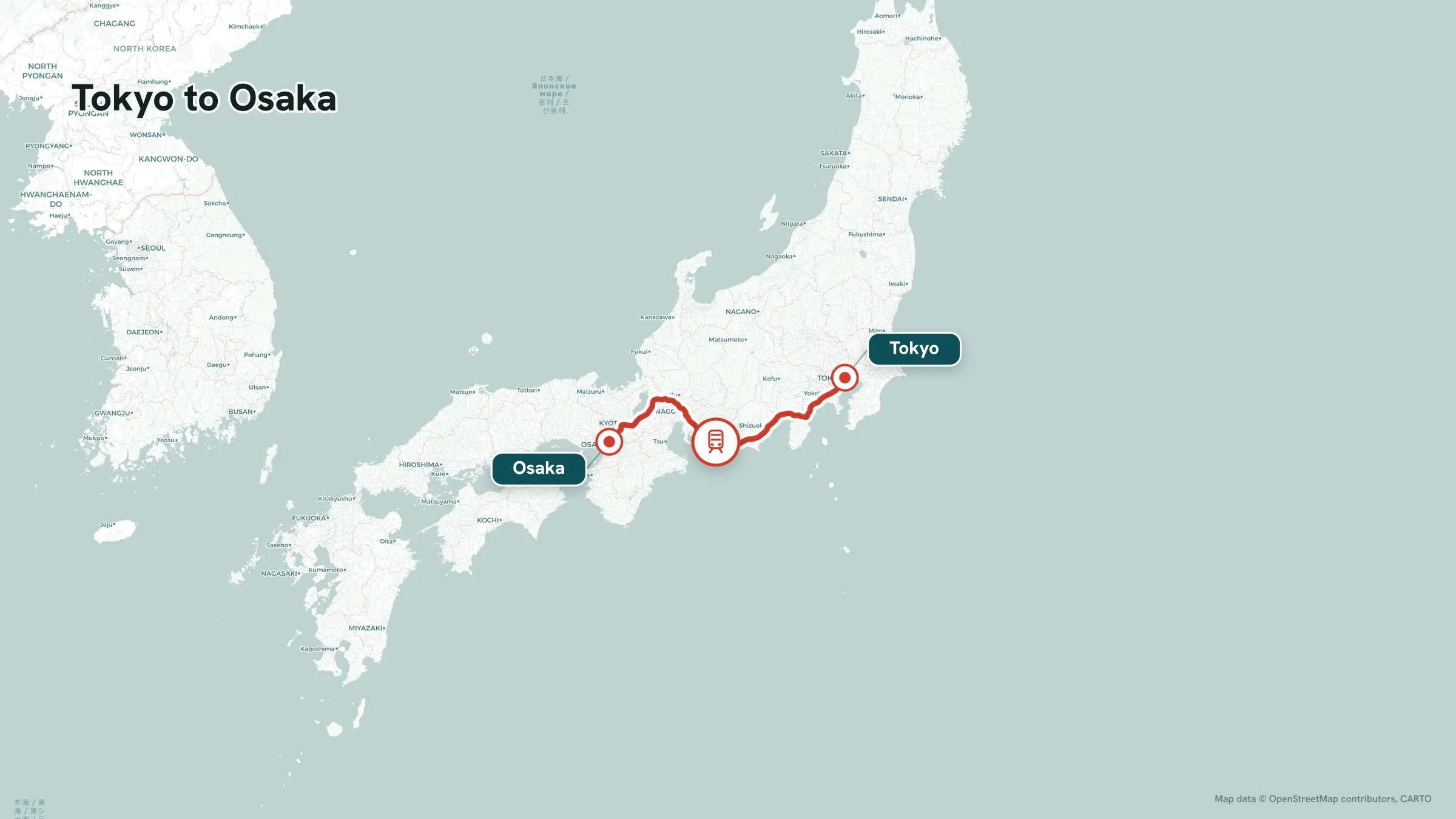
The Tokaido Shinkansen route: Tokyo to Shin-Osaka via Nagoya and Kyoto.
The Tokaido Shinkansen is Japan's busiest rail corridor, running 553 km between Tokyo and Shin-Osaka under JR Central's control. Your terminus in Osaka is Shin-Osaka, not Osaka station - the two are a short metro or local train ride apart. First-time visitors frequently arrive at the wrong one.
Three service types run the route. Nozomi is the fastest, stopping only at Shinagawa, Nagoya and Kyoto before Shin-Osaka. Hikari stops at more stations and takes around 3 hours. Kodama calls everywhere and runs to around 4 hours.
If you are travelling on a Japan Rail Pass, the pass covers Hikari and Kodama but not Nozomi. A Nozomi supplement costs around ¥4,960 on top of the pass. Hikari takes around 40 minutes longer, which is a reasonable trade if you have already paid for the pass.
Ordinary unreserved seats start from around ¥13,870. Ordinary reserved seats typically run around ¥14,720 in standard season. Green Car costs from around ¥19,590, rising to ¥22,000 in peak season and through some third-party suppliers. I paid ¥22,000 for a Green Car reserved seat through an English-language supplier just before Christmas.
- Train
- Tokaido Shinkansen (JR Central)
- Service
- Direct, no changes required
- Journey
- 2h 21m (Nozomi fastest)
- Frequency
- Every 10-15 minutes
- Rail Pass
- Hikari and Kodama only
- Reservation
- Required on all services
How to Book
JR Central (smartEX)
Book at global.jr-central.co.jp in English. Covers all classes including Green Car. Seasonal pricing applies; reserved seats from around ¥14,720 in standard season.
At Tokyo or Shin-Osaka station
Machines and agent windows available. Walk-up works for Ordinary class. Book ahead for Green Car and peak-season Nozomi.
Journey Timeline
Seating Classes
Onboard Experience
What the Journey is Actually Like
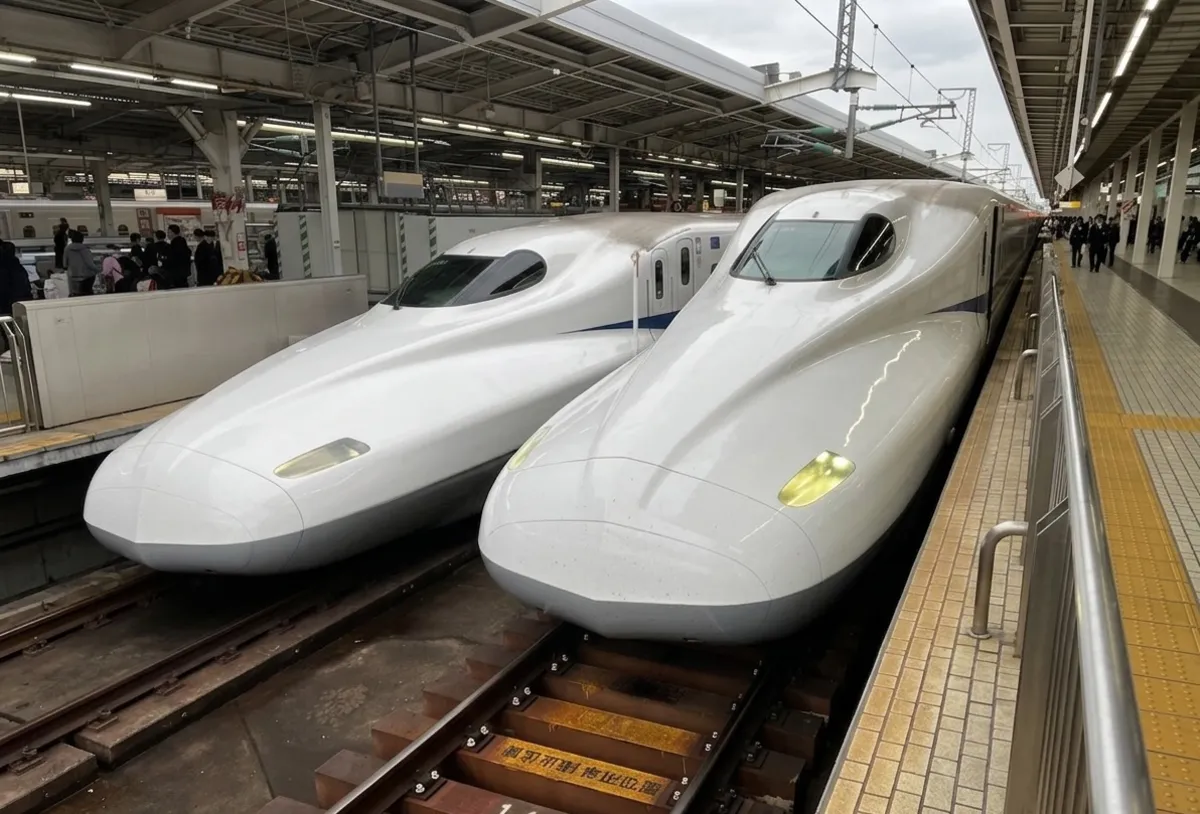
The ride is smooth and very quiet. The N700 series reaches 300 km/h, but you barely feel it. Talking on the phone is frowned upon and the cabin stays hushed for most of the trip. I found it one of the more calming trains I have been on.
In Green Car, the seat in car 9 is wide, carpeted and genuinely comfortable. The footrest has two positions: carpeted side up for wearing shoes, or platform-side down for taking them off. There is a seat warmer, a reading light and a power outlet in the armrest between the seats. I ordered a coffee via the QR code - the menu is in Japanese, so I used a translation app to navigate it.
Free Wi-Fi is available but I could not get it to connect reliably. Mount Fuji is visible from the right side of the train around 40-50 minutes after leaving Tokyo on a clear day. I was unlucky with cloud cover. The rest of the scenery is low-level and pleasant.
Shinkansen or Plane: The Real Comparison
The Nozomi drops you at Shin-Osaka in 2h 21m with no security queue, no baggage claim and no two-hour check-in window. Door-to-door, the flight only wins if you live near Haneda and are heading somewhere near Kansai airport. For most city-centre to city-centre trips, the train is faster in practice.
- City-centre to city-centre travel with no airport queues
- Travelling with carry-on only
- Flexible timing - trains run every 10-15 minutes
- Anyone who wants to see Japan at ground level
- Budget travel - highway buses run the route from around ¥4,000
- JR Pass holders wanting to skip the Nozomi supplement
From Osaka
From Shin-Osaka, the Sanyo Shinkansen heads west to Hiroshima (around 1 hour 35 minutes) and Hakata in Fukuoka (around 2 hours 20 minutes). Kyoto is a 15-minute ride back the way you came. The Osaka Metro and local trains reach central Osaka from Shin-Osaka in about 8 minutes.
If you're building a wider Japan rail itinerary, the Tokyo to Kyoto guide covers the classic day trip. The Tokyo to Sapporo route goes all the way to Hokkaido. The full Japan rail guide covers pass options and regional routes.
How long does the Nozomi take from Tokyo to Osaka?+
The fastest Nozomi services take 2 hours 21 minutes between Tokyo Station and Shin-Osaka. Most departures run between 2h 21m and 2h 30m depending on the number of stops. Allow extra time to get from Shin-Osaka to central Osaka.
Is Green Car worth it on the Tokyo to Osaka Shinkansen?+
I think so on a busy weekend or peak-season service. The 2+2 seat layout is noticeably wider, the seat warmer is a genuine comfort on a winter trip and you get a proper footrest. On a quiet weekday, Ordinary Reserved is perfectly comfortable.
Can I book Shinkansen tickets in English without a JR Pass?+
Yes. JR Central's smartEX platform at global.jr-central.co.jp works in English and covers all classes including Green Car. Book ahead for Green Car on busy dates.