
Buenos Aires Free Walking Tour: is it worth your time?
A tip-based city centre tour covering Congreso, Avenida de Mayo, Palacio Barolo, and Plaza de Mayo. I joined in 2017 needing context fast - here is whether it delivers.
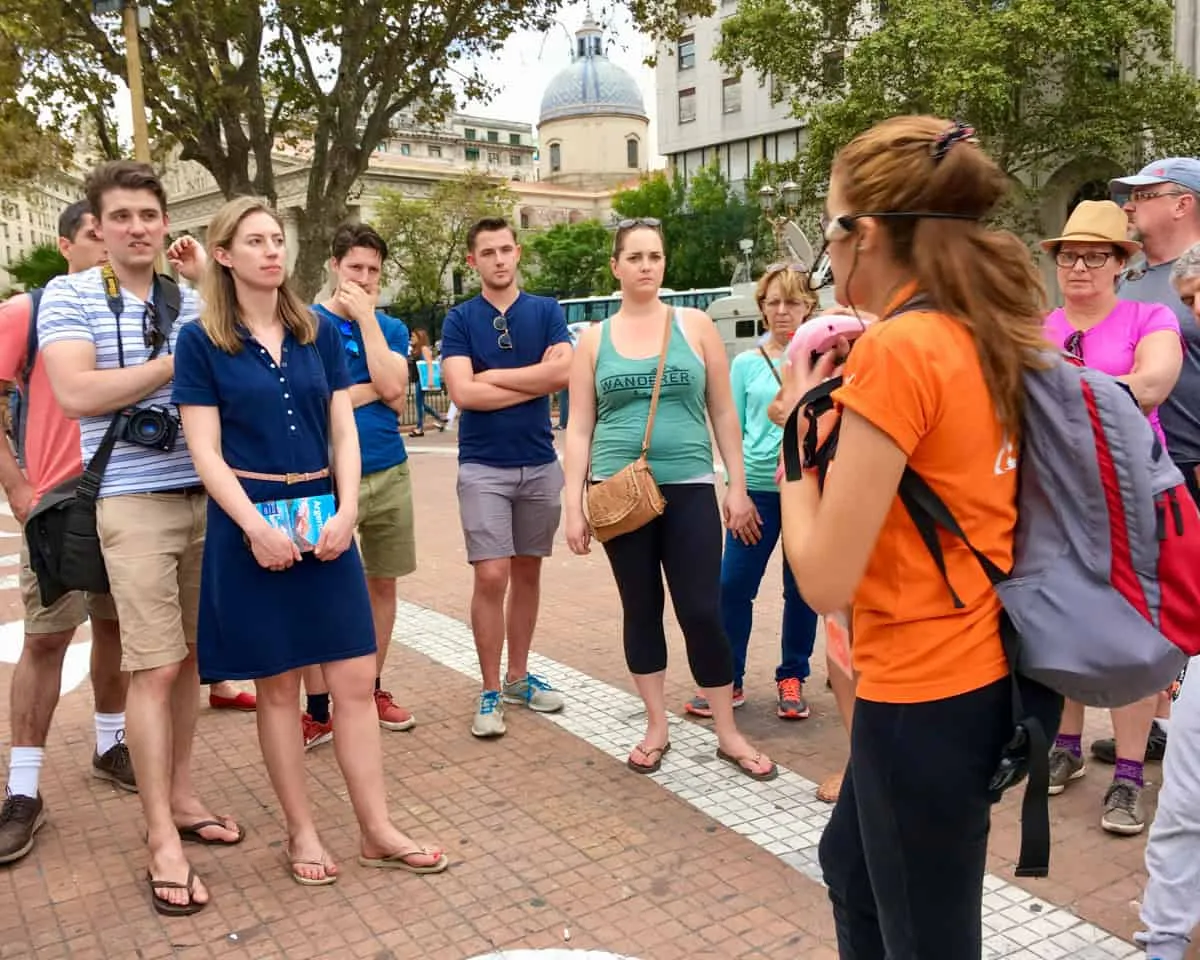
On my first trip to Buenos Aires in 2017, I needed context. Fast. As a European, I had arrived with a lazy assumption that the "New World" is, well, new. Argentina's history runs deep - political, cultural, architectural - and wandering aimlessly was not going to crack it. I needed a guide who could decode what I was seeing. So I joined Buenos Aires Free Walks' city centre tour. Three hours, pay-what-you-feel, led by a portena who knew her stuff. For a US$10 tip, I got historical immersion, urban orientation, and answers to questions I did not know I had.
How it rates
The scores below reflect the city centre tour in 2017 on a first day in the city.
What it is: how tip-based tours work
The name is accurate about the cost model and misleading about the money. Buenos Aires Free Walks openly states they expect at least US$10 per person. That is fair and it is how the guides earn a living. The mechanic: no upfront payment, no booking deposit, join the group and tip at the end based on what the tour delivered. If the guide was excellent and you left with genuine insight, tip accordingly. If it felt rushed or thin, adjust.
I paid US$10. That covered 2.5 hours of work from a professional guide - comparable to a decent lunch, far cheaper than a private guide at US$80 to US$150 for a half-day, and better value than wandering with a guidebook. The tip model also means guides are incentivised to deliver rather than coast.
The experience: Congreso to Plaza de Mayo
We met at the National Congress building at 10:30am. Our guide was a portena in a bright orange Buenos Aires Free Walks t-shirt, which made the meeting point straightforward. Group of about 15 - Australians, Americans, Europeans, a couple from Japan. The tour ran closer to three hours than the advertised 2.5.
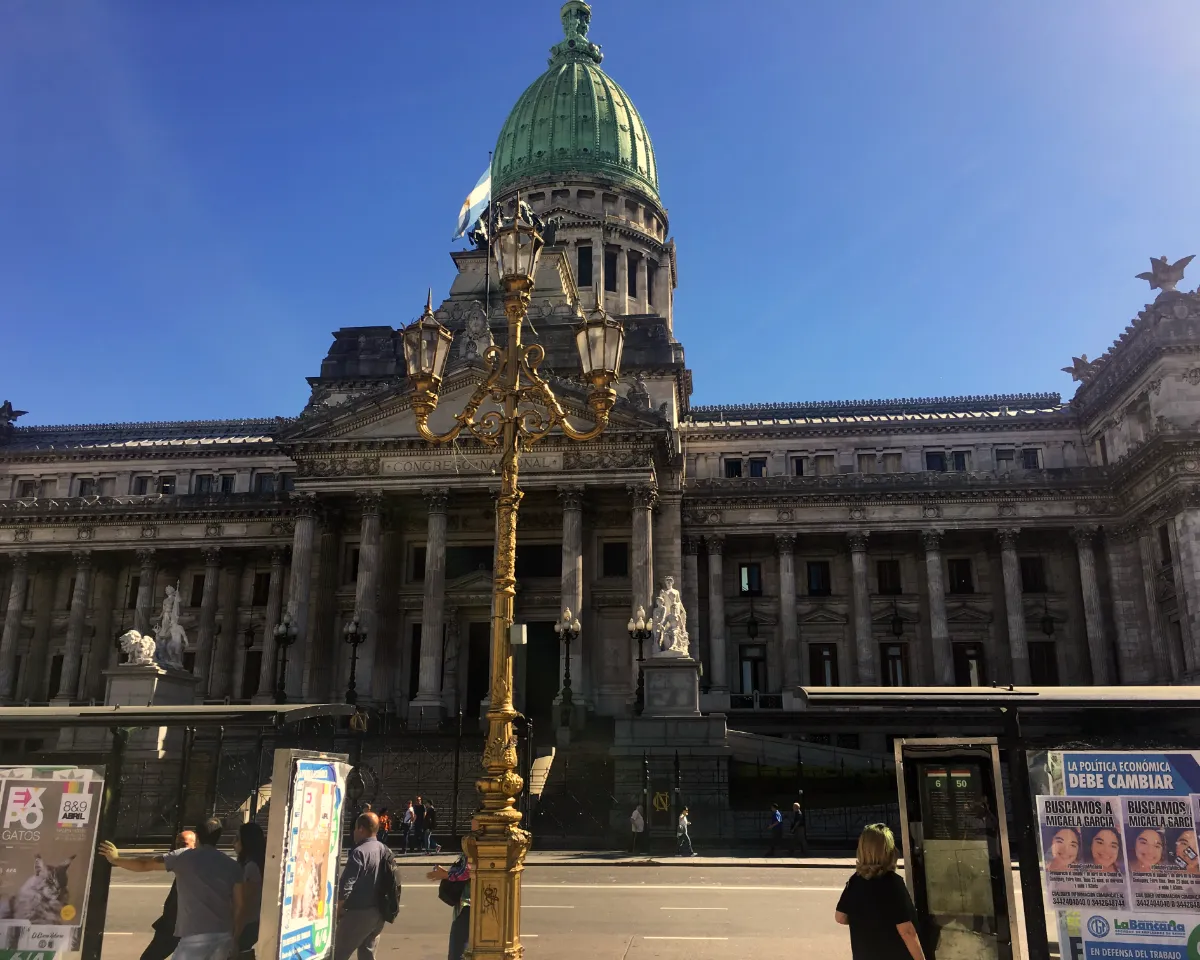
The National Congress building - the meeting point and first stop on the city centre tour.
The National Congress was the first stop. The guide did not just describe the neoclassical dome - she contextualised why Buenos Aires styled itself as the "Paris of South America," and why that project ran into political friction almost immediately. Near Congress sits a bronze copy of Rodin's Thinker. She used it to talk about Argentina's Belle Epoque ambitions and the tension between contemplation and the chaotic politics next door. A small detail that set the tone: this was not going to be surface-level.
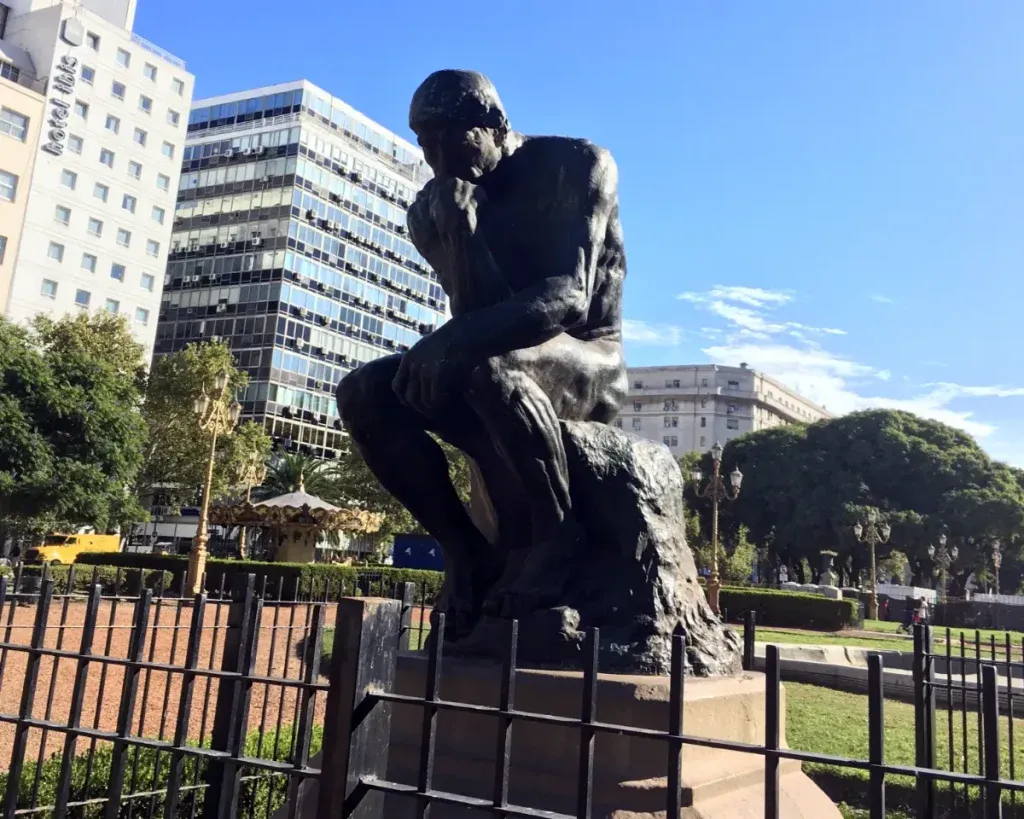
Rodin's Thinker outside Congress - the guide used it to frame Argentina's Belle Epoque ambitions.
We walked Avenida de Mayo - Art Nouveau facades, eclectic styles, early 20th-century optimism pressed into stone.
Avenida de Mayo - the grand boulevard that runs from Congress to Plaza de Mayo.
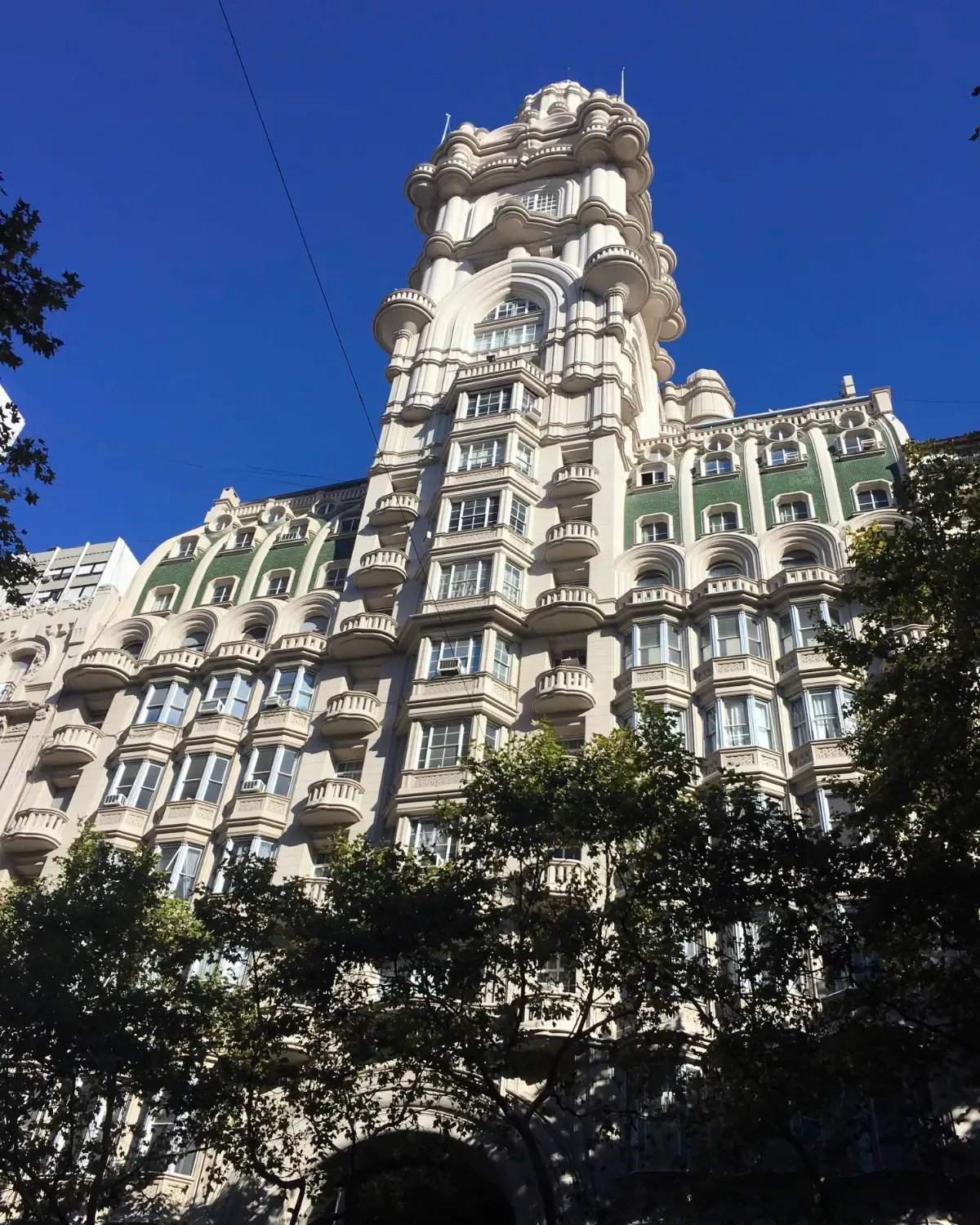
The highlight was Palacio Barolo, a building structured around the architecture of Dante's Divine Comedy: Heaven, Purgatory, and Hell across its floors. Architecturally striking and thematically unusual. Worth the tour for that stop alone.
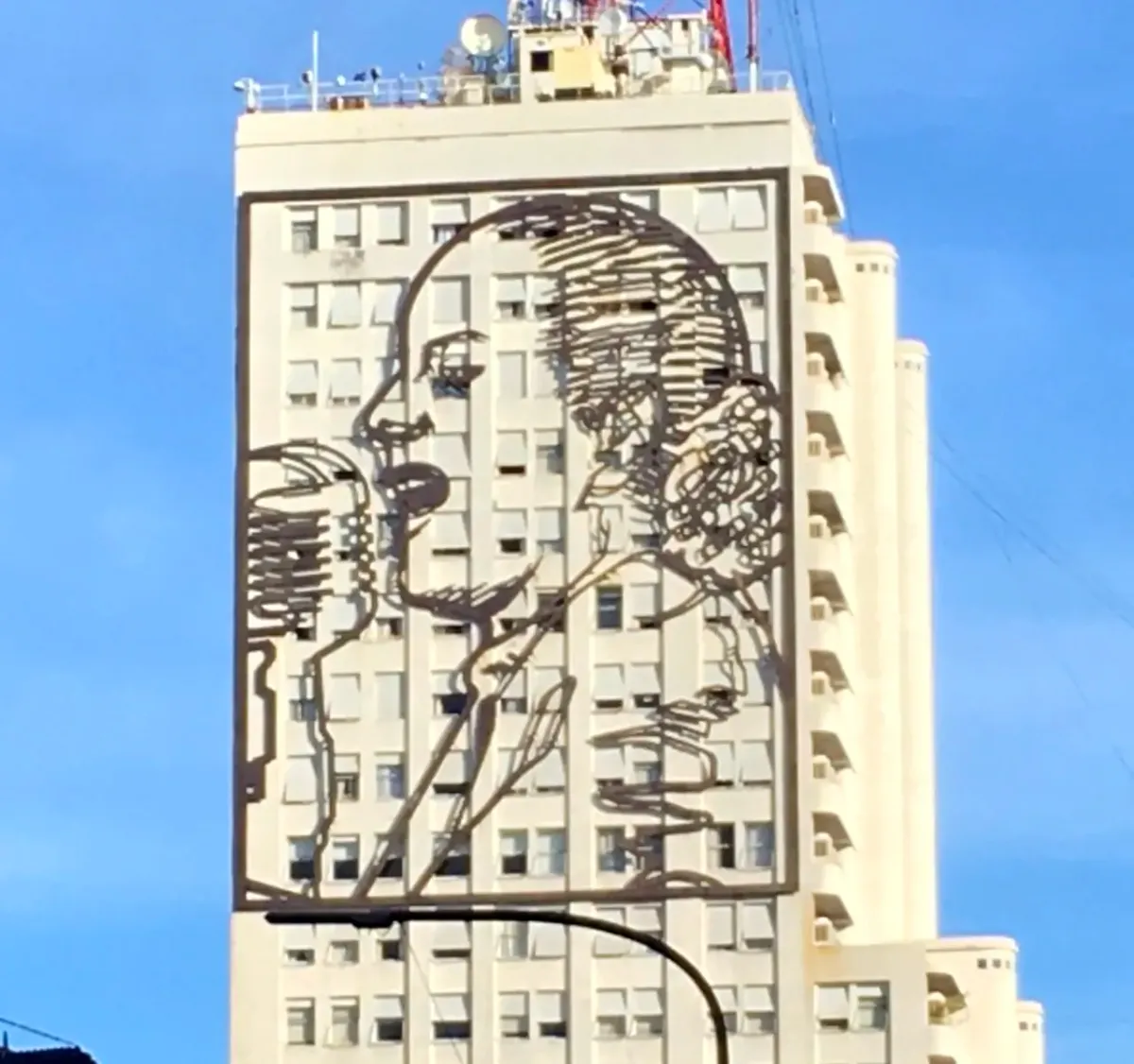
The Evita mural on the Ministry of Social Development - central to understanding Argentine political identity.
At the Eva Peron mural on the Ministry of Social Development, the guide did not shy from the complexity: Evita's political legacy, her championing of labour rights and women's suffrage, the near-canonisation by some and demonisation by others. I later visited Recoleta Cemetery and found the context from this tour made that visit considerably richer.
We passed Cafe Tortoni - 1858 institution, cultural salon for writers and politicians, no time to stop - then stepped briefly into the Metropolitan Cathedral, which houses the tomb of General Jose de San Martin, Argentina's liberator, guarded by cavalry. 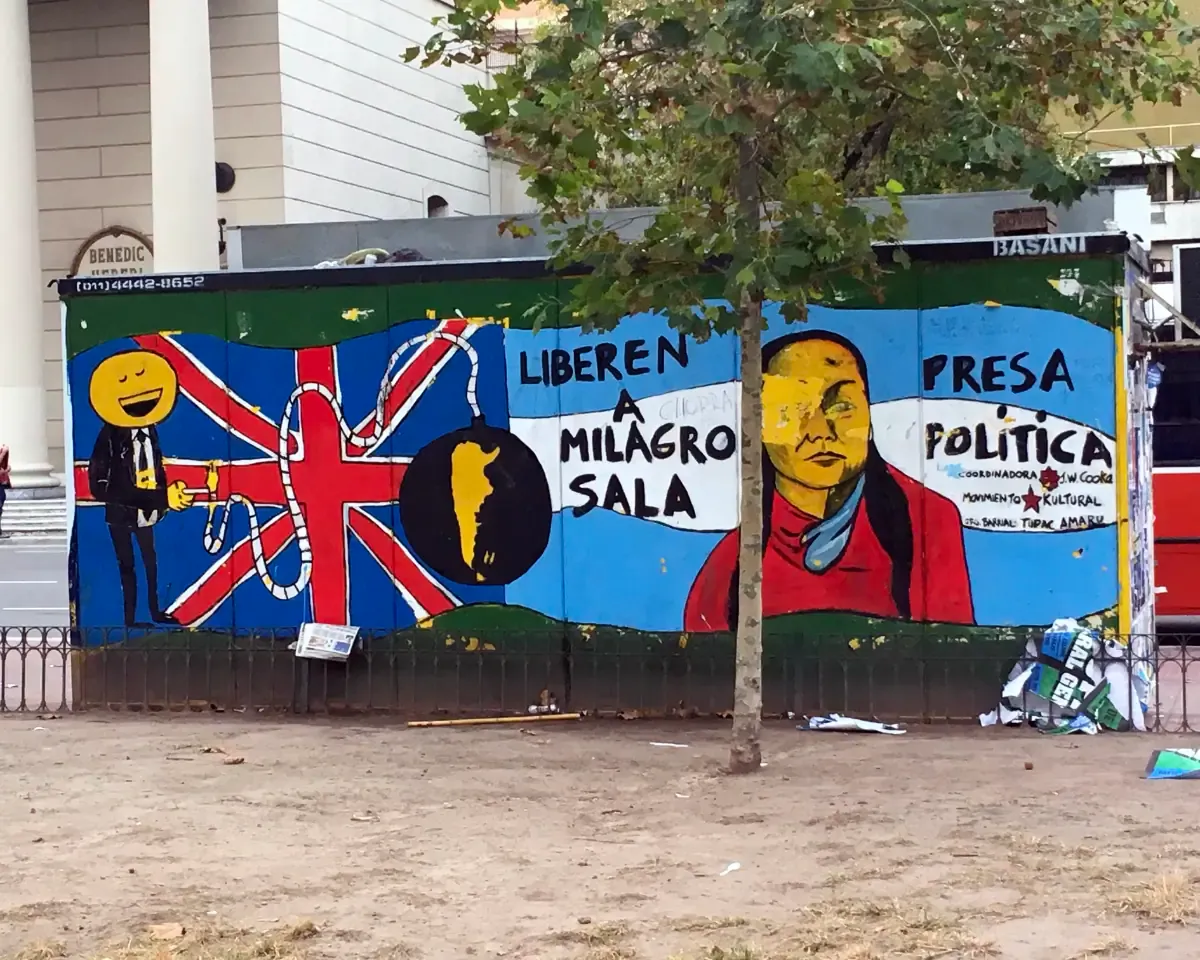
Plaza de Mayo - the tour's final stop and the heart of Argentine political life.
The tour ended at Plaza de Mayo: Casa Rosada, the site of protests and celebrations, and the Madres de Plaza de Mayo who have circled the pyramid every Thursday since the dictatorship demanding answers about their disappeared children. We arrived during a small protest. The guide explained this is civic engagement, not chaos - Plaza de Mayo is designed for this. That reframing helped.
Buenos Aires Free Walks also runs afternoon tours covering Recoleta and Retiro, a La Boca morning tour, a Palermo graffiti walk, and a San Telmo tour that pairs well with the Sunday antiques market. I only had time for the city centre tour, but the Recoleta route would have been my next choice.
Practical: booking, tips, and what to bring
Book ahead at buenosairesfreewalks.com even though walk-ups are allowed - booking guarantees your spot and helps organisers manage group sizes. Arrive 10 minutes early; guides leave on time. Bring cash in small bills (USD or pesos both work for tipping - guides cannot break large notes). Wear comfortable shoes: the route covers 3 to 5 km over uneven pavement, cobblestones, and occasional broken sidewalks. Bring water, especially in summer (December to February). Buenos Aires gets hot and humid and the tour does not pause for cafe breaks.
Stay aware in crowded spots along Avenida de Mayo and at Plaza de Mayo. Pickpocketing happens; keep bags zipped and valuables in a cross-body bag or money belt.
Is it worth it?
What Works04
- Three hours of genuine historical context for a US$10 tip - exceptional value for a first day
- Guide quality is high - professional guides with real depth, not volunteers reading Wikipedia
- Social but not forced - you can chat with the group or not; far less commitment than a full-day tour
- Practical orientation included - where to eat, what to avoid, how the city is laid out
What Doesn't04
- Groups can reach 30+ in high season - book an early slot or off-season for smaller numbers
- No cafe breaks and no flexibility to linger - if you want to pause at a stop, you fall behind
- If you have already spent real time researching Buenos Aires, you may find the coverage too broad
- Warm weather and no pauses means heat and hydration matter more than you expect
How to do it
Book at buenosairesfreewalks.com - no affiliate link, just the direct operator site. The city centre tour meets at the National Congress building at 10:30am. The booking process is straightforward and free; you pay nothing until you tip at the end.
If you want something more tailored on a return visit, consider a private guide. Expect US$80 to US$150 for a half-day focused on a specific thread - Argentine wine history, modernist architecture, or tango. Worth the premium if you want depth on a particular subject rather than broad orientation.
The tour pairs naturally with El Ateneo Grand Splendid in the afternoon - Avenida Santa Fe is about 20 minutes from Plaza de Mayo on foot, and by then you will have enough context to appreciate both the building and the neighbourhood it sits in.
Verdict: the right move on day one in Buenos Aires
Buenos Aires Free Walks city centre tour does what free walking tours are supposed to do and often fail to: it gives you a usable mental map and genuine historical depth, not a surface-level stroll between landmarks. For around US$10 I got three hours with a guide who had opinions, local knowledge, and the ability to make Argentine political history feel immediate rather than abstract.
I would not do another free walking tour on a return visit. I would book a private guide focused on something specific. But for a first day in a city with this much layered history, it was exactly the right call - and the US$10 tip remains one of the better-value decisions I made that trip.
Anyone arriving in Buenos Aires without deep background knowledge and wanting efficient, low-cost orientation on day one.
Travellers who have already researched the city thoroughly, want a fully customised route, or prefer complete independence over a group format.