
Recoleta Cemetery: is Buenos Aires' grandest landmark worth it?
A 14-acre city of mausoleums and the grave of Eva Peron. I visited twice in three weeks - here is whether it earns the trip, and how to do it.
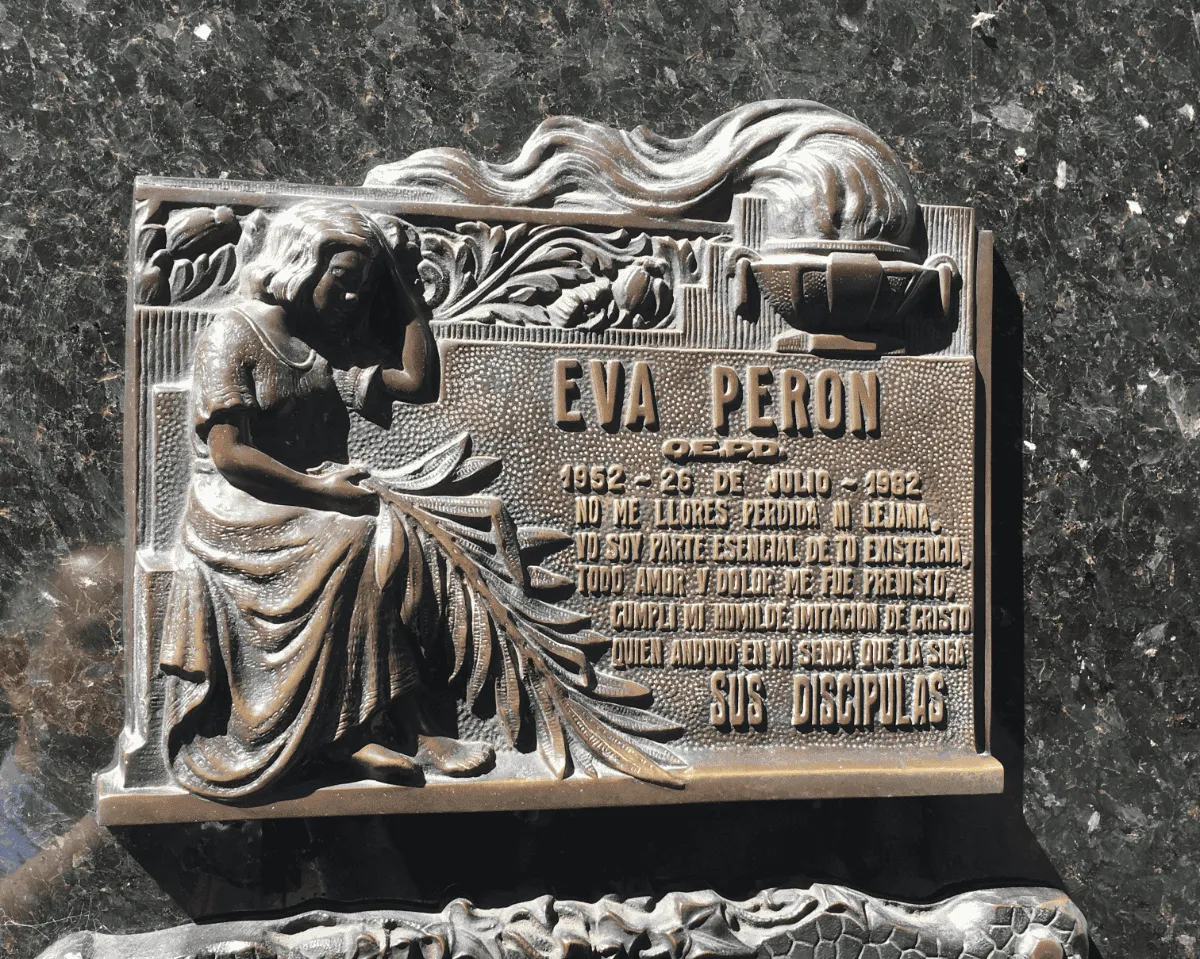
I am not a natural cemetery visitor. But I went to La Recoleta Cemetery twice during three weeks in Buenos Aires in 2017, and it is the one Buenos Aires landmark I tell people not to skip. It is less a graveyard than a mini-city frozen in time: more than 4,600 vaults and 6,400 statues, sarcophagi and crypts packed across 14 acres in the centre of the city's smartest neighbourhood.
I knew of it before I knew Buenos Aires, because of Evita. Seeing Eva Peron's grave in person, after the musical and the film, is a strange and memorable thing.
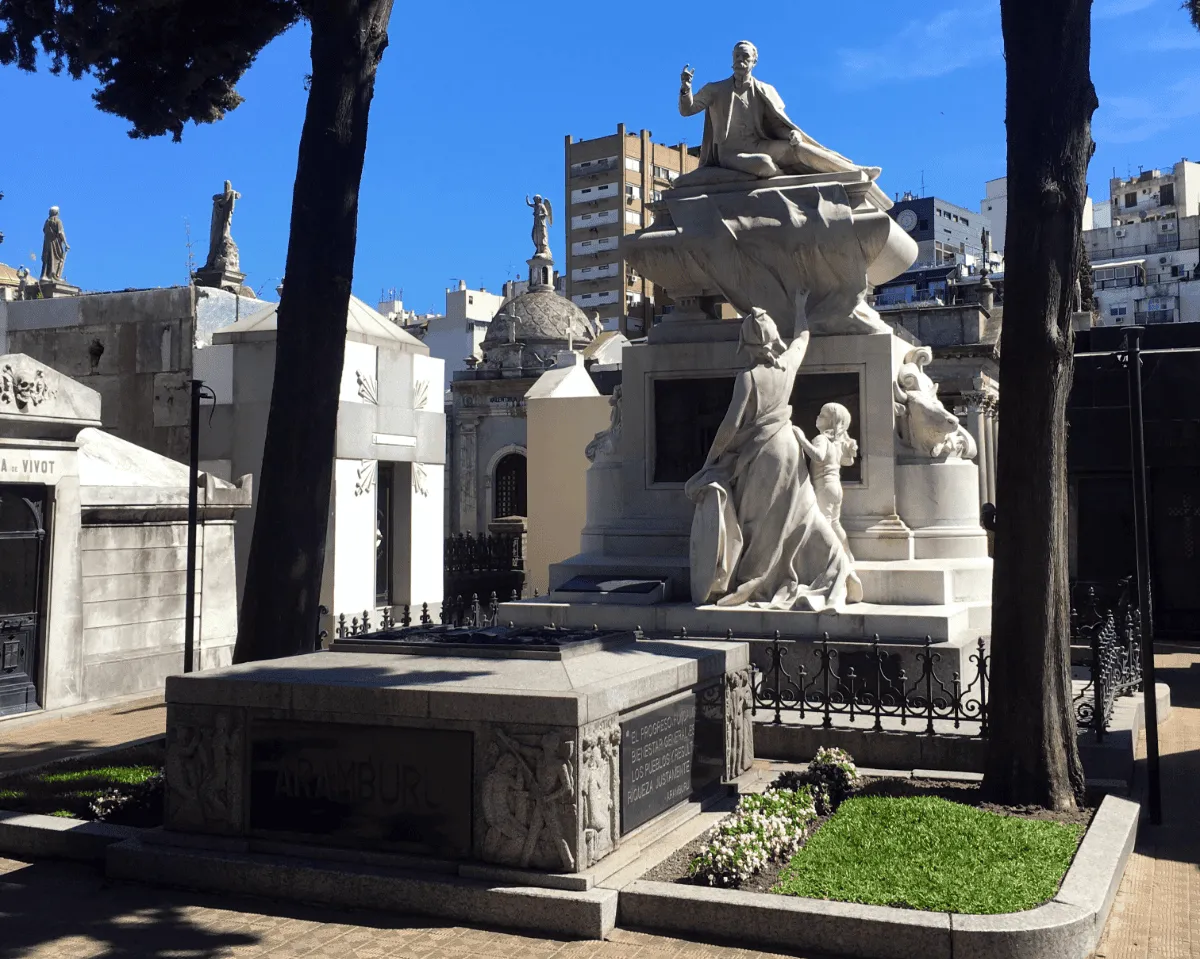
The lanes inside Recoleta Cemetery feel more like a historic quarter than a graveyard.
How it rates
The scores below reflect a self-guided first visit plus a second walk with more context. The overall is editorial, not a mean of the axes.
What it is, and the first impression
Recoleta Cemetery opened in 1822 and became the resting place of Argentina's wealthiest and most powerful families. Each mausoleum is a serious piece of architecture, running from neo-gothic spires to clean Art Nouveau lines, and the effect of seeing them lined up along narrow lanes is closer to walking a historic quarter than visiting a cemetery. You can lose an hour just turning corners.
It is a wee bit eerie to wander past coffins you can actually see through the ironwork. But the architecture and the sheer density of it carry the visit, even if, like me, you would not normally choose a cemetery as a morning out.
The experience: Eva Peron and the Duarte vault
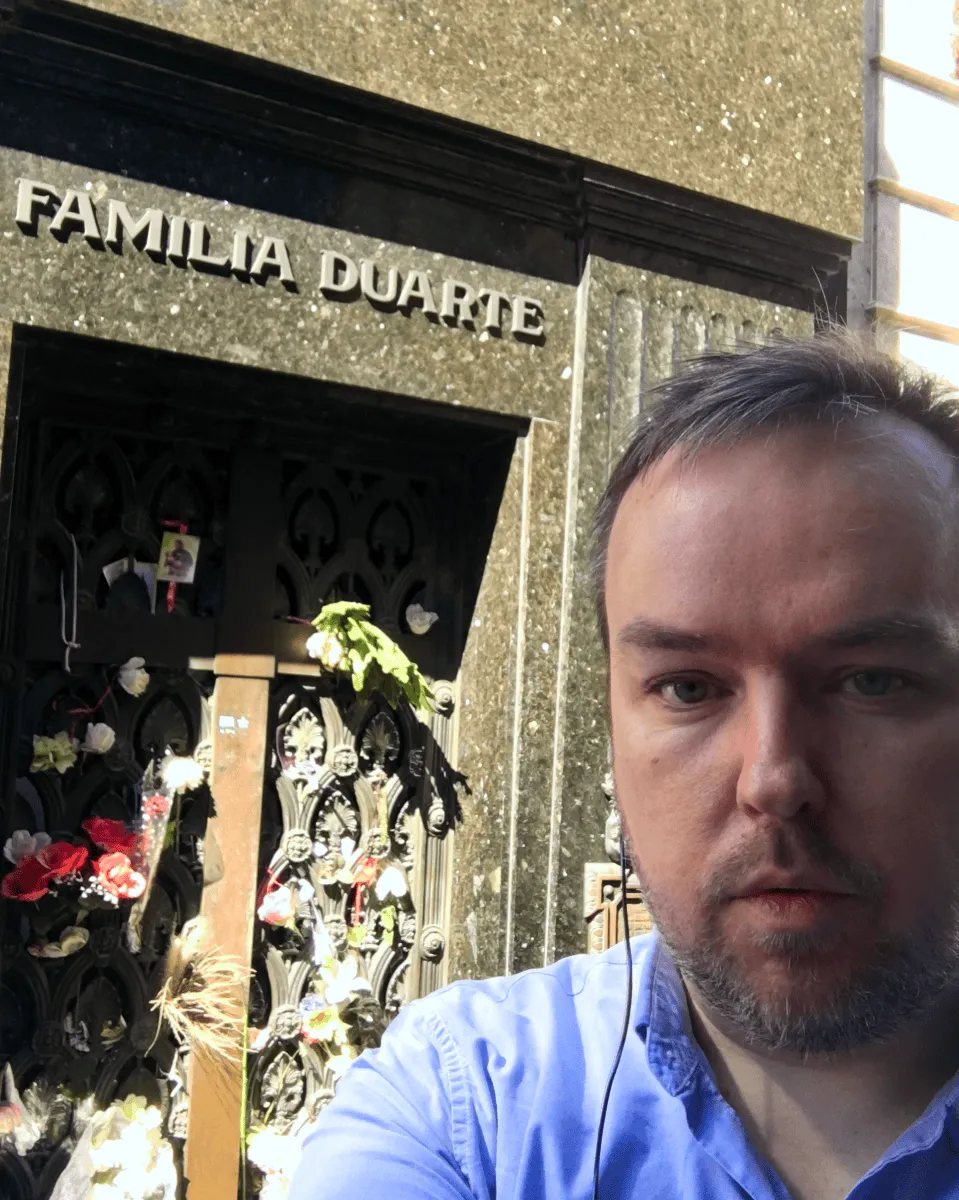
The Duarte family vault - modest next to the grander tombs around it, and often the one spot with a quiet cluster of visitors.
The grave most people come for is Eva Peron's. Evita was First Lady of Argentina from 1946 until her death in 1952, a woman who rose from poverty to become an actress and then a national figure who championed labour rights and women's suffrage. Andrew Lloyd Webber and Tim Rice's musical immortalised that arc, and "Don't Cry for Me Argentina" is most of the reason she is known outside Argentina. Fair warning: you will hum it as you walk.
She is buried with her birth family, the Duartes. Her remains were not moved to the family vault until roughly 20 years after her death, and they sit in a crypt several metres underground as a deliberate measure of protection. The Duarte vault itself is modest next to the grander tombs around it, which is part of what makes finding it feel like a small event. It is often the one spot with a quiet cluster of people in front of it.
Practical: getting in, tickets, timing
The cemetery is open 9am to 5pm, seven days a week. Entry is free for national residents and around ARS 14,320 (about US$15) for international tourists, paid at the entrance. Give it one to two hours.
Getting there is easy. The nearest metro is Las Heras on Line H, a short walk away, and it is a pleasant stroll from much of the city centre if you would rather bank the steps. Buses 10, 37, 41, 59, 60, 67, 92 and 130 all stop nearby. Go earlier in the day for softer light and thinner crowds, and pair it with lunch in Recoleta or Palermo afterwards.
Is it worth it?
What Works04
- The architecture is the draw - neo-gothic to Art Nouveau, packed into a walkable grid
- Eva Peron's grave delivers if you know the story going in
- Central and cheap, with free entry for residents and inexpensive guided tours
- Easy to combine with a Recoleta or Palermo afternoon
What Doesn't04
- It is still a cemetery - faintly eerie, and not for everyone
- Self-guided, you will miss most of the history and walk past the best vaults
- The grid is dense and easy to get turned around in without a route
- Tourist entry has crept up; carry the fare and check current prices
The cemetery's walkable grid of mausoleums - easy to get turned around in without a route.
How to do it: self-guided or a tour
You can absolutely do this self-guided, ticket at the gate and a wander. But a guide turns 4,600 anonymous vaults into a navigable story, points out the tombs you would never find alone, and most tours are inexpensive for what they add. There are free Spanish-language tours at 11am and 2pm Tuesday to Friday (you still pay entry), or an English option if you want the history without the language barrier.
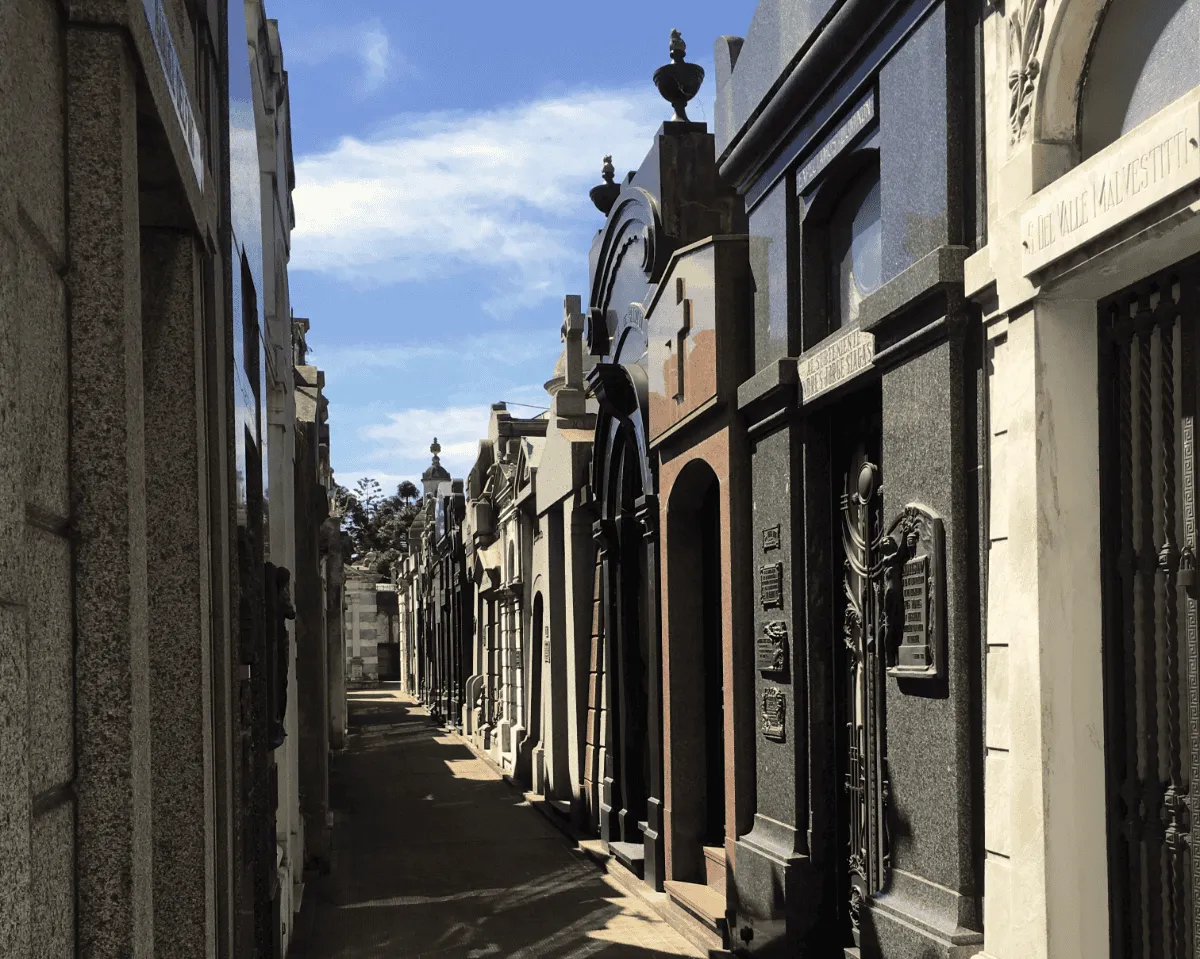
Neo-gothic spires and Art Nouveau stonework line every lane - the architecture is the real draw.
Verdict: the Buenos Aires landmark I would not skip
Recoleta Cemetery is the rare sight that overdelivers on a low price and a strange premise. For around US$15 you get a dense, beautiful, slightly eerie open-air museum of Argentine history, with Eva Peron's grave as the anchor. I went in sceptical about spending a morning in a cemetery and came away having gone back a second time.
Do it self-guided if you are short on time or budget, but if you can stretch to a cheap English tour, do - the history is most of the reward, and the grid is easy to wander without ever finding the vaults that matter. Either way, go early, carry the entry fee, and build a Recoleta lunch around it.
Anyone curious about Argentine history or the Evita story, and travellers who like architecture and atmosphere over a conventional museum.
Anyone genuinely unsettled by cemeteries, or in too much of a hurry to give it an unhurried hour.