
El Ateneo Grand Splendid: is Buenos Aires' famous bookshop worth it?
A converted 1919 theatre that now sells books. National Geographic calls it the world's most beautiful bookshop. I ducked in to escape the rain - here is whether it earns the trip.
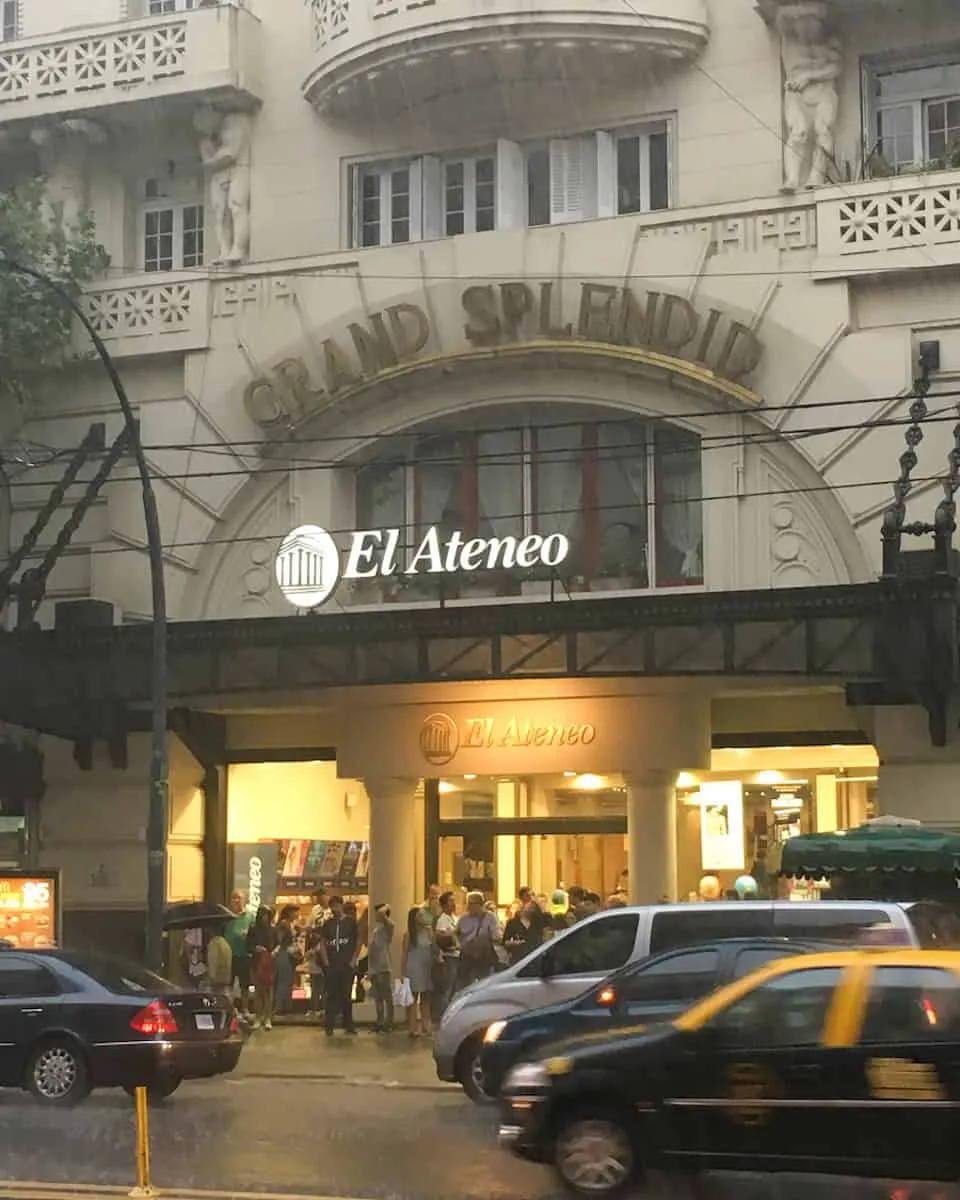
People kept telling me to go to El Ateneo Grand Splendid. I kept resisting. I travel hand luggage only now, and a bookshop felt like an invitation to buy things I could not carry. Then it started to rain in Buenos Aires - not drizzle, but proper rain - and El Ateneo was three blocks from my hotel in Recoleta. National Geographic calls it the world's most beautiful bookshop. The Guardian ranked it second globally. With credentials like that, I figured even a non-shopping visit might be worthwhile.
I was right. This is not just a bookshop. It is a converted 1919 theatre that happens to sell books.
How it rates
The scores below reflect a visit in 2025 during a rainy afternoon in Recoleta.
What it is, and the first impression
The building opened in 1919 as Teatro Gran Splendid, during Buenos Aires' golden era when European immigrants flooded the city and tango was born. The theatre hosted opera and tango - Carlos Gardel performed here - and in the late 1920s it became a cinema showing Argentina's first talkies, films with synchronised sound. By the late 1980s the theatre had closed. The cinema limped on until 1999. After a three-million-dollar renovation, it reopened in December 2000 as a bookshop, retaining nearly all its theatrical splendour.
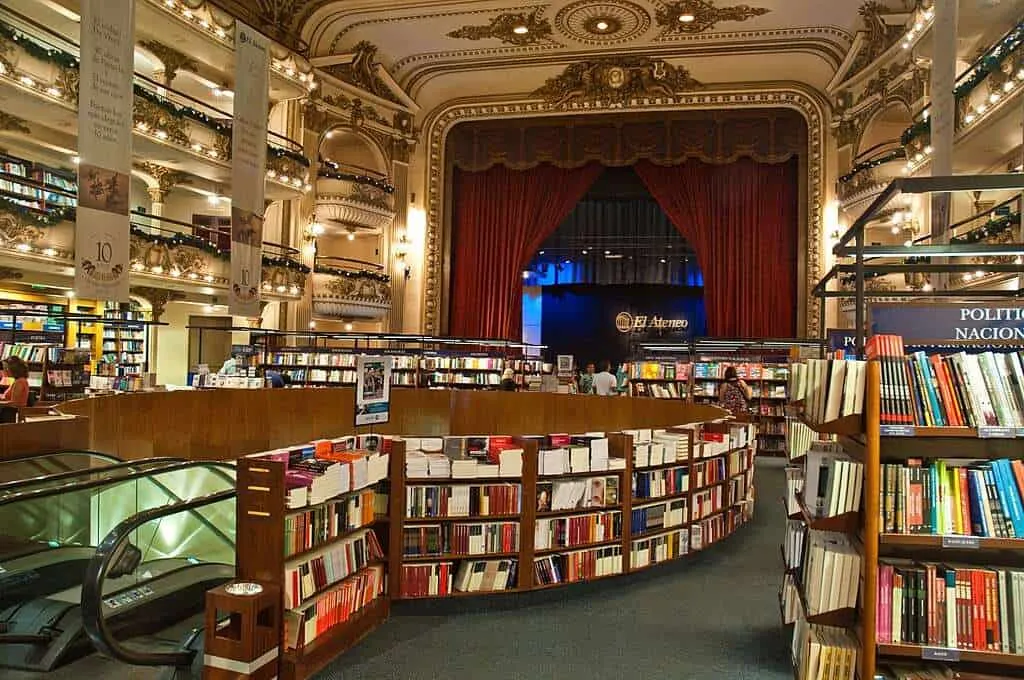
What they preserved: the central dome with frescoes by Italian artist Nazareno Orlandi, the red velvet curtains now framing what is the cafe, the former luxury boxes converted into reading nooks, the balconies wrapping the entire space, and the original stage itself - now occupied by a cafe where you can sit exactly where performers once stood.
The interior stopped me cold when I walked in. High ceilings, ornate detailing, that dome bathed in soft dramatic lighting. It is like stepping back a century, except the stars are books rather than tango dancers.
The theatre interior on arrival - balconies, frescoes, and books where the stalls once were.
The experience itself
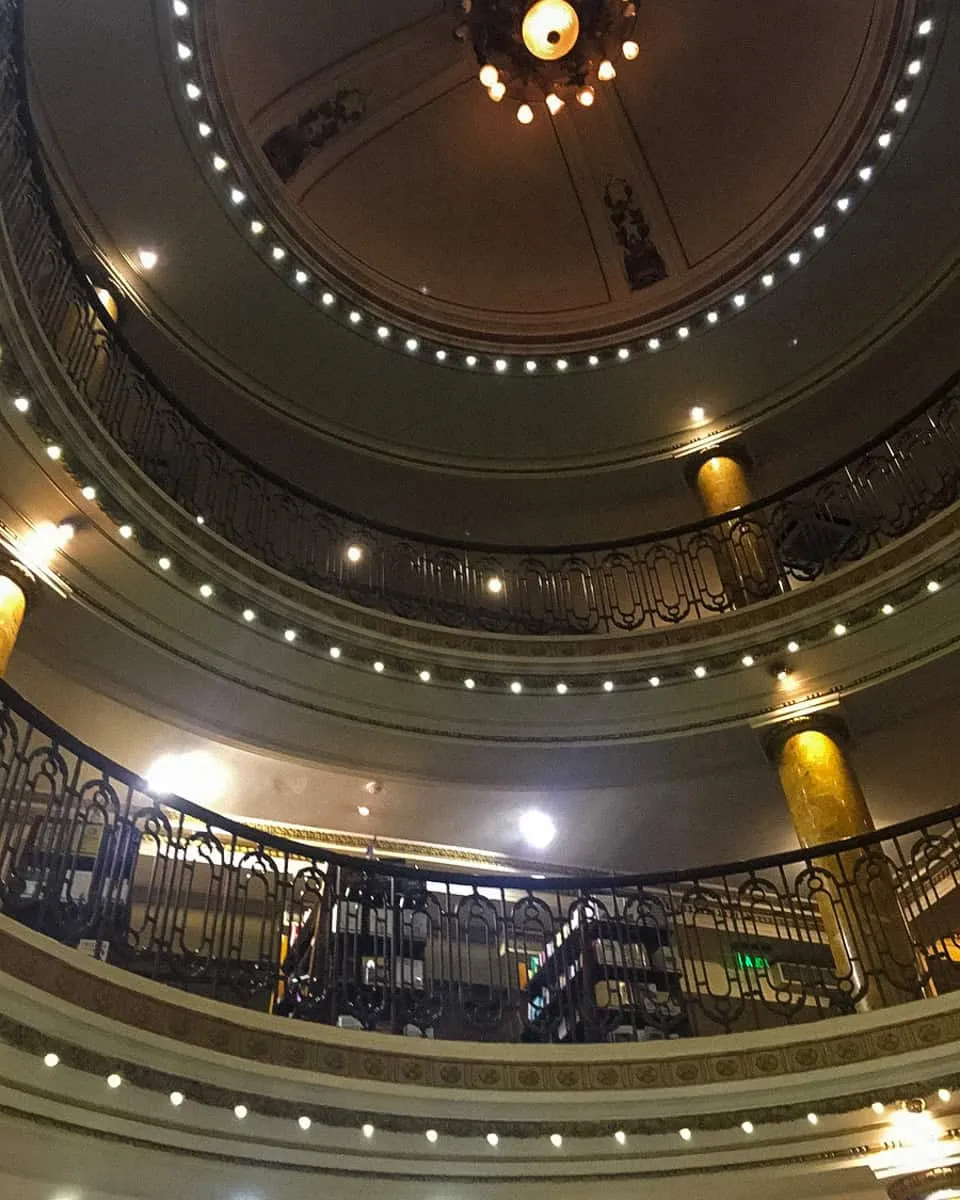
The central dome with Nazareno Orlandi's frescoes - preserved from the original 1919 theatre.
The ground floor carries general interest titles, bestsellers, Argentine literature, DVDs and CDs. The majority is in Spanish. Head upstairs and the sections become more specialised; the higher you climb, the better the views of the frescoes and the full theatre layout.
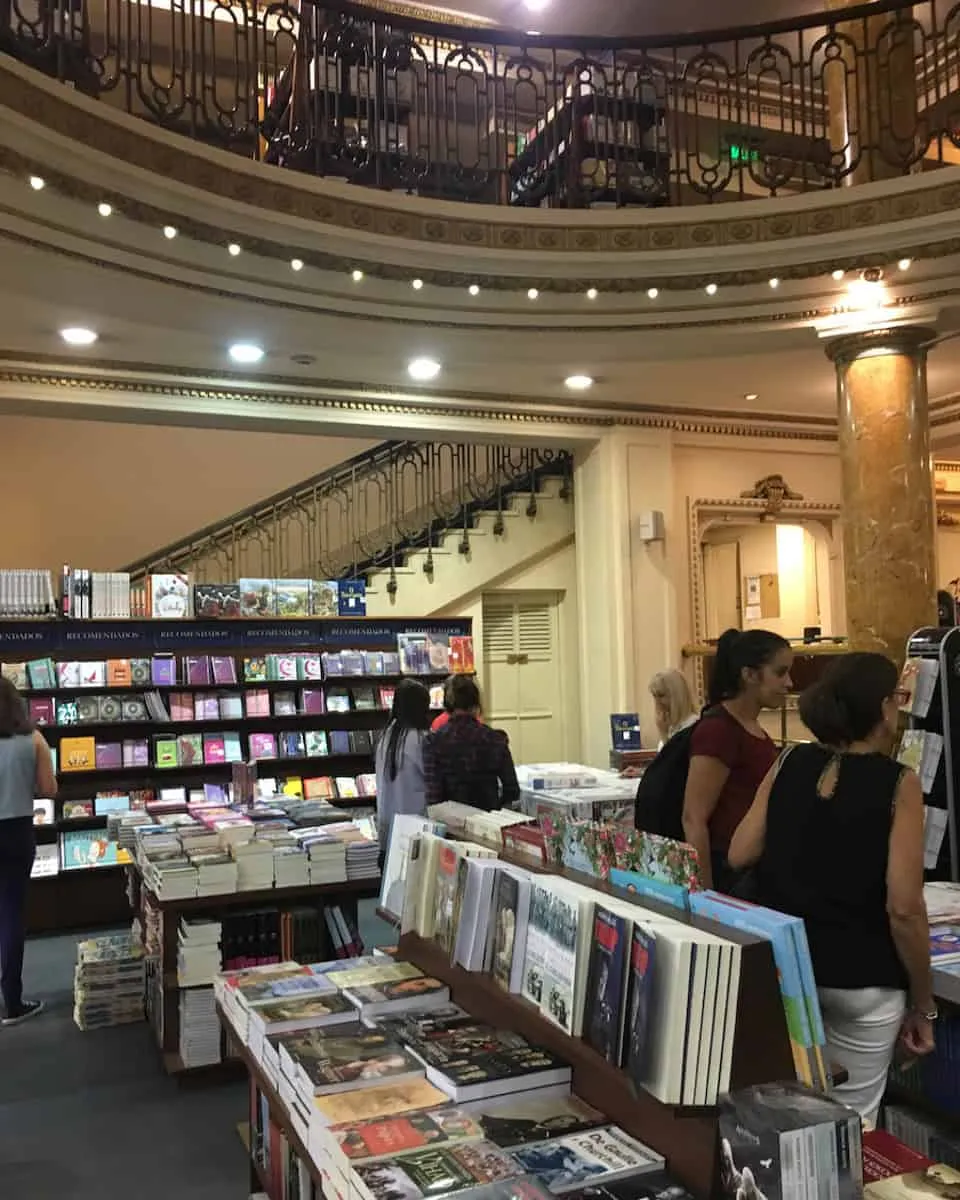
The balconies wrap the full perimeter - the brass lamps and Art Nouveau detailing are original.
The book selection is worth being clear about. If you do not read Spanish, your options are limited. There is a small English section near the entrance - romance novels, thrillers, the occasional literary title, a few large-format photo books. I picked up a journal and a pen. Something small to remember the visit, and something I could actually carry.
The cafe on stage is one of the better ideas in Buenos Aires hospitality. You order a cappuccino, sit exactly where performers once stood, and look back at the balconies. The perspective reversal works. You are not in the audience; you are centre stage. The coffee is solid. The pastries are fine. You are paying for the experience more than the food, and that is expected. It gets busy at weekends - I went back mid-week around 2pm and got a table without trouble.
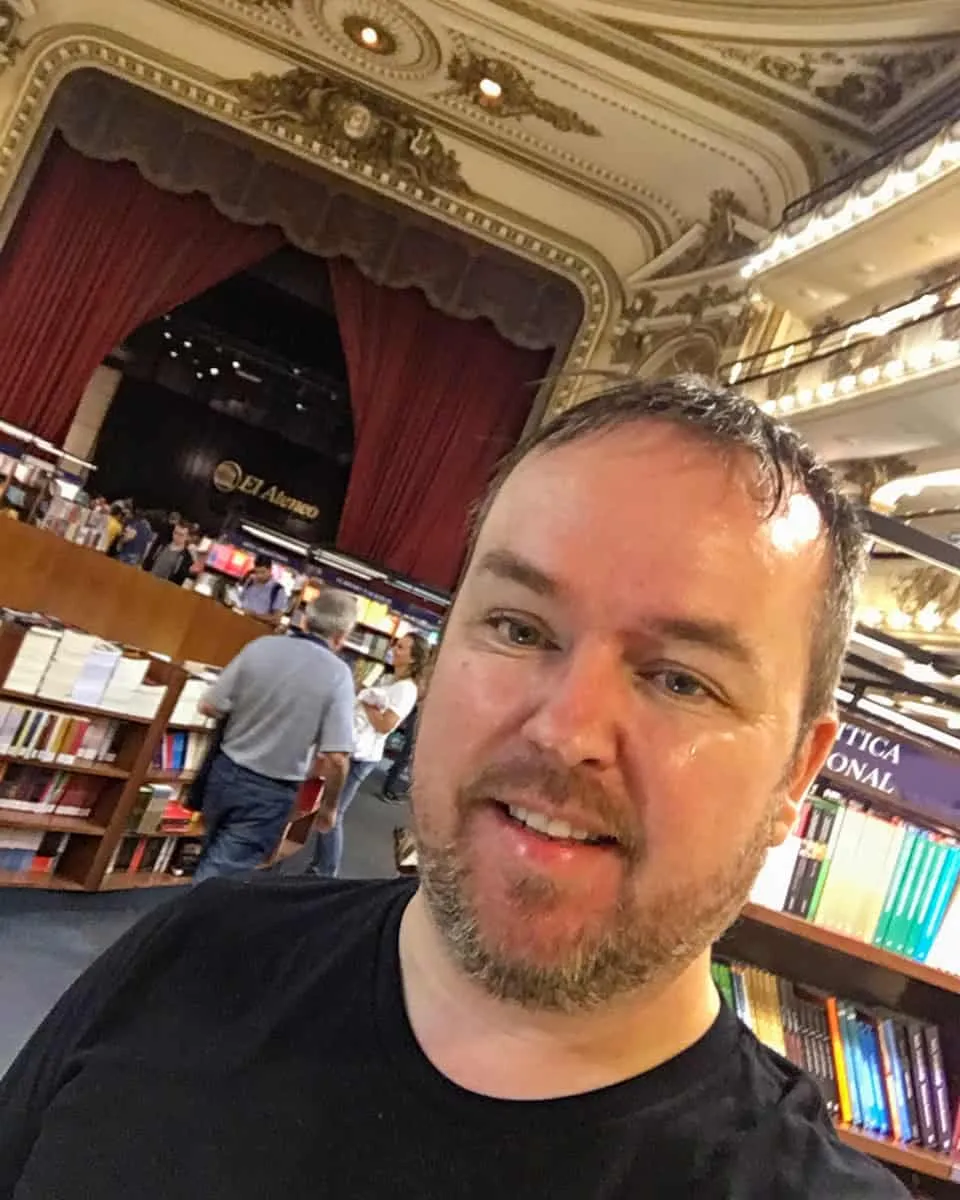
The cafe occupies the original stage - the red velvet curtains are original, the audience seats are now bookshelves.
One addition worth knowing about: in 2024, El Ateneo added a paid immersive experience on the upper floor. Historical panels, newspaper clippings, archival photos, a projection room covering Carlos Gardel and tango history. Ticket prices for non-residents ran to around ARS 30,000 (roughly US$15-18 at 2026 exchange rates). My take: skip it. The free areas give you everything that matters - the architecture, the atmosphere, the views from the balconies, the cafe on stage. The paid section is fine but not worth the price. If you are a theatre history enthusiast or a dedicated Gardel follower, perhaps. For everyone else, the free visit is the visit.
Photography is worth doing. The balconies, the dome, the symmetry of the space - it earns it. The best vantage points are one balcony level up and slightly off-centre (avoids the crowd gathering at dead centre), from the stage cafe looking back toward the balconies, and from the ground floor looking up at the dome. Weekday visits give cleaner shots; weekend afternoons bring crowds to the obvious spots.
Practical: getting in, timing
Entry is free. No booking, no queue, no ticket - you walk in off Avenida Santa Fe. The immersive experience on the upper floor is the only paid element.
Hours are Monday to Saturday 9am to 9pm, Sunday 12pm to 9pm. Sunday hours are subject to change around holidays, so check yenny-elateneo.com before visiting.
Getting there from most hotels in Recoleta or Palermo is walkable. Avenida Santa Fe is a busy commercial street and the building is straightforward to spot. If you are taking the Subte, Line D to Callao, then walk northwest along Santa Fe for about three blocks - roughly ten minutes. Budget 30-45 minutes for the visit. Longer if you want to sit in the cafe or settle into one of the reading nooks in the old boxes.
Busiest periods are weekends, particularly Sunday afternoons. Best time to visit is a weekday morning between 9am and 11am - quieter, good light for photos, easy to browse without the crowds. January and February (southern hemisphere summer) and October are the peak tourist months in Buenos Aires; June is typically quieter.
Is it worth it?
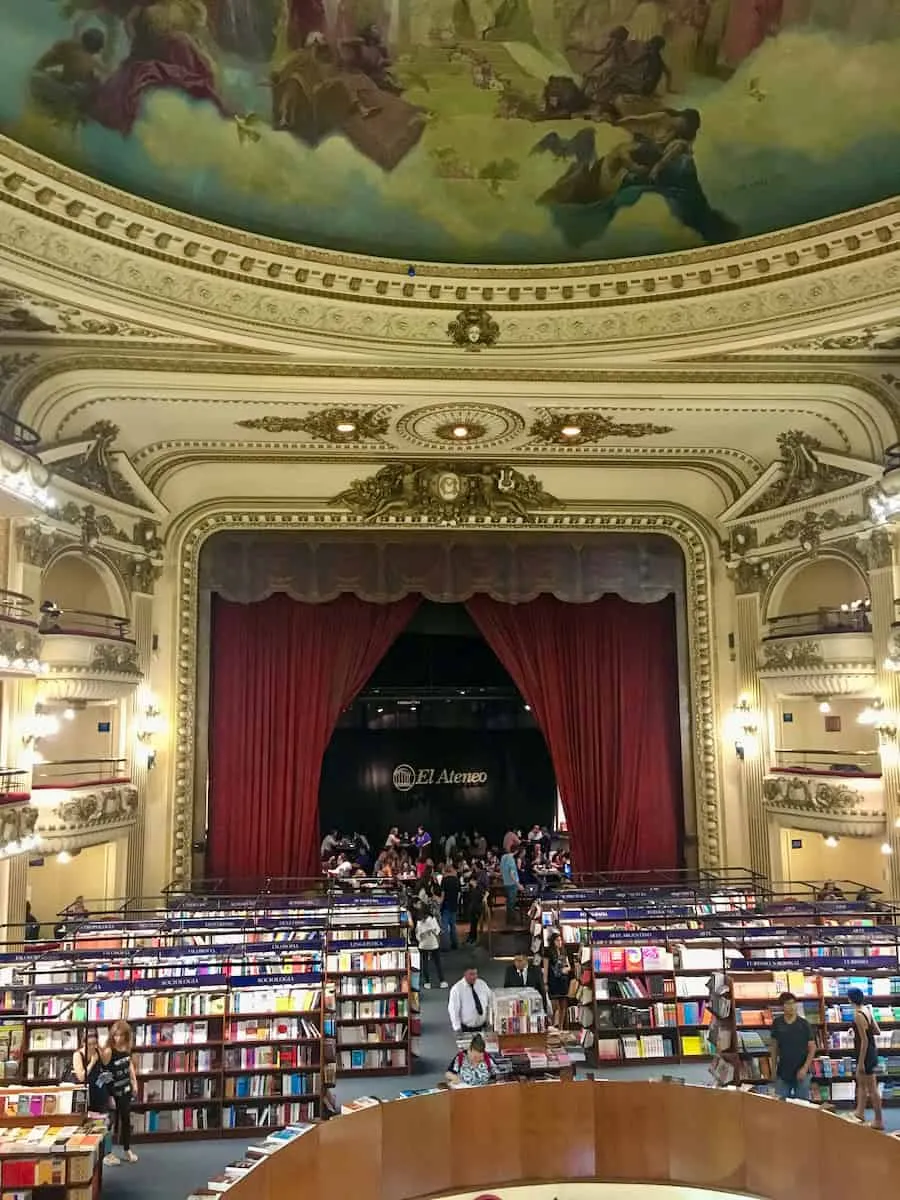
The full theatre from one balcony up - the scale of the space is clear from here.
What Works04
- The building is the main attraction - theatre architecture preserved at this standard is rare
- Free entry means it costs nothing to find out whether it appeals to you
- The stage cafe is a genuinely good idea, not a gimmick
- Walkable from Recoleta Cemetery and the Bellas Artes museum, making a natural half-day combination
What Doesn't03
- If you do not read Spanish, the book selection is very limited - come for the building, not the shopping
- The paid immersive experience upstairs is not worth the price for most visitors
- Weekend afternoons can be crowded enough to make both the cafe and the photo spots frustrating
How to do it
Walk in off Avenida Santa Fe. No booking required. Take the stairs to the first and second balcony levels to get the full sense of the dome and the theatre layout. If you want the cafe on stage, go mid-week and mid-afternoon for the best chance of a table. Leave the paid immersive experience unless you have a specific interest in tango history.
El Ateneo sits in Recoleta, a ten-to-fifteen minute walk from Recoleta Cemetery - worth combining into a half-day if you are in the neighbourhood. The Museo Nacional de Bellas Artes is about twenty minutes on foot and has free entry. Both pair well with lunch or coffee on Avenida Santa Fe afterwards.
Verdict: not overhyped, and that is the surprise
I went to El Ateneo to escape the rain and came away genuinely impressed. The world's most beautiful bookshop claim is justified. The building is remarkable, the preservation is thoughtful, and the conversion from theatre to bookshop works better than it has any right to.
The caveats are real but minor. The English book selection is thin - if you are planning to browse and buy, manage expectations. The paid immersive experience can be ignored. The weekend crowds at the cafe and the obvious photo spots are a minor frustration that a weekday visit sidesteps entirely.
Even if you do not buy a single book, it is worth thirty minutes of your Buenos Aires itinerary. Free entry with architecture at this level is not something you walk past.
Anyone in Recoleta with half an hour - architecture, history, and a decent cafe on a theatre stage, all free.
Anyone expecting a serious English-language bookshop, or visiting on a busy Sunday afternoon without patience for crowds at the cafe.