
Switzerland charges full price for everything. A one-way second-class ticket from Zurich to Zermatt costs CHF 81 to CHF 119 depending on when you book. Geneva to Interlaken adds another CHF 47 to CHF 58 each way. Add a boat crossing on Lake Lucerne and a few regional buses, and CHF 200 disappears before you reach the first viewpoint.
The Swiss Travel Pass is SBB's answer to that arithmetic. For CHF 254 you get three consecutive days of unlimited travel on trains, buses, and boats across Switzerland. That includes free entry to more than 500 museums. The 15-day version costs CHF 499. On a mountain circuit with several long legs, the daily break-even of CHF 85 can close within the first day.
The catch is that the pass has exclusions, and those exclusions are the mountains most people travel to Switzerland to see. Jungfraujoch - the most visited summit in the country and the centrepiece of most Bernese Oberland itineraries - is not covered at all. The fare from Interlaken runs above CHF 200. The two most popular panoramic trains add mandatory reservation fees on top of the pass price.
SBB sells an alternative to the Travel Pass for CHF 120. The Half Fare Card cuts every SBB fare by 50% for a month, including those mountain exclusions. For certain trip types it is the better purchase.
I work through the cost comparison for each trip type below, name every mountain the pass will not pay for, and I'll help you decide which pass is right for your trip. For a similar comparison, except for Japan or broader Europe, the JR Pass breakdown and the Eurail Pass guide use the same approach.
What the Swiss Travel Pass actually is
The pass comes in two variants. Consecutive covers a fixed block of days - choose from 3, 4, 6, 8, or 15. Flex covers the same durations but lets you select which days to activate within a one-month window. The price difference on the 3-day is CHF 35 (CHF 289 Flex versus CHF 254 consecutive, 2nd class adult). I'd skip that premium in most cases - the break-even section explains why.
Both variants cover trains operated by SBB and the wider Swiss Federal Railways network, regional buses, and lake and river boats. They also include free public transport in more than 90 Swiss cities. In practice that means no separate ticket for trams and metro lines in Zurich, Geneva, or Bern.
Mountain coverage splits into three tiers. Rigi, Stanserhorn, and Stoos are fully free with the pass. Most other mountain excursions carry a 50% discount - the Gornergrat cog railway above Zermatt is one example. A third group carries no discount at all. Those are listed in the next section.
On 2026 pricing: a 2nd class adult consecutive pass runs CHF 254 for 3 days up to CHF 499 for 15. First class adds roughly 60% - CHF 405 for 3 days, CHF 787 for 15. Under-25s pay roughly 30% less. Children aged 6 to 15 travelling alone pay approximately half; under 6 travel free. Parents can add children aged 6 to 15 when buying. Each child gets a free Swiss Family Card and travels at no extra cost while with you. The pass is digital-only.
The costs the price tag doesn't show
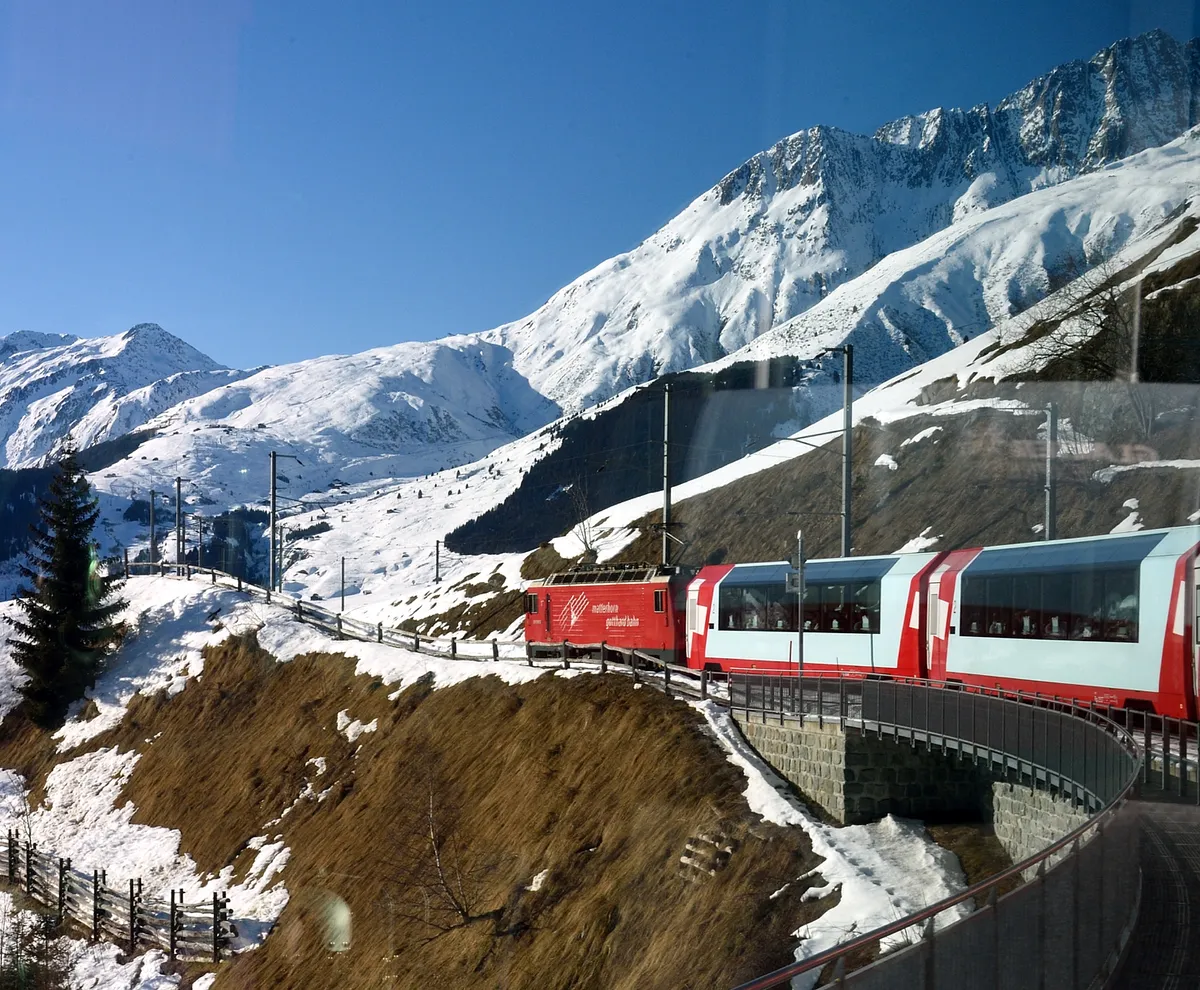
Switzerland's three main panoramic trains are the most marketed rail journeys in the country. The Glacier Express runs from St. Moritz to Zermatt. The Bernina Express links Chur to Lugano across the Bernina Pass. The GoldenPass Express connects Montreux and Interlaken via Zweisimmen. The pass covers the base fare on all three - but each train charges a mandatory reservation fee on top:
- Glacier Express: CHF 54 per person per direction
- Bernina Express: CHF 32 per person per direction (panoramic car)
- GoldenPass Express: CHF 23 per person per direction in 2nd class
Doing the Glacier Express one-way and the Bernina Express one-way adds CHF 86 in reservations before any other costs. The Glacier Express return runs CHF 108. These fees are mandatory - you cannot board without a reservation.
The exclusions are the sharper problem. Jungfraujoch - the most-searched train excursion in Switzerland - is not covered by the pass at all. The full-price fare from Interlaken Ost runs above CHF 200 per person. Titlis above Engelberg, Pilatus above Lucerne, and Schilthorn above Murren are also excluded. Full price applies regardless of what pass you carry. Gornergrat gives a 50% discount with the pass, but is not free.
The combined effect is significant. A 3-day pass at CHF 254, two panoramic train reservations at CHF 86, and a Jungfraujoch visit at CHF 200-plus totals over CHF 540 before a meal. Point-to-point Supersaver fares for the same three journeys - booked ahead - might cost less.
What the break-even maths actually looks like
Each pass duration has a daily break-even threshold - the minimum value in rail travel you need per day to justify buying the pass over individual tickets. Based on 2026 2nd class adult consecutive prices:
| Pass | Break-even per day |
|---|---|
| 3-day (CHF 254) | CHF 85 per day |
| 4-day (CHF 309) | CHF 77 per day |
| 6-day (CHF 399) | CHF 67 per day |
| 8-day (CHF 439) | CHF 55 per day |
| 15-day (CHF 499) | CHF 33 per day |
Zurich to Zermatt costs CHF 81 at the cheapest advance fare. That is nearly one full day's break-even on a 3-day pass from a single leg. Book within two weeks and you pay CHF 119. The pass makes that leg free and carries you everywhere else for two more days.
Cost analysis - Zurich to Zermatt, SBB advance and full-price fares
The booking window matters more than most people account for. SBB Supersaver fares on popular routes, booked six to eight weeks out, can run well below standard advance prices. At those prices, even two long legs per day on a 3-day trip may not reach CHF 254. Book within two weeks and full-price fares apply - the pass wins clearly.
I'd rarely want to pay the Flex premium. The CHF 35 extra on the 3-day only makes sense if you will genuinely skip at least one day of rail travel in your month. Most itineraries do not leave a full travel day unused.
When the Swiss Travel Pass saves you money
Mountain-heavy itineraries in 3-5 days
A three-day circuit covering Zurich, Zermatt, and Interlaken involves multiple full-price legs. Zurich to Zermatt runs CHF 81 to CHF 119. Zermatt to Interlaken via the Lotschberg adds another CHF 50 to CHF 70. The Gornergrat ride above Zermatt costs CHF 25 with the 50% pass discount rather than CHF 50 full price. Two days of that travel density absorbs the 3-day pass price completely.
Panoramic train touring
The Glacier Express full fare is CHF 159 per direction in 2nd class (full route, St. Moritz to Zermatt). With the pass you pay CHF 54 for the mandatory reservation only - the base fare is covered. Pairing the Glacier Express outward and the Bernina Express in a second leg saves around CHF 191 in base fares against booking both point-to-point. The pass covers the base cost; you pay CHF 86 in combined reservation fees.
Last-minute or flexible planning
Supersaver fares require booking six to eight weeks out. If you book within two weeks, you pay full point-to-point fares throughout. At full price, two long journeys on the first day - Zurich to Zermatt plus a connecting leg - easily exceed CHF 85. The 3-day pass recovers its cost before the day ends.
Travellers under 25
The 30% youth discount brings the 3-day break-even from CHF 85 per day to roughly CHF 59 per day. At that threshold, almost any multi-stop itinerary covering two or more Swiss cities justifies buying the pass over individual tickets.
When point-to-point tickets win
If you have five or more days in Switzerland with a fixed itinerary, you can often beat the pass on advance fares. Standard prices on popular routes: Zurich to Zermatt from CHF 81, Geneva to Interlaken from CHF 47. Zurich to Lugano starts from CHF 45; Bern to Interlaken from CHF 40. Supersaver fares booked 6 to 8 weeks out can be lower still. Four or five legs bought individually will often come in below a 6-day pass at CHF 399.
Single-destination stays remove the pass's main argument. Five days in Interlaken without travelling elsewhere leaves a national unlimited pass with nothing to justify its cost. If that's your plan, just buy the tickets you actually need.
The Half Fare Card gets overlooked more than it should. At CHF 120 for one month, it halves every SBB fare - trains, mountain railways, and boat trips. It also applies to Jungfraujoch, Titlis, Pilatus, and Schilthorn, which the main travel pass does not cover at all. On a 7-plus-day trip with a planned itinerary, the Half Fare Card plus individually bought tickets will often beat every pass tier - and cover the exclusions the pass misses. Compare Swiss train prices on Omio to check your specific route costs before deciding.
How to decide in 15 minutes
Start with a list of every train journey in your itinerary. Include regional buses and any lake crossings. If you don't have a firm plan yet, that is itself a signal - unplanned travel is where the pass earns its cost most easily.
Price each journey on SBB.ch using your actual booking window. If you are travelling in the next two weeks, look up the full-price fare. If you are booking eight weeks out, use the Supersaver price. The difference between these two scenarios often flips the decision entirely.
Add mandatory reservation fees for any panoramic trains on your list: CHF 54 for the Glacier Express, CHF 32 for the Bernina Express, CHF 23 for the GoldenPass Express. These fees apply to all pass holders - they are not optional and are not discounted.
Add full-price entry for any excluded mountain excursions. Jungfraujoch from Interlaken, Titlis, Pilatus, and Schilthorn all apply full fares regardless of what pass you carry. If Jungfraujoch is on your itinerary, the pass offers no discount on your most expensive single day.
Compare the total to the pass price plus the reservation fees you have already identified. If the pass saves CHF 30 or more after all adjustments, buy it. If the gap is smaller, Supersaver fares or the Half Fare Card will serve you better.
Where to buy the Swiss Travel Pass
The official route is swissrailways.com, SBB's English-language tourist shop. It sells every pass duration at 2026 prices in USD with immediate digital delivery. The booking flow is in English and the pricing matches what you see on sbb.ch directly.
For a broader European pass instead, the Eurail Pass guide covers a different product - Eurail covers most of Europe while the Swiss Travel Pass is Switzerland-only.
As I said in my Tip above, what you're buying is a digital pass. No app activation is required or available - the pass is the QR code and your ID, not a screen in an application.
Common questions about the pass, what it covers, and whether it is worth buying.