
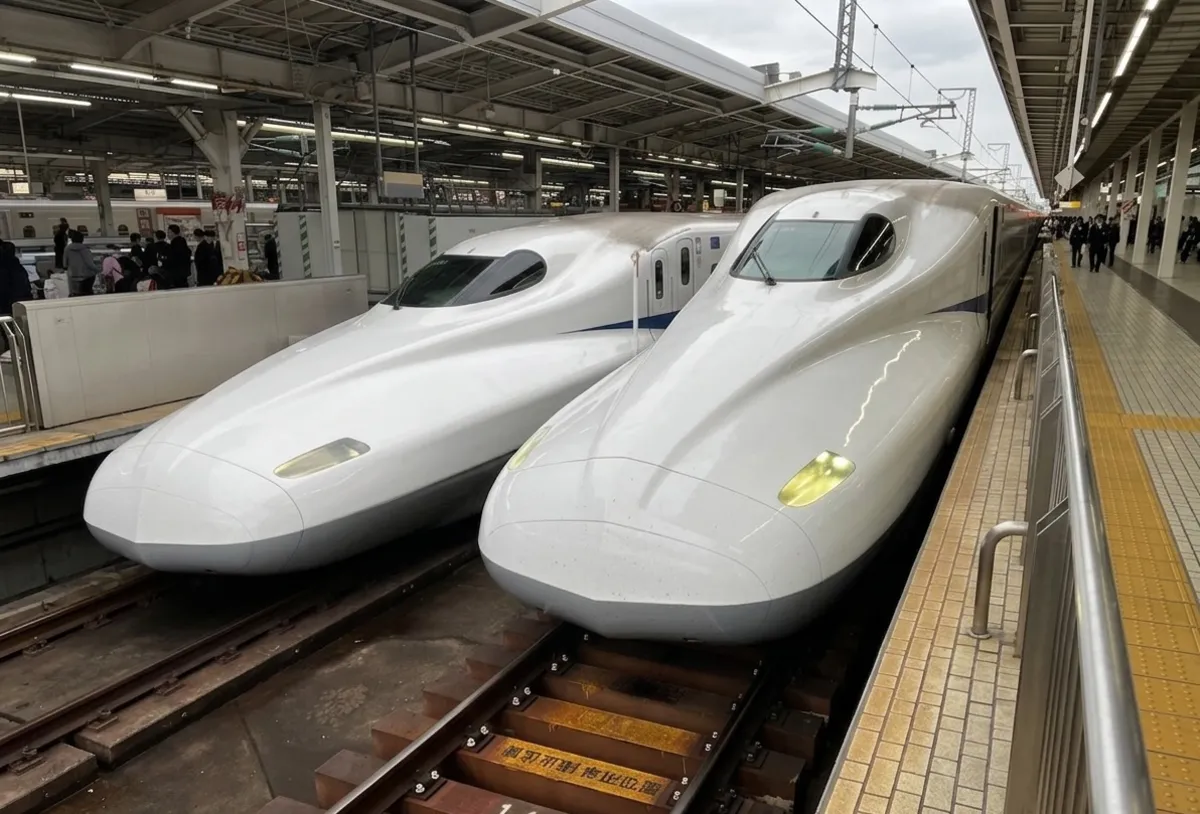
The Japan Rail Pass used to be a no-brainer. The 2023 price hike changed that. Here's what the pass covers, what it doesn't, and the 20-minute check that tells you whether it saves money on your trip or quietly overcharges you.
What the JR Pass is (and who can buy one)
The JR Pass is a multi-day ticket that covers most JR Group trains across Japan: limited expresses, rapid services, local services, and most Shinkansen lines. You pick a duration - 7, 14, or 21 consecutive calendar days, not travel days. Activate on a Monday and your 7-day pass expires the following Sunday at midnight, whether you rode trains every day or none.
Only travellers entering Japan on a Temporary Visitor visa (the standard 90-day tourist entry) can buy it. Work visa holders and residents are excluded. You buy the pass before you arrive and receive a physical Exchange Order that you redeem at a JR office in Japan.
The pass works on JR-operated trains plus the Tokyo Monorail to Haneda, a handful of JR buses, and the ferry to Miyajima. It does not cover Tokyo Metro, Toei, Osaka Metro, Hankyu, Kintetsu, or any other non-JR operator. For those, you'll want an IC card (Suica or PASMO) which taps across almost everything else.
Shinkansen: yes to Hikari and Kodama, no to Nozomi
The pass covers Shinkansen services with one big exception: the Nozomi and Mizuho, the fastest trains on the Tokaido and Sanyo lines. You get Hikari or Kodama instead. Tokyo to Osaka takes roughly 2h22m on the Nozomi, 3h on the Hikari, 4h on the Kodama. You're trading 30-90 minutes per long leg for the pass's flexibility.
2026 prices
Standard (adult) pricing, unchanged since the October 2023 hike. Child fares (ages 6-11) are half the adult rate; under-6s ride free.
- Ordinary: 7 days ¥50,000 · 14 days ¥80,000 · 21 days ¥100,000
- Green Car (first class): 7 days ¥70,000 · 14 days ¥110,000 · 21 days ¥140,000
Green Car gets you more legroom, quieter carriages, and wider seats. On a four-hour leg it genuinely helps. On a one-hour hop, you won't notice the difference. The premium is ¥20,000-¥40,000 depending on duration - worth it for long, back-to-back Shinkansen days, overkill for shorter trips.
Is it worth it? The 20-minute check
Open a note on your phone. List every long-distance train you're planning. Price each leg as an individual ticket using Google Maps or the JR fare calculator. Add them up. Compare the total to the pass price. If individual tickets beat the pass, skip the pass. That's it.
Anchor numbers for a 7-day pass at ¥50,000 - you need to beat roughly ¥7,000 a day in JR fares to break even. Here's what individual Hikari Shinkansen tickets cost (standard class, one-way):
| Route | Standard fare (one-way) |
|---|---|
| Tokyo to Osaka | approx. ¥14,000 |
| Osaka to Hiroshima | approx. ¥10,500 |
| Hiroshima to Fukuoka | approx. ¥12,500 |
| Tokyo to Kanazawa | approx. ¥14,000 |
A Tokyo-Osaka round trip is about ¥28,000. That's ¥22,000 short of the 7-day pass. You need at least one more major leg - Hiroshima, Kanazawa, Hakodate, Fukuoka - before the pass starts saving money. Stick to the Tokyo-Kyoto-Osaka triangle with a day trip to Nara, and you'll almost certainly lose money on the pass.
The pass rewards movement. If you're basing yourself in one city with day trips on local JR lines, an IC card will cost a fraction of the price. Load a Suica with ¥5,000-¥10,000, tap on and off, and top up when it runs low. It works in convenience stores and vending machines too - the pass doesn't.
Regional passes that often beat the national pass
JR sells regional passes that cover a specific area for less than half what the national pass costs. If your itinerary fits the region, these are usually the smarter buy. Most travellers default to the national pass without checking.
- Hokuriku Arch Pass: Tokyo to Kyoto via Kanazawa, 7 days. Scenic route through the Japan Alps and the Sea of Japan coast. Roughly half the price of a national pass.
- Kansai Area Pass: Osaka, Kyoto, Nara, Kobe, Himeji. 1-5 days. Ideal if you're focused on the Kansai triangle.
- Kansai-Hiroshima Pass: extends the Kansai pass down to Hiroshima and Miyajima on the Sanyo Shinkansen. 5 days.
- JR East (Tohoku) Pass: Tokyo and everything north-east - Aomori, Sendai, Nikko, the Tohoku Shinkansen. 5 flexible days within 14.
Check the coverage map before you buy. Some regional passes also allow Nozomi or Mizuho (the Kansai-Hiroshima Pass, for instance), which the national pass doesn't. That can be a deciding factor if speed matters to you.
How to buy, exchange, and activate without burning a day
Buy the pass before you travel. Klook is an authorised seller that ships the Exchange Order worldwide and often runs small discounts on the official rate. The order is valid for 90 days. In Japan, you hand it in at a JR office or exchange counter and receive the physical pass, which you can then activate any day within the next 30 days.
This is where most people trip up. They exchange and activate immediately, then spend their first three days in Tokyo riding the Yamanote line. That's three pass days burned on ¥500 of local fares.
Seat reservations and station workflow
Seat reservations on JR Pass are free and unlimited. Without the pass they cost ¥320-¥730 per journey. Reserve your first few long-haul trains the moment you exchange the voucher, especially during cherry blossom season, Golden Week, or summer holidays. Popular Hikari services on Tokyo-Kyoto-Osaka fill up fast.
Book at any JR ticket office (staff speak enough English for this), at a reservation machine, or online through the JR-West or JR-East apps. Always carry the physical pass - conductors scan it, and IC apps don't replace it.
The questions that come up most when travellers are deciding whether to buy.
Are the 7, 14, or 21 days consecutive?+
Yes. Calendar days, not travel days. Activate on a Monday and a 7-day pass expires the following Sunday at midnight.
Can I change the activation date after I exchange the voucher?+
No. Once you activate, the dates are locked. Choose the start date carefully before you hand the pass to the ticket machine.
Can I buy the JR Pass inside Japan?+
Technically yes, but it's priced higher and involves more paperwork. Almost everyone buys it online before they travel.
Can I use the Nozomi or Mizuho Shinkansen?+
No, not on the national JR Pass. You're limited to Hikari, Sakura, and Kodama. Some regional passes (like the Kansai-Hiroshima Pass) do allow Nozomi - check the fine print.