
Interislander Ferry: Crossing New Zealand's Cook Strait
The Interislander across the Cook Strait between Wellington and Picton: booking, the crossing, and what to expect when it turns rough.

The Interislander Ferry has been an essential ferry link between New Zealand's North and South Islands for over 55 years.
The journey across the Cook Strait between Wellington and Picton is not only scenic but also a crucial connection between the North and South Islands of New Zealand. For decades the route also carried freight trains on a roll-on, roll-off basis, though that capability is paused until new rail-enabled ships arrive - more on that below.
I used the Interislander recently to connect my (mainly) train journey from Auckland on the North Island all the way to Queenstown on the South Island.
It's a bit of an unforgettable trip not only for the history, but mainly for the natural beauty of this place.
A Brief History of the Interislander Ferry Route
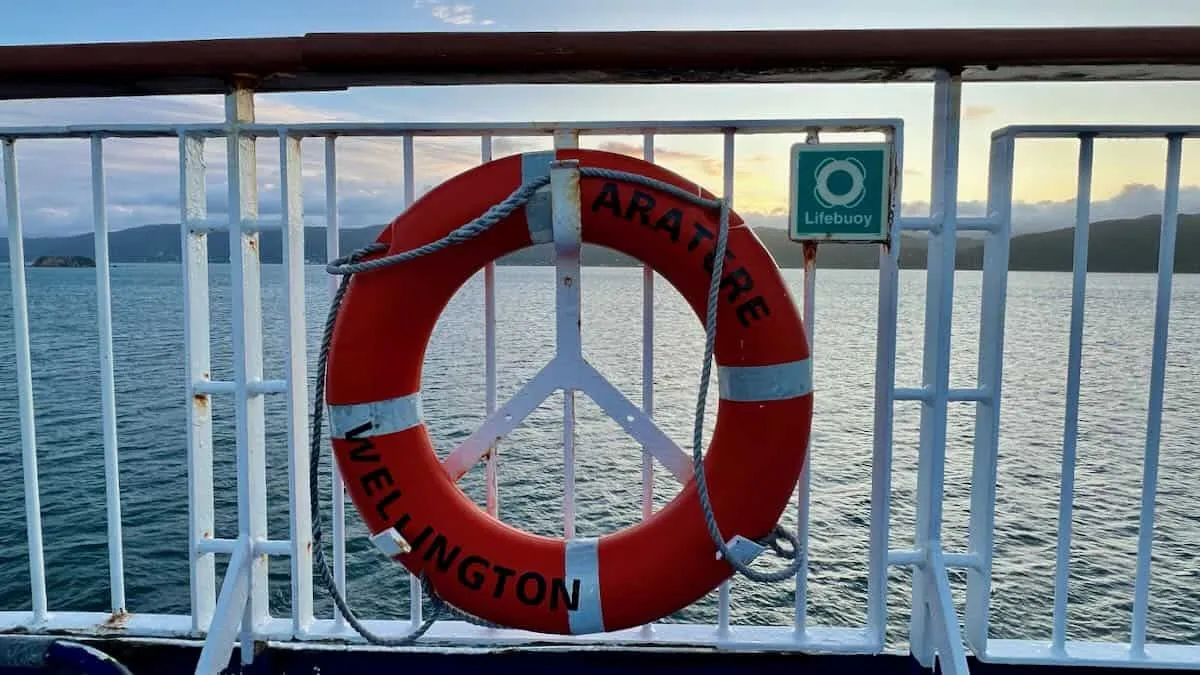 Photo: Patrick Hughes - the iconic Aratere Ferry
The Interislander Ferry service began in 1969 under the New Zealand Railways Corporation.
Since then, it has changed quite a bit and is changing even more. First, the company introduced a fleet of then modern vessels such as the Kaitaki, Kaiārahi, and Aratere, which were designed for comfort while managing the sometimes-challenging conditions of the Cook Strait.
I sailed on board the Aratere, which was showing some signs of wear and tear. That turned out to be a sign of things to come: the Aratere has since been retired, and I'll get to what happened to her below.
Then again these ships were put in place not just to transport passengers like me, they are a critical way of moving freight and rail across New Zealand's islands.
The future is taking longer to arrive than anyone hoped: the plan for new ferries that was underway when I sailed has since been cancelled and replaced with a new one. More on that in a moment.
Historical Connection to Train Travel
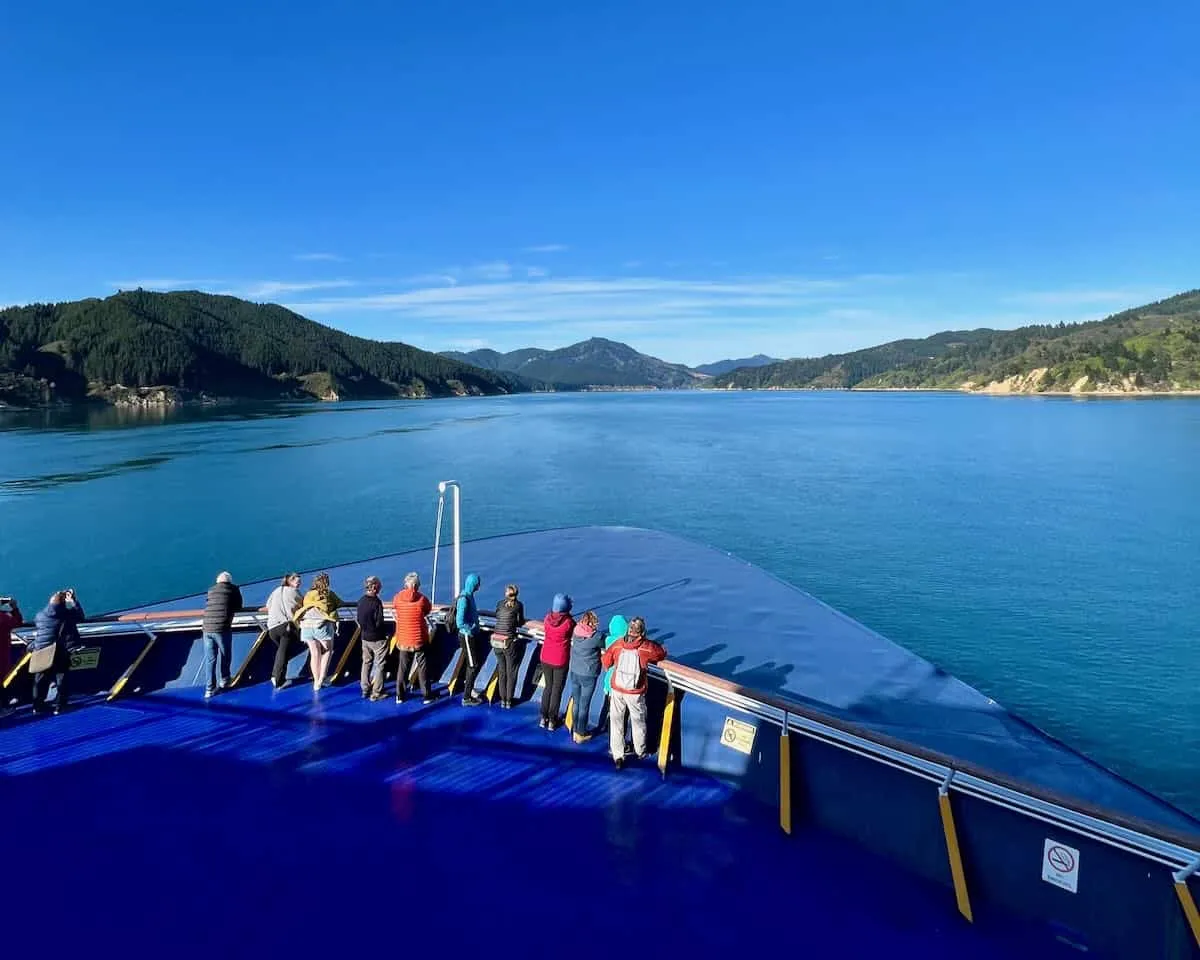 Photo: Patrick Hughes - beautiful weather as the ferry approaches Picton
I came to New Zealand from Hobart, intending to travel from Auckland all the way to Queenstown by train (as much as possible). The first leg was the Northern Explorer from Auckland to Wellington.
What I thought I needed to do was take a ferry simply get from Wellington (North Island) to Picton (South Island) to pick up my next train, the Coastal Pacific.
What I did NOT realise was how closely the Interislander Ferry was integrated into New Zealand's rail network, in fact, it was set up to be able to handle rail freight moving between the islands.
The Wellington and Picton terminals are still strategically interlinked with the railway system, though rail freight across the strait is suspended until the replacement ships arrive.
And that helps passengers like me (and maybe you) who want to connect between the iconic Northern Explorer, Coastal Pacific, and TranzAlpine train routes operated by KiwiRail's Great Journeys New Zealand.
Bluebridge Ferry
My review of the Interislander service on this page is not intended as a recommendation of that company and I have no connection with it, nor with Kiwirail. So I want you to know there's a second ferry service that competes in terms of amenities, schedules, and pricing.
Some would say that Bluebridge can have a more budget-friendly option for some travellers and it offers up to 50 sailings per week.
My Personal Experience: An Early Morning Crossing
I traveled from Wellington on the 6:15 am Interislander Ferry - an early start, but the only available option for self-booking as a foot passenger on that day, that would guarantee my arrival in plenty of time for the Coastal Pacific train. Despite the early hour, the experience was smooth.
Seating and Ambiance
The seating onboard was functional and comfortable, with plenty of seating options to relax. I'd recommend the seats in the bar area as people didn't migrate that far once they got on the ship.
Early mornings might not be everyone's preference, but it didn't mean things were peaceful! There were some school groups and lots of tourists like me on board.
Cafes and Bars
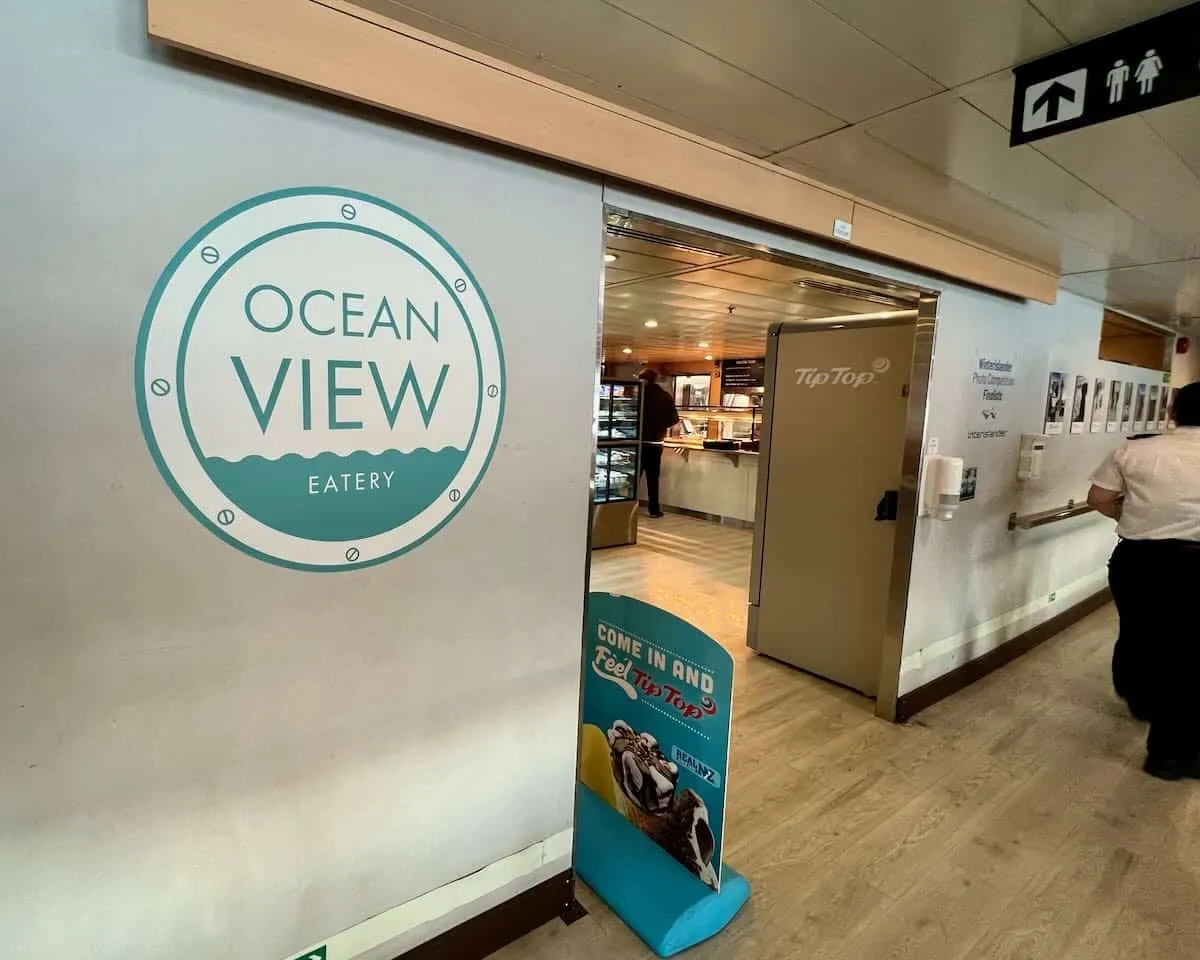 Photo: Patrick Hughes - the onboard cafe is the Ocean View Eatery
Though the bar was closed at that hour, the café was open, offering a selection of both hot and cold options - good for those needing breakfast or a caffeine kick to start the day.
I did find the options particularly expensive (for this European), with a serving of Weet Bix and milk costing around $7.50 NZD.
Outdoor Decks and Cinema
One of the best features was the availability of outdoor decks, providing stunning views of the coastline. On the Aratere, you could go up a further set of steps and get an even clearer view.
The best views on my trip were of Picton because it was bright by the time we got there at around 10am.
For passengers wanting entertainment, the ferry also offered an onboard cinema, but literally nobody was in the cinema when I went in to take a picture.
Lounges on the Interislander Ferry
There are some premium lounges on board the Interislander ferries (some features might vary between ships).
Premium Lounge
The premium lounge is available on the Kaitaki and Kaiarahi ferries. You can add access to the lounge to pretty much any ticket.
When I travelled, the price was $86 NZD per person.
Regular readers of Planet Patrick will know that I love a lounge.
For this short ferry trip, I couldn't see the value in paying that much. For an evening trip, or if I was travelling with someone who would enjoy the peace and quiet and access to alcoholic drinks, then it could be good.
Accessibility Challenges at Picton
Before we sailed for Picton, I did hear there were some accessibility challenges due to construction happening at Picton terminal.
I understood at the time that the works were part of preparations for new ferries under the since-cancelled iReX programme, and it meant the walkways getting off the ferry were not as stable as you might need.
Indeed, on arrival, it took a while to get to flat ground from the ferry and I'd be concerned that if you have mobility needs, that you might find it problematic if you were travelling alone.
The Future: New Ferries in 2029
When I sailed, the Interislander's future was meant to be hybrid, via something called the Inter-island Resilient Connection (iReX) programme: two new hybrid-electric ferries built in South Korea, one due in 2025 and the other in 2026.
That never happened. The government cancelled iReX in December 2023 over its ballooning cost, and the replacement plan was reset from scratch.
The Replacement Plan
The current plan is for two new rail-enabled ferries entering service in 2029. They will be larger than the current ships, at 200 metres long with room for 1,500 passengers and 40 rail wagons each, and they are being built by Guangzhou Shipyard International in China rather than South Korea.
Until they arrive, Interislander says it will keep running the current fleet.
What Happened to the Aratere
The ship I sailed on didn't survive the wait. The Aratere, the only rail-enabled ferry on the Cook Strait, was retired in August 2025 and sold for recycling in India after 26 years and roughly 53,000 crossings. That leaves the Interislander running the Kaitaki and Kaiarahi, and it means no rail wagons cross the strait until the new ships take over.
Next time I go back to New Zealand, perhaps the upgraded terminals in Wellington and Picton will be in place to match - I'd be interested to see how the new facilities improve the passenger experience.
Facilities at Wellington and Picton Terminals
This won't be a very long section! At Wellington, there's the check-in area, a waiting area and a small cafe that was selling hot drinks and some snacks. At Picton, the terminal felt a bit disconnected from the way we had to get off the ferry, but it had some basic facilities including toilets and had a carousel for arriving luggage.
Final Thoughts
Sometimes a ferry is just a ferry but, in this case, the route that the Interislander takes through the Cook Strait and into Marlborough Sounds is quite iconic.
Often, ferries retrace sea routes in operation for hundreds of years and this vital link might be newer than those in other parts of the world, but the history here is no less profound.
At least, step out on deck and enjoy the views of leaving Wellington or arriving into Picton's horseshoe-shaped bay (or vice versa), you won't be disappointed.