
Is the Shanghai Maglev Worth It in 2026? A Review of the World's Fastest Train
The Shanghai Maglev reaches 430 km/h and is over in minutes. What the ride is like, what it costs, and whether it is worth the detour.
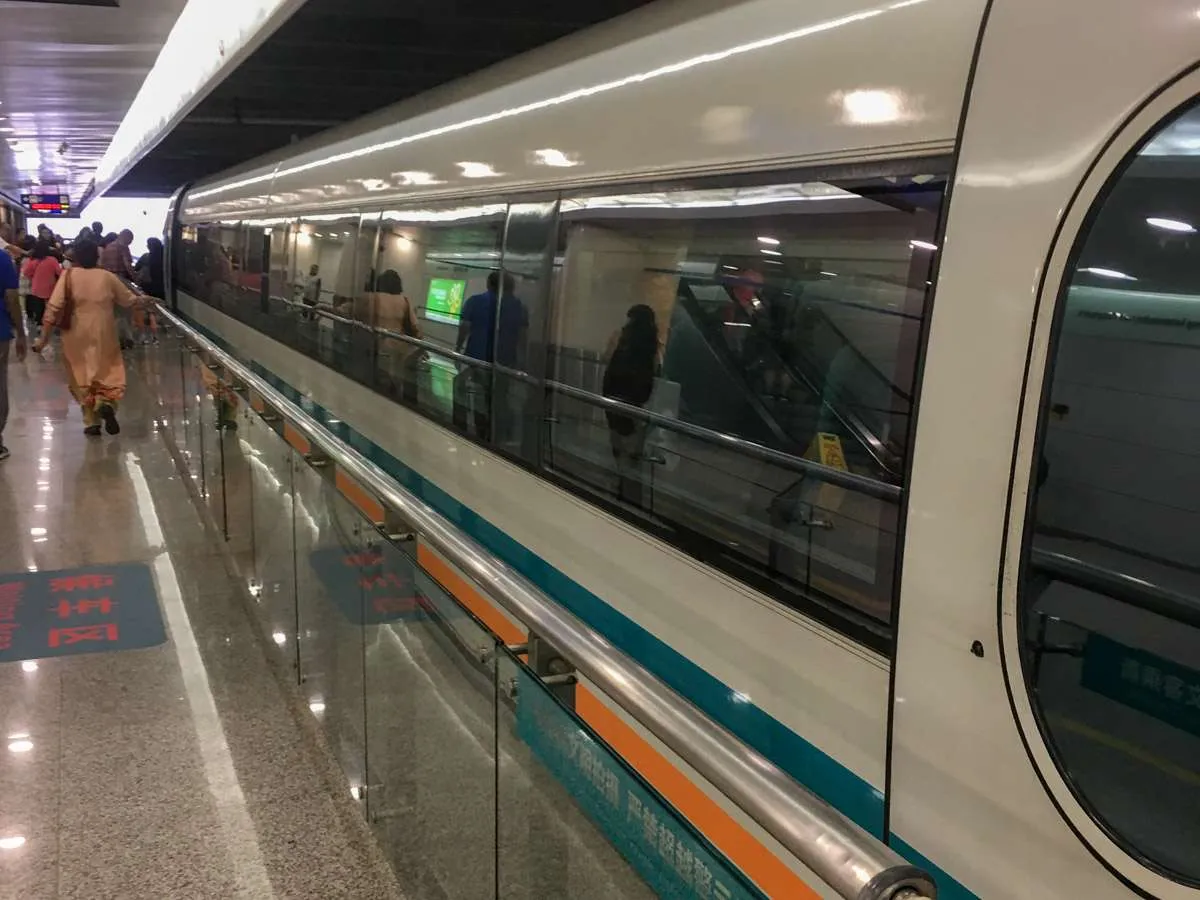
The acceleration is instant, but eerily silent. One moment you're sitting in what feels like an airplane cabin, the next you're watching the digital speedometer climb past 300 km/h, and you can barely feel it. Welcome to the Shanghai Maglev, where magnetic levitation makes (up to) 430 km/h feel like floating on air.
I took the Shanghai Maglev in 2017 during my first trip to Shanghai and it had been on my list for years. It runs from Pudong Airport to "central" Shanghai. Experiencing the fastest train the world was fascinating, but I've got mixed feelings about whether this engineering marvel is worth your time and money, plus tips if you decide to try it.
Essential Shanghai Travel Resources
Tickets
Book Shanghai Maglev tickets on the official Maglev booking website. Book Maglev tickets
Stay On the Bund
Choose from the hotel options in the most popular area for Shanghai visitors. Find hotels on the Bund
Popular Tickets
See the Bund, Nanjing Road, Yu Garden and the Oriental Pearl Tower on a private day tour. Book a Shanghai highlights tour
MetroMan Map
Get this Chinese-produced (English-language) metro map. Get the MetroMan map
What Makes the Shanghai Maglev Special?
The Shanghai Maglev isn't just another fast train, it gives you some sense about how the future of transportation might unfold. It uses German Transrapid technology, floating above its guideway using magnetic levitation, which eliminates friction and enables speeds that would be impossible with conventional rail (see: Sydney Airport Link or the KLIA Ekspres!).
The key facts:
- Maximum speed: 431 km/h (268 mph) - fastest in commercial service
- Journey time: 8 minutes from Pudong Airport to Longyang Road (stay tuned for more on that!)
- Distance covered: 30 kilometers (19 miles)
- Operating since: 2004, making it the world's first commercial high-speed maglev
What struck me most wasn't just the speed, but the complete absence of the rhythmic clacking you associate with trains. There's just smooth, silent acceleration that makes you question whether you're actually moving at all, until you look up at the digital speed display at the end of every carriage.
Pro Tip: If you decide to book this trip, scroll down for my best Maglev tips, from booking to where to sit.
The Reality Check: My Experience
✅ Thrill factor: Watching the digital speedometer hit 400+ km/h is unforgettable.
❌ Doesn't reach the city: You'll still need to transfer to the metro or a taxi to reach downtown Shanghai.
The Good
The thrill factor is real. There's something genuinely exciting about watching that speedometer climb past 400 km/h while you're sitting comfortably in an air-conditioned cabin. The train geek in me was thrilled.
It's very efficient from the airport. If you're staying near Longyang Road or don't mind the metro connection, the maglev gets you off the airport grounds and into Shanghai's transport network faster than any alternative.
The ride quality is exceptional. The magnetic levitation creates an almost ethereal smoothness, because the entire train is avoiding contact with the ground.
The Not-So-Good
It's over before you know it. Eight minutes sounds reasonable on paper, but when you're paying premium prices for a once-in-a-lifetime experience, you find yourself wishing it lasted longer! Just as you're settling in and getting a sense of the speed, you're already slowing down for arrival.
It doesn't actually go to Shanghai. This was my biggest surprise. The maglev terminates at Longyang Road, which is definitely not central Shanghai. You'll need to transfer to the metro (Line 2, 7, or 16) to reach the city centre, adding time, cost, and faff to your journey.
The price premium is comparatively high. Bear with me. A one-way ticket costs ¥50 (around £5.50 or $7) which isn't crazy compared to much of the world, but it's 5 times the usual metro price (¥10), and you'll still have to connect to your destination.
The Speed Question
This might surprise you: the train doesn't always hit its maximum 431 km/h speed. Is the maglev a fraud?! I believe the speed peaked at around 300 km/h, which is still incredibly fast but not quite the record-breaking experience I'd anticipated. The full-speed runs seem to depend on timing, traffic, and "operational considerations".
How It Compares: Pudong Airport to Shanghai City Center
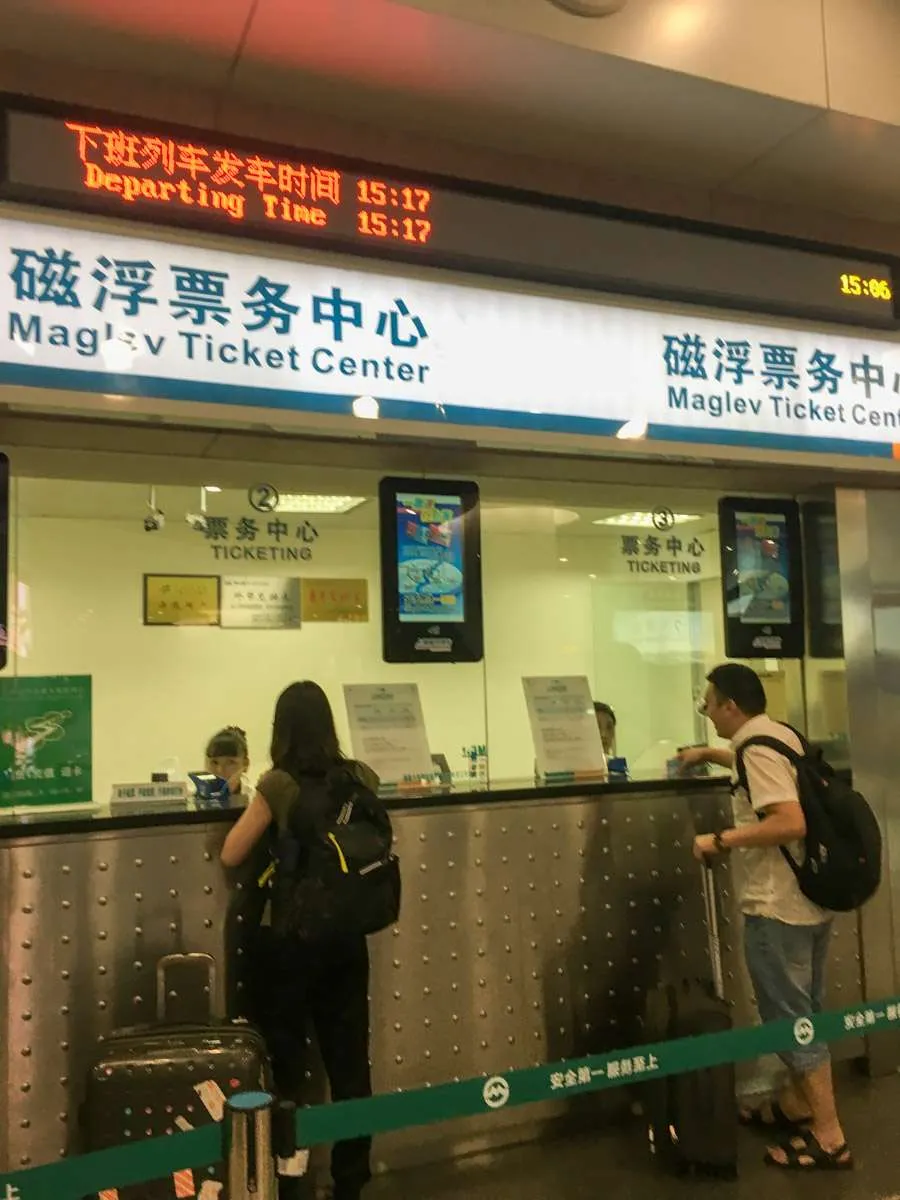 The ticket desk at Shanghai Pudong Airport
If you're working through whether to book the Maglev, let's first look at the alternatives:
| Transport Method | Cost | Total Time | Convenience |
|---|---|---|---|
| Maglev + Metro | ¥60 | ~25 minutes | High-tech experience, one transfer |
| Metro only | ¥10 | ~60 minutes | Budget-friendly, direct to many areas |
| Taxi | ¥150-200 | 45-60 minutes | Door-to-door, no transfers |
| Airport Shuttle | ¥30 | ~60 minutes | Mid-range option, limited stops |
The maglev wins on speed and novelty, but loses on cost-effectiveness and convenience for most visitors.
Is the Shanghai Maglev Worth It?
Yes, if you're:
- A transportation nerd who appreciates cutting-edge technology (takes selfie)
- You want the experience
- Staying near Longyang Road or areas well-connected to Lines 2, 7, or 16
- Arriving with light luggage and don't mind transfers
Maybe skip it if you're:
- Heading to areas poorly served by the metro lines from Longyang Road
- Carrying heavy luggage and prefer door-to-door transport
- You care more about efficiency than anything else
Practical Tips for Taking the Shanghai Maglev
Booking and tickets: You can buy tickets at the station or book online. I took standard class for the 8-minute journey and it was perfectly fine. It think VIP class feels unnecessary for such a short trip.
Photography: Sit on the right side for better views during the journey. The speed makes photography challenging, but the experience itself is worth capturing.
Timing: The maglev runs every 15-20 minutes during peak hours. Check the schedule if you're on a tight connection.
The museum: There's a small maglev technology museum at Longyang Road station if you want to learn more about how the system works.
Frequently Asked Questions
The maximum commercial speed is 431 km/h (268 mph), though regular service often peaks around 300-301 km/h. Either way, it's still the fastest commercial train service in the world.
The journey from Pudong Airport to Longyang Road takes exactly 8 minutes. Factor in waiting time and the metro connection for your total travel time.
It depends on your priorities. For the experience and engineering marvel, absolutely. For pure transportation efficiency, the metro is more practical and budget-friendly.
It connects Pudong International Airport to Longyang Road Metro Station. From there, you'll need to transfer to Shanghai Metro Lines 2, 7, or 16 to reach central Shanghai.
The Bottom Line
The Shanghai Maglev is definitely a triumph of engineering, but some people might find it and a somewhat frustrating travel experience. Yes, it's fast and smooth, but that limited route makes it feel more like a demonstration than a practical transfer to Shanghai centre.
Having said that, if you're visiting Shanghai and have the faintest interest in trains, it's worth experiencing once. Take the metro back to the airport! The sensation of smooth speed is really unique, just don't expect this to be the most practical airport transfer option you've experienced.
Read more of my practical airport to city centre smart connections!