
Where to Stay in Phuket in 2026: Best Areas for First-Timers and Solo Travellers
Phuket works if you pick the right base. Patong is loud, Kata and Kamala are calmer, Old Town has the culture. How to choose between them.
Some links on this page are affiliate links. If you book through them I earn a small commission at no extra cost to you. I only recommend places I have stayed or would stay myself.
Phuket is the third stop on Thailand's most-travelled loop after Bangkok and Chiang Mai, and it is the one that trips people up. Not because it is difficult, but because the island has several completely different versions of itself and picking the wrong base can shape the whole trip.
I did not go to Phuket on my first Thailand trip precisely because of what I had read about Patong. Bangla Road runs through its centre and is, unambiguously, the heart of Phuket's sex trade. After dark it is loud, neon-lit, and explicitly geared to a specific kind of tourism. That visibility made me skip the island initially. What I did not realise at the time was that Patong is just one corner of a large island, and there are quieter zones - Kata, Kamala, and Old Phuket Town - that give you beach access or cultural depth without any of that atmosphere.
This guide covers those areas: what each one actually delivers, what it costs, and how to choose between them based on what you want from the trip.
Patong and Bangla Road - the polarising party base
Let me be clear about what Bangla Road is, because it affects the whole question of where you stay. After dark, the street transforms: go-go bars with pole dancers visible from the street, beer bars with hostesses calling out, loud music competing from every doorway, and touts pushing ping-pong show flyers. It is not threatening - tourist police patrol regularly - but it is overwhelming if that is not your scene, and there is no middle ground. You are either comfortable with it or you are not.
During the day Patong is quiet, and the northern end of Patong Beach is fine at any time. Budget accommodation starts around 12 to 16 GBP per night here, which is the cheapest on the island. If you are staying for the beer and the beach and Bangla Road does not bother you, Patong makes sense. If you are booking Patong for budget reasons but would rather avoid the strip, check the map carefully: northern Patong Beach and inland spots keep you away from the main action.
For everyone else, the beaches below are the better call.
Kata and Kamala - calmer beach bases with value
Kata Beach sits about 15 minutes south of Patong by taxi and feels like a different island. The beach curves around a bay with soft sand and clear water that is good for swimming. Mid-range hotels line the main road back from the beach, running 32 to 55 GBP per night. You will find normal restaurants, 7-Elevens, dive shops, and Thai massage places without the overtly sexual undertones. Kata Noi, the smaller bay immediately south, gets even fewer people - a handful of beachfront restaurants and quieter hotels make it the best option if crowds stress you out.
My approach for this trip was to stay in Kata for the beach access without the Patong scene. The extra cost over Patong buys peace and a different crowd, which for most people is worth it.
Kamala Beach, north of Patong, is similar but longer and less developed. Accommodation runs a bit cheaper - 25 to 45 GBP per night mid-range - and the vibe skews toward long-stay expats and families. Beach vendors are less pushy, and evenings are quiet. Both Kata and Kamala need transport to reach other parts of Phuket (4 to 8 GBP via Grab), so they work best if you are happy to stay put rather than bar-hopping across beaches.
Old Phuket Town - culture, cafes, Sunday Walking Street
Old Phuket Town is the part of Phuket that most beach-bound travellers skip entirely, and that is a mistake. I flew in from Oslo, six hours of time difference in my system, and went straight here. Two nights, no beach. Just restaurants, temples, colourful streets, and the kind of flat, walkable neighbourhood that is ideal when your body clock is six hours behind and you do not trust yourself to make good decisions.
It was one of the better calls I made on that trip.
The town sits inland, away from the beaches, and focuses on Sino-Portuguese architecture, street art, and local food. Accommodation here is cheaper - 20 to 35 GBP per night mid-range - and it suits people who want culture over sand, or who are arriving jet-lagged and want to ease in before hitting the coast. You need transport to reach beaches (15 to 20 minutes to Patong or about 40 minutes to Kata via Grab, roughly 4 to 7 GBP), but it is a good base if you are island-hopping and only need the beach for day trips.
Soi Romanee
This is the street you will see in every photo of Old Town Phuket. It is 125 metres of Sino-Portuguese shophouses painted in pastel colours, strung with Chinese lanterns, and ranked the 19th most beautiful street in the world. That sounds like it should be overrun with tour groups, but when I walked it on a weekday morning it was quiet - a few photographers, a couple browsing the boutique shops, and me.
The history is worth knowing. Soi Romanee was once the red-light district for Chinese labourers who came to work Phuket's tin mines. Brothels, opium houses, gambling dens. Now it is boutique cafes and ice cream shops. The architecture survived because it was too pretty to demolish.
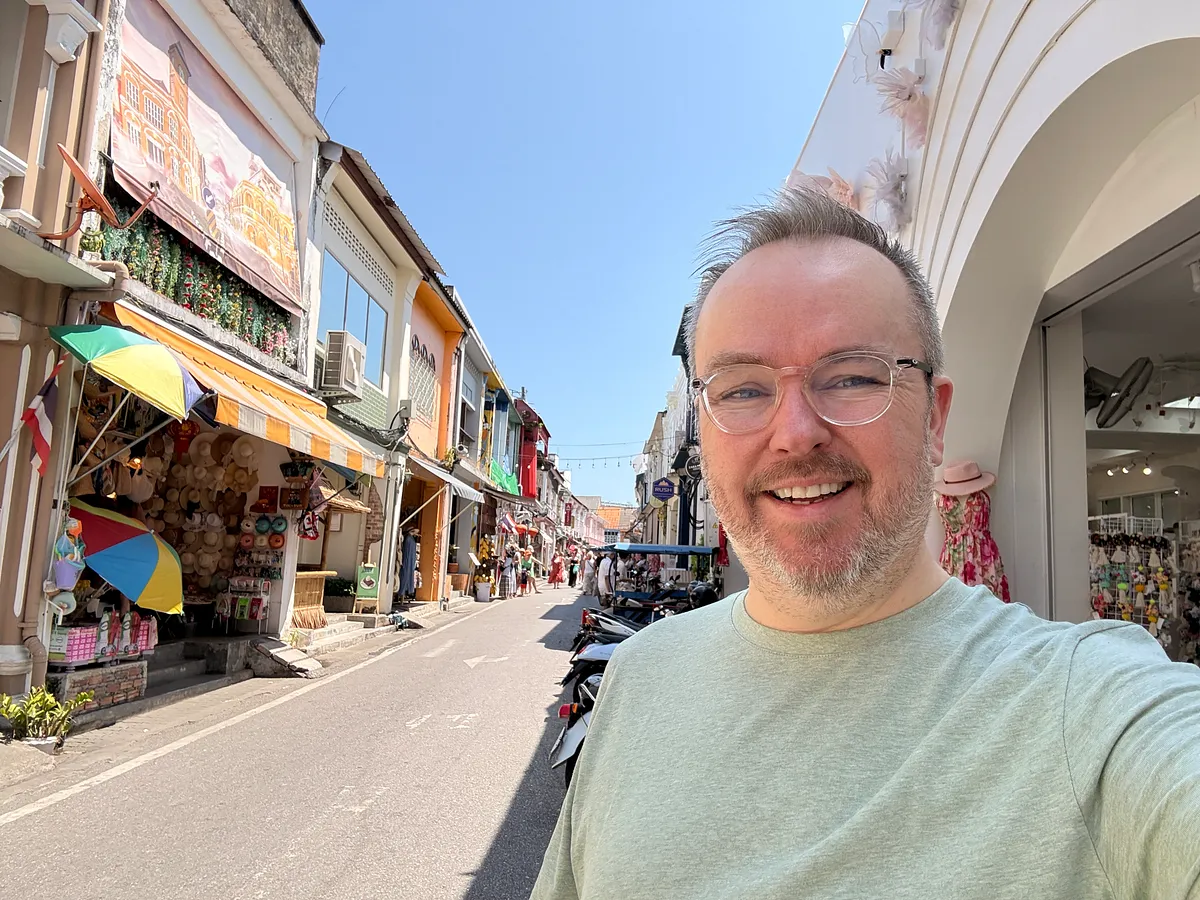
Colourful shophouses and street vendors line Soi Romanee in Phuket Old Town
Torry's Ice Cream and the mango queue
Halfway down Soi Romanee, in a Sino-Portuguese house with a pink facade, Torry's Ice Cream makes flavours like lychee sorbet, Phuket pineapple, and fish sauce caramel. The Bi Co Moi - coconut ice cream on black glutinous rice - is the one to go for. It sounds odd. It works.
Next door, Hey Mango draws queues of 20-plus people for fresh mango juice at around 100 THB a go. I did not join the queue - twenty people deep in 30-degree heat is a hard sell when there is ice cream next door - but the demand is there if you want it.
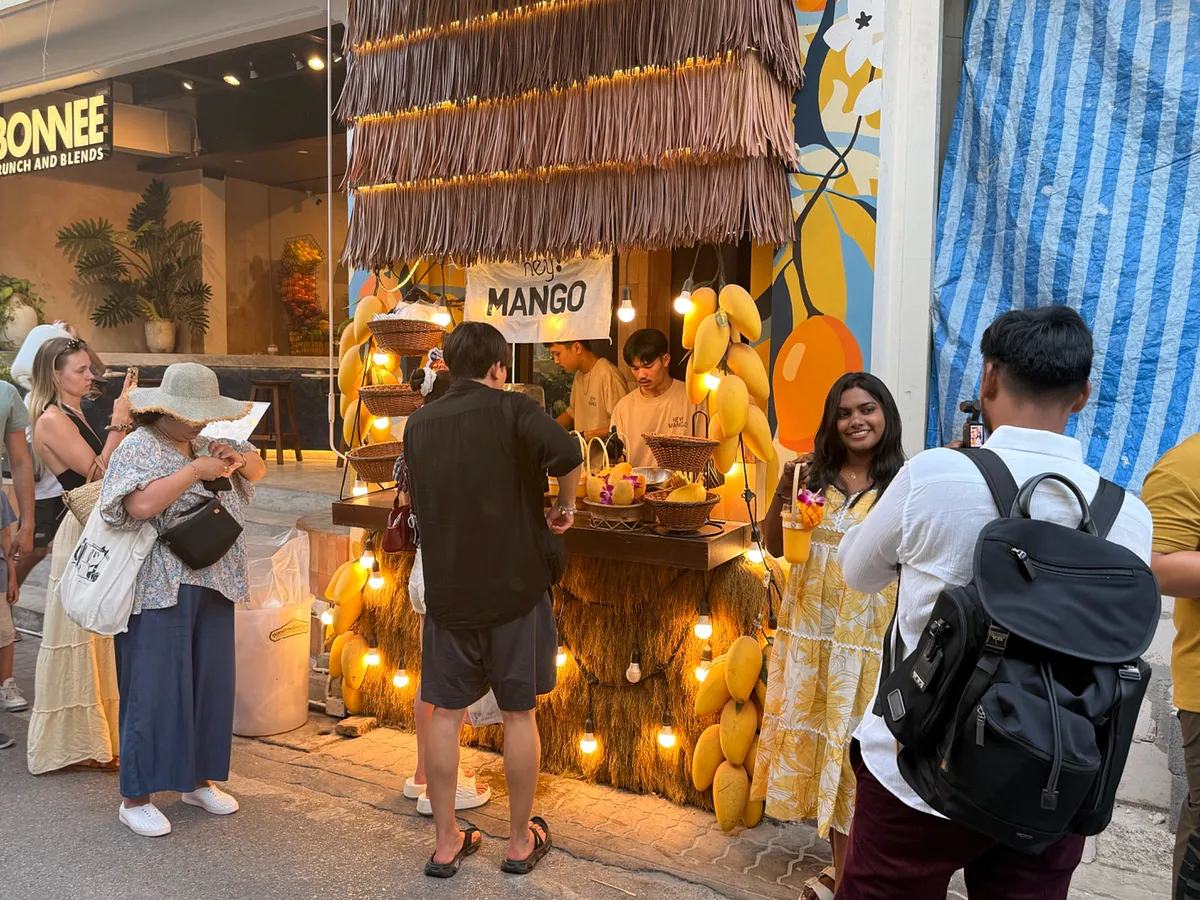
Street vendor selling mango smoothies from a thatched hut on Soi Romanee
Wat Mongkol Nimit
The Buddhist temple at the end of Soi Romanee, right beside The Memory at On On Hotel. It is not a major tourist temple like the Big Buddha - it is a neighbourhood temple. Locals were praying when I visited. I walked through the grounds, looked at the architecture, and left after fifteen minutes. Not everything needs to be a two-hour experience.
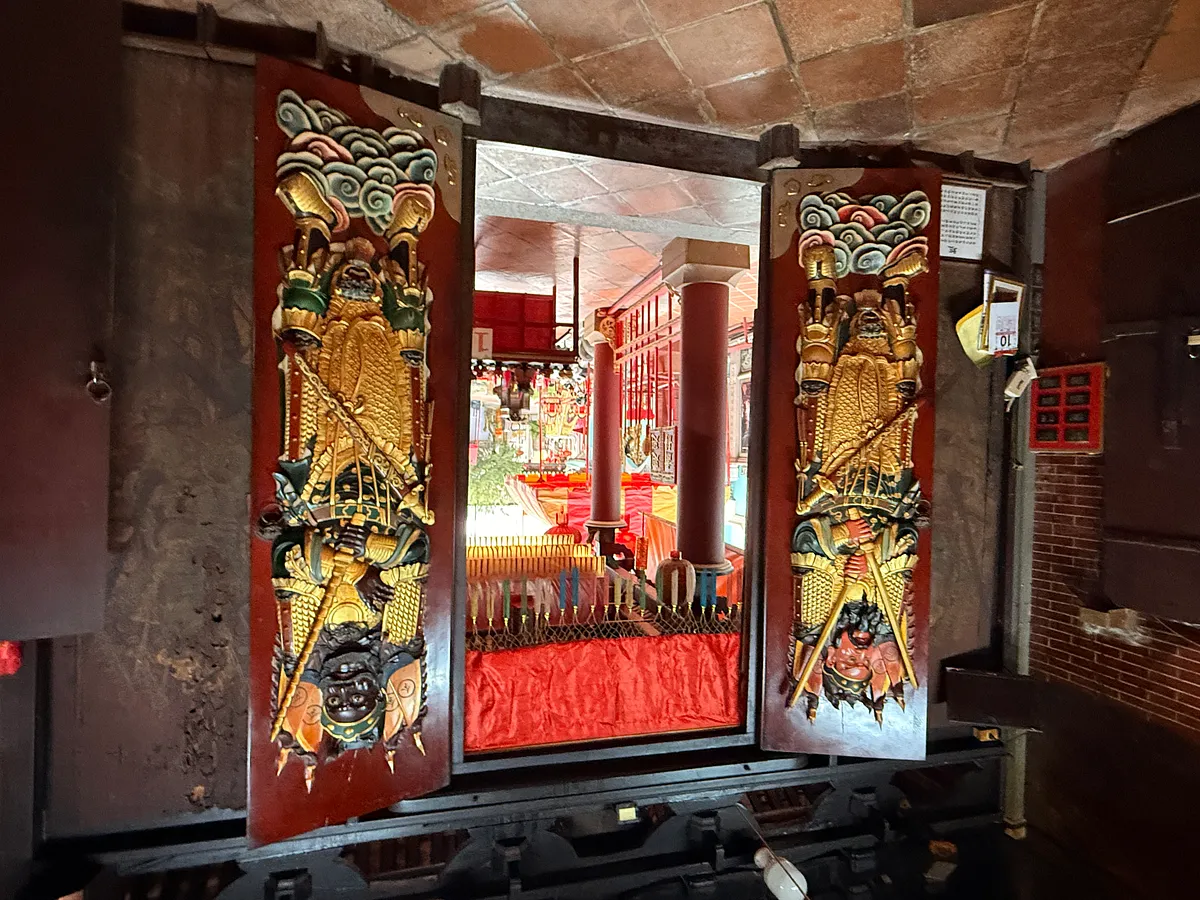
Traditional door guardians at a Phuket temple
The Memory at On On Hotel
This is where Leonardo DiCaprio's character stays in The Beach (2000). The hotel has been renovated since then, but the Sino-Portuguese facade is original. If I were doing this trip again, I would stay here instead of where I actually stayed.
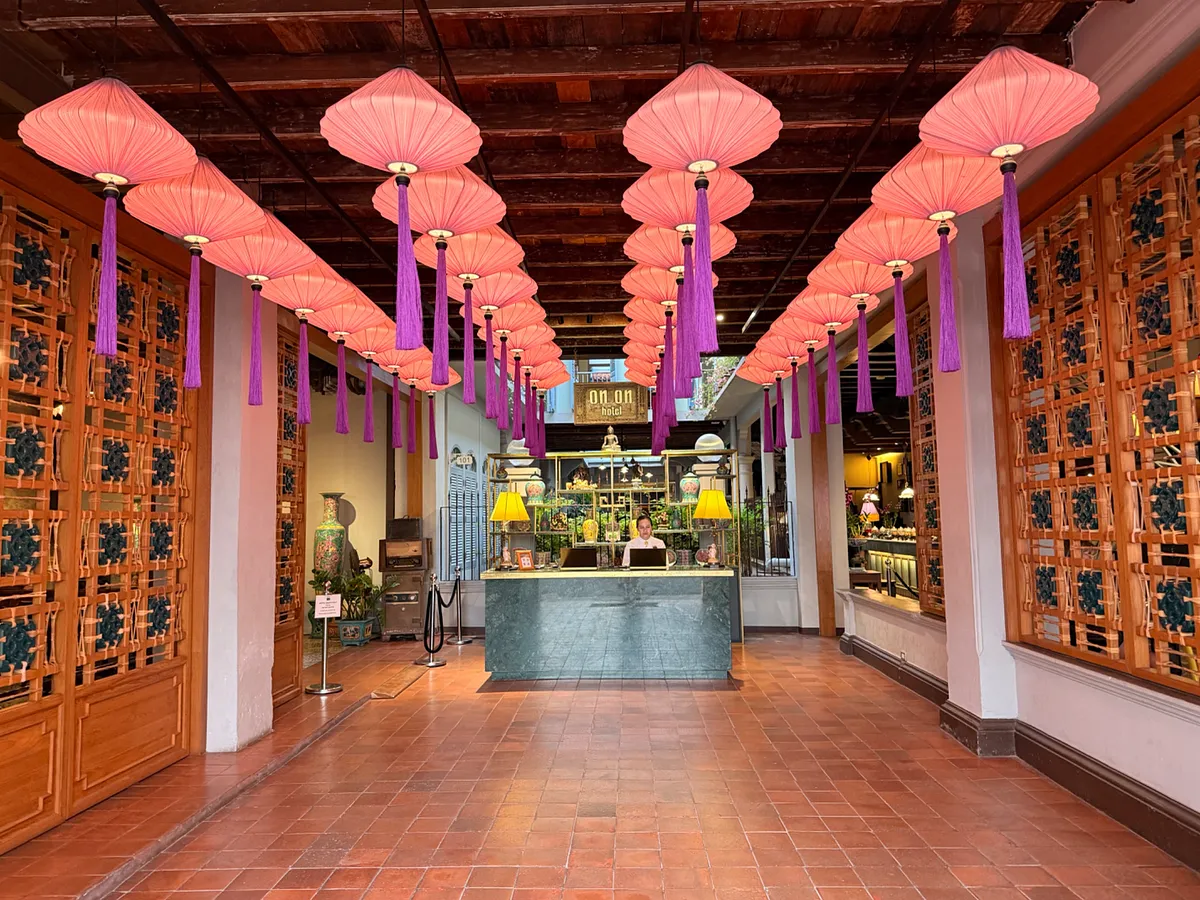
On On Hotel entrance decorated with traditional pink lanterns
Walking the architecture
The real activity in Old Town is walking. The Sino-Portuguese architecture runs along Thalang Road, Phangnga Road, and the connecting sois. There is no specific route to follow. Turn down any side street and you will find coloured shutters, Chinese shrines, and small cafes.
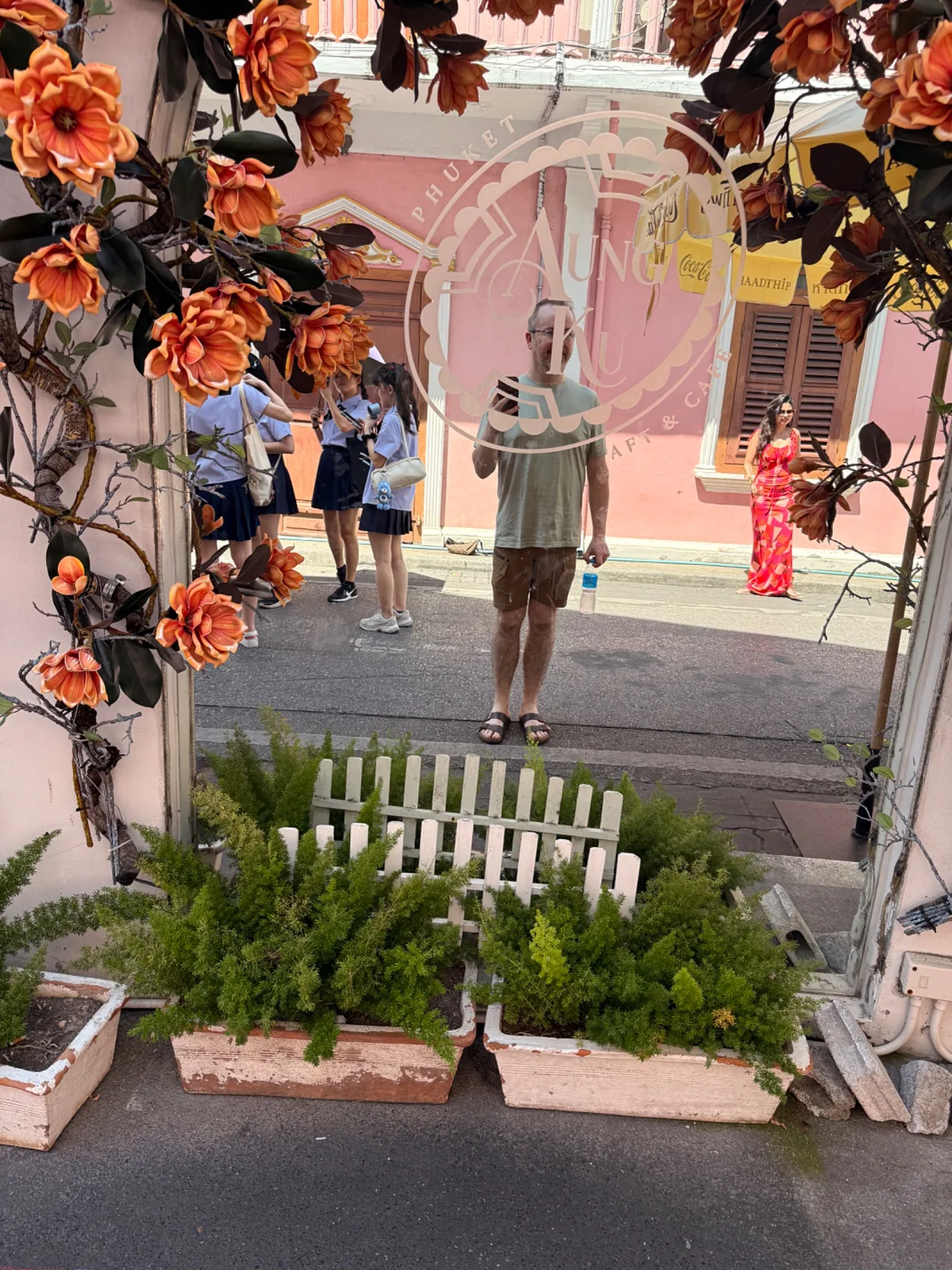
Decorative archway with orange flowers frames a street view at Soi Romanee
Two things to know. First, it is hot. I was here in March and it was 30 degrees with humidity that makes your glasses fog up when you step outside from air conditioning. Walk early morning or late afternoon. Second, the roads. There are no pedestrian crossings in most of Old Town. Cars and motorbikes do not stop. My strategy was to find a local crossing the road and shadow them. Look both ways, commit, and walk at a steady pace.
Sunday Walking Street runs on Thalang Road weekly, with food stalls, crafts, and live music. It is touristy but less aggressive than Bangkok markets. During the week the area is quiet, good for slow mornings with coffee.
Where to eat in Old Town
The Neighbors Cafe on Phangnga Road does Western-leaning brunch - I had avocado toast on my first jet-lagged morning, 259 THB, and it was fine. You are paying Western-adjacent prices for Western-style food. If you want value, One Chun Cafe and Restaurant on Thep Krasatti Road is the better call: a Michelin Bib Gourmand in a 19th-century Sino-Portuguese building filled with vintage radios and antique clocks. I paid 225 THB for a chicken cashew nut main with rice. That is 5.30 EUR at a Michelin-recognised restaurant. Eat local.
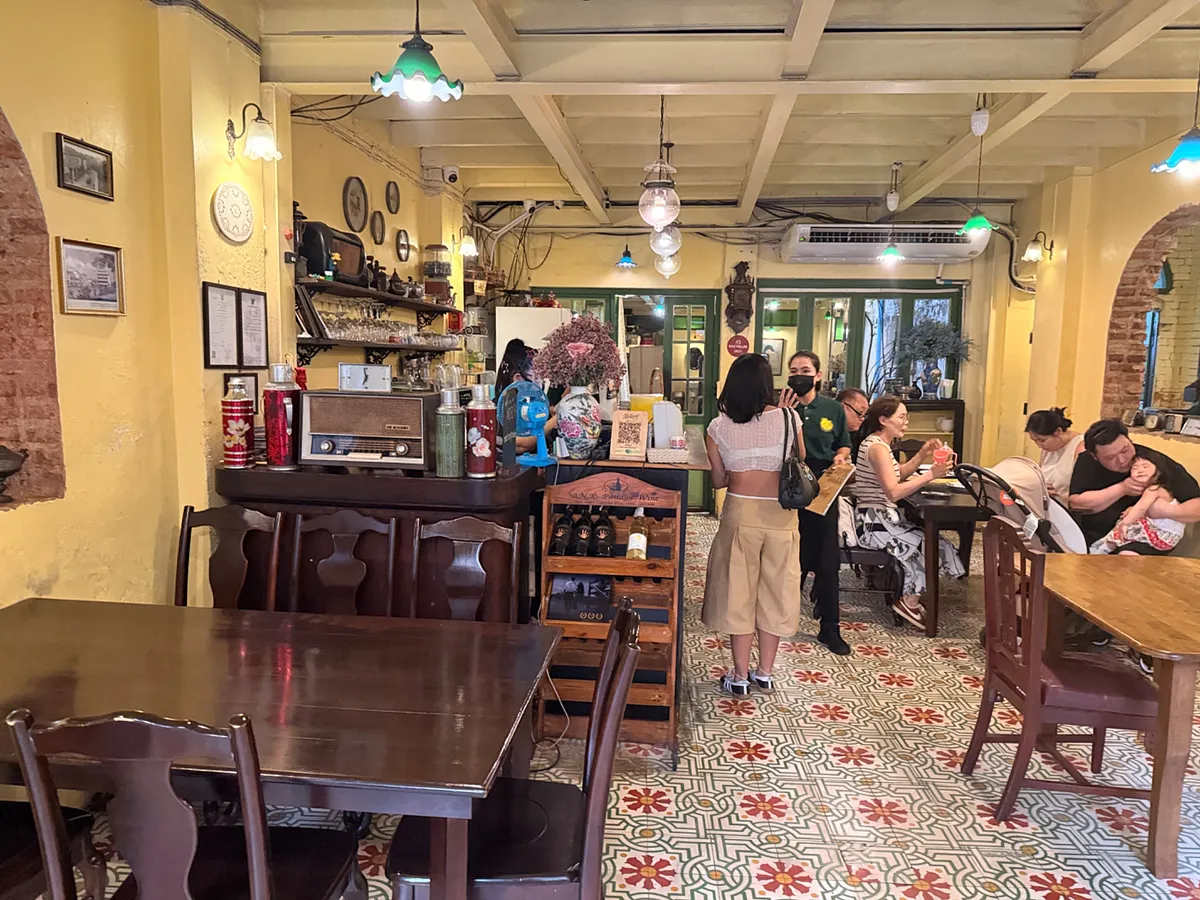
One Chun: vintage cafe with Sino-Portuguese tiles and antique furnishings
Where to stay in Old Town
I stayed at Sino House Hotel - spacious rooms, friendly staff, about 38 GBP per night in high season. But the humidity in Phuket is serious, and the bathroom showed it: mould, drain smell. Fine for two nights, not for a longer stay.
Next time I would book The Memory at On On Hotel. Central location on Phangnga Road, right in the middle of Old Town, walking distance from Soi Romanee and both restaurants above.
Check stays in Old Phuket Town
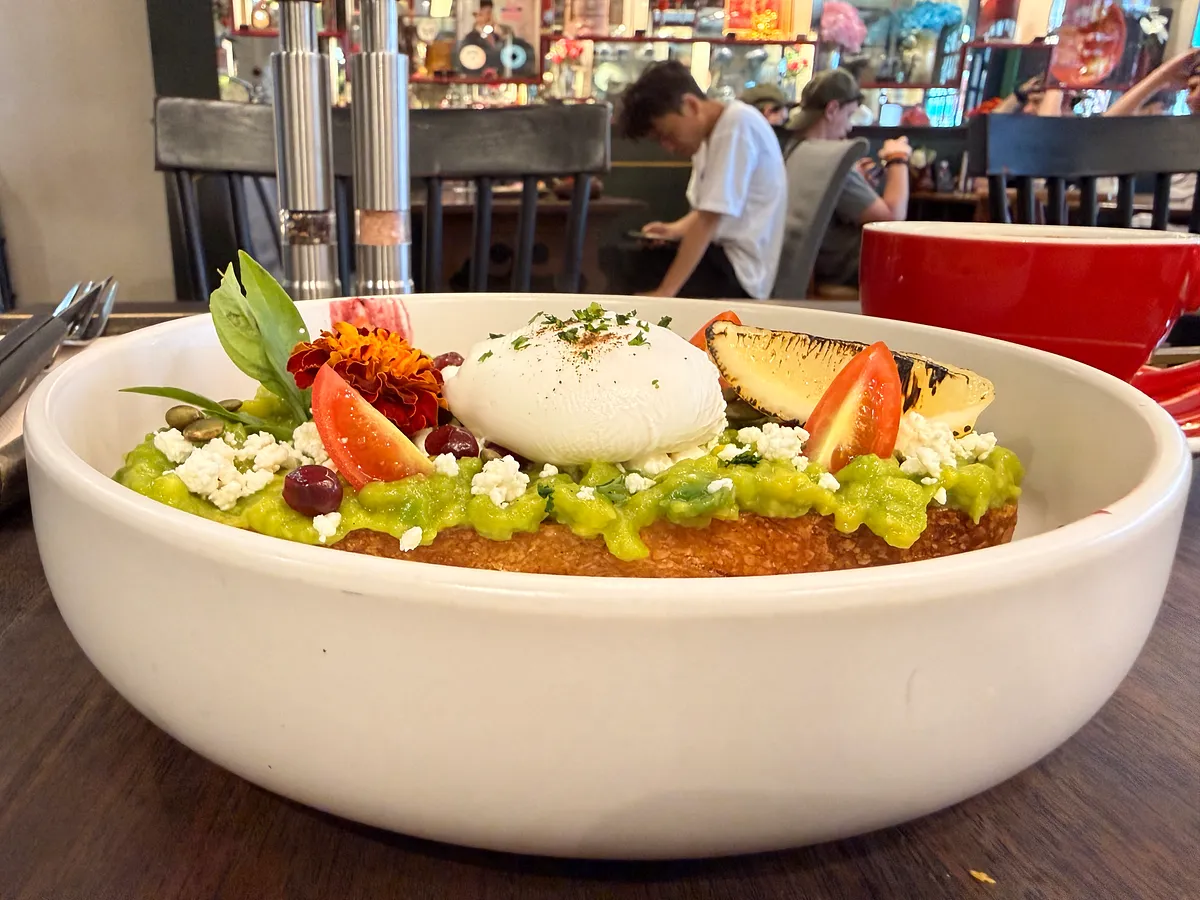
Brunch at The Neighbors Cafe, Phuket Old Town
Getting to Phuket and around
Most visitors fly into Phuket International Airport. From Bangkok it is a 1.5-hour domestic flight, costing 20 to 50 GBP if booked ahead - prices spike during holidays, so search 4 to 6 weeks out. A Grab from the airport to Old Town costs around 676 THB (about 16 GBP). To Kata Beach expect a similar fare.
Phuket has no train and limited public transport, so Grab, taxis, or scooter rental are your main options on the ground. Scooters cost 6 to 8 GBP per day but traffic is heavy and accidents are common among tourists. Only rent one if you are confident, and always wear a helmet. Grab rides between beaches run 4 to 8 GBP and are the safer default.
Download Grab before you arrive. It shows the fare upfront, tracks your route, and avoids fare negotiation entirely.
When to go and what it costs
Phuket's high season runs November to April (27 to 32 degrees), with calm seas and clear skies for beaches and island tours. Avoid May to October if island tours matter to you - monsoon rains make boat trips unreliable and beaches get rough seas. The rain is not constant (sunny mornings, then afternoon downpours), but tours cancel and seas get rough.
Peak crowds hit January to March. Book flights and accommodation ahead to save 20 to 30 per cent. November and April offer the best balance of weather and value.
Daily budget for solo travellers: 40 to 65 GBP in Phuket covers mid-range accommodation, local food, transport, and one activity. Island tours to Phi Phi or James Bond Island cost 32 to 65 GBP including lunch and snorkelling.
| Area | Accommodation per night | Notes |
|---|---|---|
| Patong | 12-16 GBP budget | Cheapest option; Bangla Road is unavoidable after dark |
| Kamala | 25-45 GBP mid-range | Long-stay expat vibe, quieter than Kata |
| Kata / Kata Noi | 32-55 GBP mid-range | Best balance of beach and calm |
| Old Phuket Town | 20-35 GBP mid-range | No beach; cultural base, easy walking |
Phuket for solo travellers
Solo dining in Old Town is completely normal. I ate alone at every meal for two days and never felt like an outlier - locals and tourists alike do it. Cafe culture here welcomes anyone with an appetite, and One Chun especially has tables spaced well with enough going on visually that you do not need your phone for company.
In Kata and Kamala, beach-town restaurants are similarly easy to navigate solo. The relaxed pace suits people who want to eat, swim, and move at their own schedule without negotiating with anyone.
On safety, Phuket ranked 10th globally for daytime safety in a 2023 Travelbag study (83 out of 100). Tourist police are visible. The sex-trade zones are not dangerous but they are overt - stick to well-lit main streets if you are out late in Patong. Standard precautions apply elsewhere: Grab over unmarked tuk-tuks, bag zipped, phone in a front pocket in busy areas.
The only genuinely tricky safety issue in Old Town is road traffic. No pedestrian crossings, no traffic lights for walkers. Find a local crossing and move with them.
Which Thailand base is right for you?
Phuket is the beach and island leg of the trip. If you want temples, street food, and city culture, that is what Bangkok and Chiang Mai are for. Phuket delivers on beaches, island-hopping, and a slower pace - and Old Town gives you a cultural buffer if you want to land gently before hitting the coast.
If you have two weeks in Thailand, the sequence that works is Bangkok first, Chiang Mai for the cooler cultural base, then Phuket to finish at the beach. Each stop prepares you for the next.
We receive a commission for any products you purchase using our links, at no extra cost to you.