Try searching for a destination, airline, or route
Where to Stay in Cape Town
Where to stay in Cape Town: five neighbourhoods compared with safety context, hotel picks at every budget. Sea Point, Camps Bay, V&A Waterfront and more.
By Patrick Hughes · 9 min read · south-africa · May 2026
Some links on this page are affiliate links. If you book through them I earn a small commission at no extra cost to you.
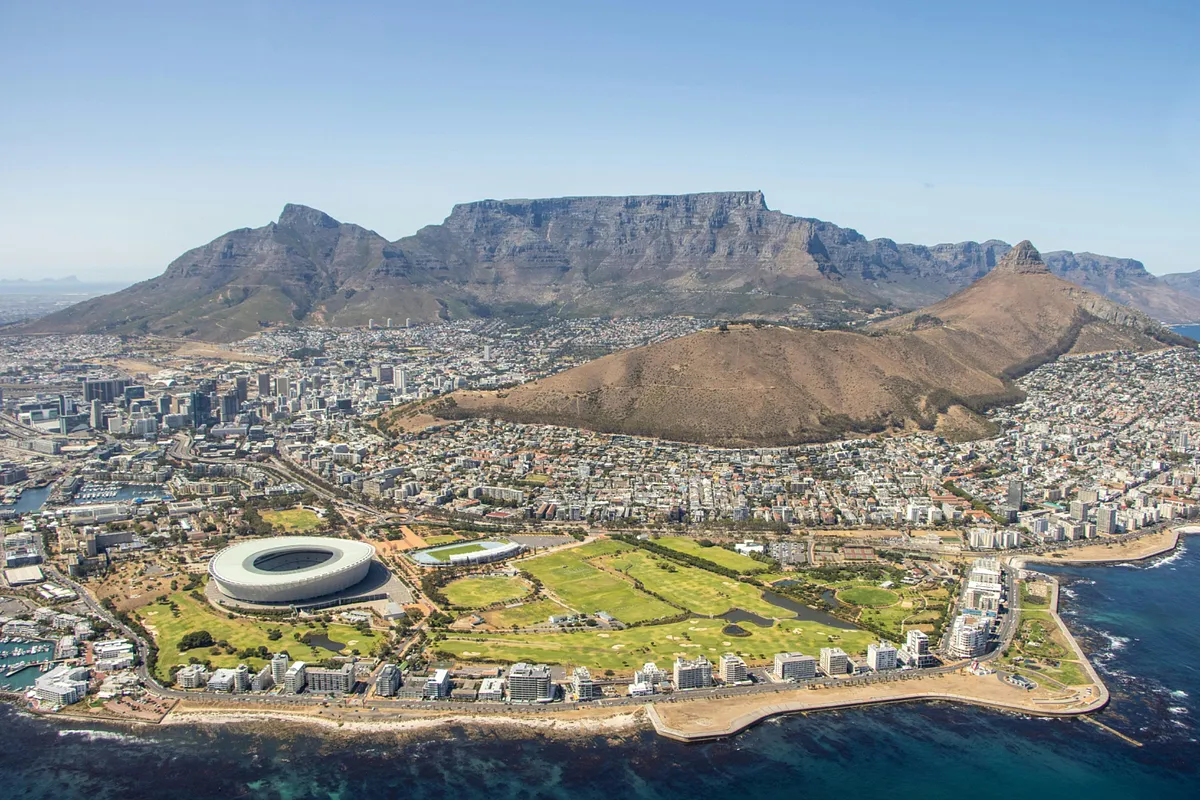
Cape Town arranges itself logically. Table Mountain rises directly behind the city bowl, and the Atlantic seaboard runs north from there through Green Point and Sea Point toward the clifftop suburbs at Camps Bay and Clifton. The V&A Waterfront anchors the working harbour between the mountain and the ocean. There's no bad base here - but each of these areas has a different character, a different price band, and a different relationship with safety after dark, which matters in Cape Town in a way it does not in most European cities.
I've spent time in Johannesburg, but my last proposed visit to Cape Town got cut off by a cancelled flight from Dubai during the latest Middle East conflict. I'm writing this post based on the research I did on the areas I'd like to stay, so here's my take. For a broader look at travelling in South Africa, I've also written a South Africa travel guide starting from Johannesburg.
Sea Point and Green Point stretch along the Atlantic seaboard north of the city bowl, connected by a promenade running from the tidal pools at Three Anchor Bay through Sea Point. The mountain sits behind, the ocean in front. It's walkable, well-lit, and tourist-policed - among the safest parts of the city after dark.
Green Point is slightly closer to the V&A Waterfront and Cape Town Stadium - better if you need regular access to that side. Sea Point has the better restaurants: a mix of Greek, Italian, and seafood at better value than Waterfront prices.
Walk to sights
Sea Point Promenade 2 min; Cape Town Stadium 10 min
Food
Greek, Italian, seafood; better value than the Waterfront
Price band
R2,400 - R5,600 / night (approx. €120 - €280)
Best for beach and luxury
Camps Bay & Clifton
Camps Bay sits on the Atlantic side of the Twelve Apostles mountain range, with a wide beach strip and a row of restaurants and bars facing the ocean. The views are exceptional - Table Mountain to the north, the sea directly in front. It's one of the most photographed spots in South Africa, and the hotels reflect that in their pricing.
Clifton, a few minutes south of Camps Bay, has quieter beaches and fewer hotels - accommodation here tends toward self-catering apartments and private rentals. The trade-off for both areas is convenience: you're 15-20 minutes from the V&A Waterfront by car, and walking between Camps Bay and the rest of the city is not practical.
Walk to sights
Camps Bay Beach 1 min; V&A Waterfront 20 min by car
Food
High-end dining strip; limited casual options
Price band
R4,000 - R10,000 / night
Best for convenience
V&A Waterfront
The V&A Waterfront is Cape Town's working harbour turned tourist zone - it's where you catch the ferry to Robben Island, where the shops and restaurants cluster, and where a significant share of the city's hotel stock sits. It's efficient, safe, well-maintained, and somewhat lacking in character in the way that high-end harbour developments tend to be.
The practical case for staying here is strong: you're a few minutes' walk from the ferry terminal, a short Uber from the city centre, and the promenade is pleasant. The trade-off is that you can feel the tourist industry working in every direction. It suits itinerary-heavy trips more than slower ones.
Walk to sights
Robben Island ferry 5 min; aquarium and clock tower on-site
Food
Every cuisine available; tourist prices across the board
Price band
R2,000 - R8,000 / night
Best for local atmosphere
City Bowl & Gardens
The City Bowl sits at the foot of Table Mountain, between the lower cable car station and Long Street. Kloof Street's cafes, the Company's Garden, and the South African Museum are all here. This is the most residential of the central neighbourhoods - fewer hotels per square kilometre than Sea Point or the Waterfront, but the ones here tend to be better-value boutiques.
Safety follows the standard Cape Town pattern: Kloof Street and Gardens are fine during the day and manageable in the evening, but the lower end of Long Street and the CBD after dark require the same awareness you'd apply anywhere in a South African city. Uber in preference to walking after midnight.
Walk to sights
Company's Garden 5 min; Table Mountain cable car 15 min
Food
Cafes and neighbourhood restaurants along Kloof Street
Price band
R1,100 - R2,800 / night
Best for character and colour
De Waterkant & Bo-Kaap
De Waterkant sits between the V&A Waterfront and the City Bowl, a small neighbourhood of pastel-coloured terraced houses that Cape Town's LGBTQ+ community built into what it is today. There are a handful of guesthouses here, but the accommodation stock is mostly self-catering apartments and private rentals - this is one of the city's most Airbnb-heavy postcodes.
Bo-Kaap runs along the slopes of Signal Hill above De Waterkant, its Malay-heritage identity expressed in painted houses and cobbled streets that run down toward the city centre. There are almost no hotels - a few guesthouses and homestays - but the walk down to the Company's Garden or De Waterkant takes around ten minutes.
Walk to sights
Bo-Kaap Museum 10 min; V&A Waterfront 15 min on foot
Food
Cape Malay cooking in Bo-Kaap; village-scale dining
Price band
R1,600 - R4,400 / night
Find accommodation in Cape Town
Getting Around Cape Town
Cape Town's geography makes Uber or a car the default between most areas - the city sprawls across mountain, bowl, and seaboard, and most gaps between neighbourhoods are too far for a comfortable walk. Public buses cover the airport route well but otherwise play a supporting role.
Uber
Default transport between neighbourhoods
Uber works across the city and is the standard way to move between Sea Point, the Waterfront, Camps Bay, and the City Bowl after dark. Most cross-city rides run well under R200 - cheap by any standard, and safer than walking between areas at night.
MyCiTi Bus
Airport to city centre
The A01 route runs from Cape Town International to the City Bowl and Waterfront in around 45 minutes. Fares are cheap. Beyond the airport route, coverage is limited and timetables are unreliable - Uber fills the gap.
Car rental
Day trips outside the city
A car earns its keep for day trips to the Winelands, Cape Point, and the Garden Route. Parking is easy in most residential areas and at most hotels. Skip it for city-only stays - Uber costs less and the CBD is difficult to park in.
On foot
Within neighbourhoods only
Sea Point, the Waterfront, and the City Bowl are walkable within their own areas. Do not walk between neighbourhoods after dark - the connecting routes pass through parts of the city where street crime is higher. Uber between them instead.
Frequently Asked
What are the safest areas to stay in Cape Town?+
Sea Point, Green Point, Camps Bay, and the V&A Waterfront are all well-policed tourist areas. Cape Town has a serious crime problem in its outer suburbs and townships, but these central areas operate at a different risk level. Standard urban caution still applies - watch your phone, do not walk between areas at night, and use Uber after dark.
Is it better to stay in Camps Bay or the V&A Waterfront?+
Different priorities. Camps Bay puts you on a beach with exceptional views at a premium price, with the Twelve Apostles mountain range directly behind. The V&A Waterfront puts you close to the Robben Island ferry, the aquarium, and a range of restaurants without needing to move. If the beach isn't essential, the Waterfront is the better-value choice.
How many days do you need in Cape Town?+
Four days covers the city well - Table Mountain, Robben Island, the Waterfront, and the City Bowl without rushing. Five to seven days lets you add Cape Point, the Winelands properly, and a slower pace overall. Cape Town is one of those cities where the extra days pay off more than most.