
Chiang Mai
The north's capital is a different country in all but name - cooler, slower, built around food markets, temples and cafe culture rather than rooftop bars. Pick between the Old City and Nimman and the rest follows.
Chiang Mai is cooler and slower than Bangkok, built around temples, night markets and one of the best cafe scenes in Asia - which is why it has become a digital-nomad capital as much as a tourist one. The walled Old City holds the temples and the quieter nights; Nimman, just west, is the modern strip of coffee, co-working and rooftop bars. Doi Suthep sits on the hill above it all.
Logistics are simple - the airport is ten minutes out, Grab works reliably, and most of what you want is walkable within Nimman or the Old City. A few days covers the city and a temple or elephant day; the surrounding north (Pai, Chiang Rai) is an easy extension.
Getting there
Chiang Mai (CNX) is barely ten minutes from town, with a fixed-fare airport taxi (around 200 baht to Nimman) and Grab as the easy alternative. From Bangkok, Thai AirAsia and Bangkok Airways fly hourly in about 75 minutes, or the State Railway sleeper makes the atmospheric overnight run. For routes into Thailand by origin, see the Thailand country guide.
From within Thailand
How the north connects to the rest of the country.
| From | Method | Journey time | Notes |
|---|---|---|---|
| Bangkok | Flight or overnight train | ~1h 15m / ~12h | Hourly flights on Thai AirAsia and Bangkok Airways; the sleeper is the budget, atmospheric option. |
| Pai | Minibus | ~3h | The famous 762-bend mountain road north - beautiful, and bring the motion-sickness tablets. |
| Chiang Rai | Bus | ~3h | For the White Temple and the Golden Triangle - a day trip or an overnight. |
| Phuket / the islands | Flight (via Bangkok) | ~3h total | No direct route worth taking - connect through Bangkok for the south. |
Getting around
Chiang Mai is compact and walkable within Nimman and the Old City, and the two are a short hop apart. Grab works reliably for daily trips; the red songthaew shared taxis cost 30-40 baht a ride but you flag them down, which is awkward with luggage. Many visitors rent a scooter for the freedom - only if you are confident and insured, as the traffic and the hospital statistics are real. The moat ring road frames the Old City and is the easiest orientation point.
What to see
The headline sights, in and above the city.
Wat Phra Singh & the Old City temples
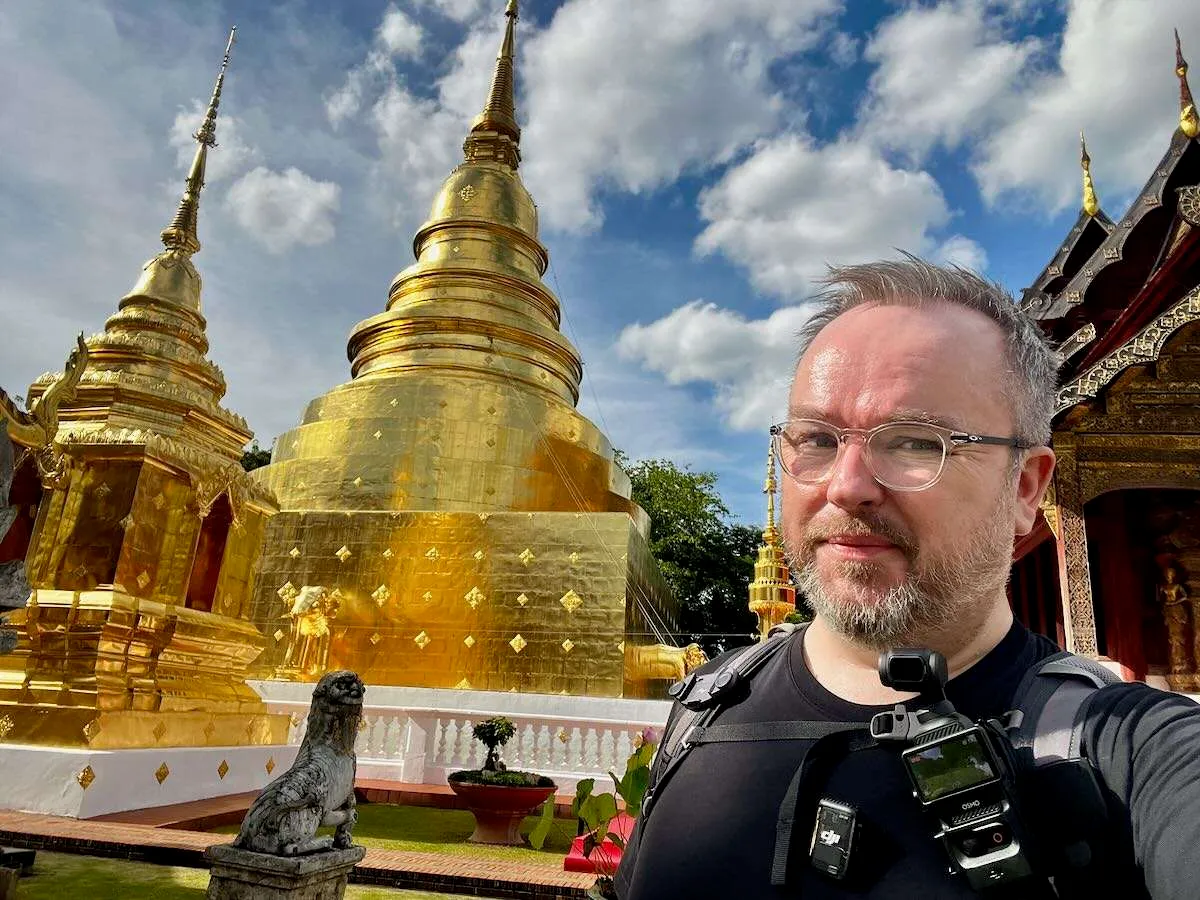
The walled Old City is dense with temples - Wat Phra Singh and Wat Chedi Luang are the headline two, best in the cool of the morning.
Doi Suthep
The gold-spired temple on the mountain above the city, with a view back over the valley. A half-day trip; the 300-step naga staircase is the classic approach.
Nimman cafe culture
One Nimman, Maya Mall and a hundred independent coffee shops - the modern heart of the city, and the reason the nomads stay. Ristr8to is the coffee-nerd pilgrimage.
The Sunday Walking Street
The Old City's main drag closes to traffic on Sunday evening for a vast craft and street-food market - the best night to be in town.
Ethical elephant sanctuaries
Chiang Mai is the place to meet elephants responsibly - choose a genuine no-riding sanctuary (see the experiences below), not a trekking camp.
Neighbourhoods & hotels
Where you stay in Chiang Mai matters more than in most cities. Pick a neighbourhood for detail and hotel picks.
Ground zero for tourists and digital nomads alike - walkable cafes, co-working, Maya Mall at the north end and One Nimman's rooftop bars mid-strip. My top pick for a first stay: high walk score, easy logistics, and the best coffee in Thailand. Book well ahead around the nomad-conference dates.
Inside the moat and the old walls - temple-dense, quieter after dark, and the better base if you are here for the culture rather than the cafe scene. Plenty of guesthouses and boutique stays in converted Lanna buildings, all within walking distance of the Sunday market.
Just north of Nimman and noticeably cheaper - local markets, budget co-livings and a residential feel, a short walk or Grab from the Nimman cafes. The value pick for a longer stay.
Along the Ping River east of the centre - resort-style hotels, bigger rooms and a calmer pace, further from the nomad hubs. The choice if you want downtime and space over walkability.
Worth the trip
The experiences worth booking in Chiang Mai.
Half-day Thai cooking class
A market visit then a garden kitchen - you cook (and eat) several classic dishes and leave with the recipes. The morning session beats the heat.
Check availability →Doi Suthep temple half-day
The mountain temple above the city plus the lesser-known Wat Pha Lat in the forest - a half-day that gives you the view and the calm.
Check availability →Ethical elephant sanctuary day
A no-riding sanctuary where you feed and bathe rescued elephants - the responsible way to meet them, and a genuine highlight of the north.
Check availability →More on Chiang Mai
Good to know
Burn season
March to May is agricultural burn season - air quality drops sharply, sometimes to hazardous. If you are sensitive, avoid those months or check the AQI before booking.
Getting around
Grab for daily trips; red songthaews (30-40 baht) if you can flag one down; a scooter only if you are confident and insured. The Old City and Nimman are walkable.
Cool evenings
In the Nov-Feb window the evenings genuinely cool down, unlike Bangkok - pack a light layer for the night markets.
Elephants
Choose a genuine no-riding, ethical sanctuary - the trekking camps are not the same thing. The experiences above are the responsible option.
Tap water
Do not drink the tap water - bottled is cheap everywhere.
Tipping
Not expected, but rounding up or leaving small change is appreciated in restaurants and for drivers.