
Norwegian Prima Review: A 2025 Southampton to New York Transatlantic
Norwegian Prima review from a 2025 Southampton to New York transatlantic. Cabins, food, the four onboard moves that matter, and whether the fare is worth it.
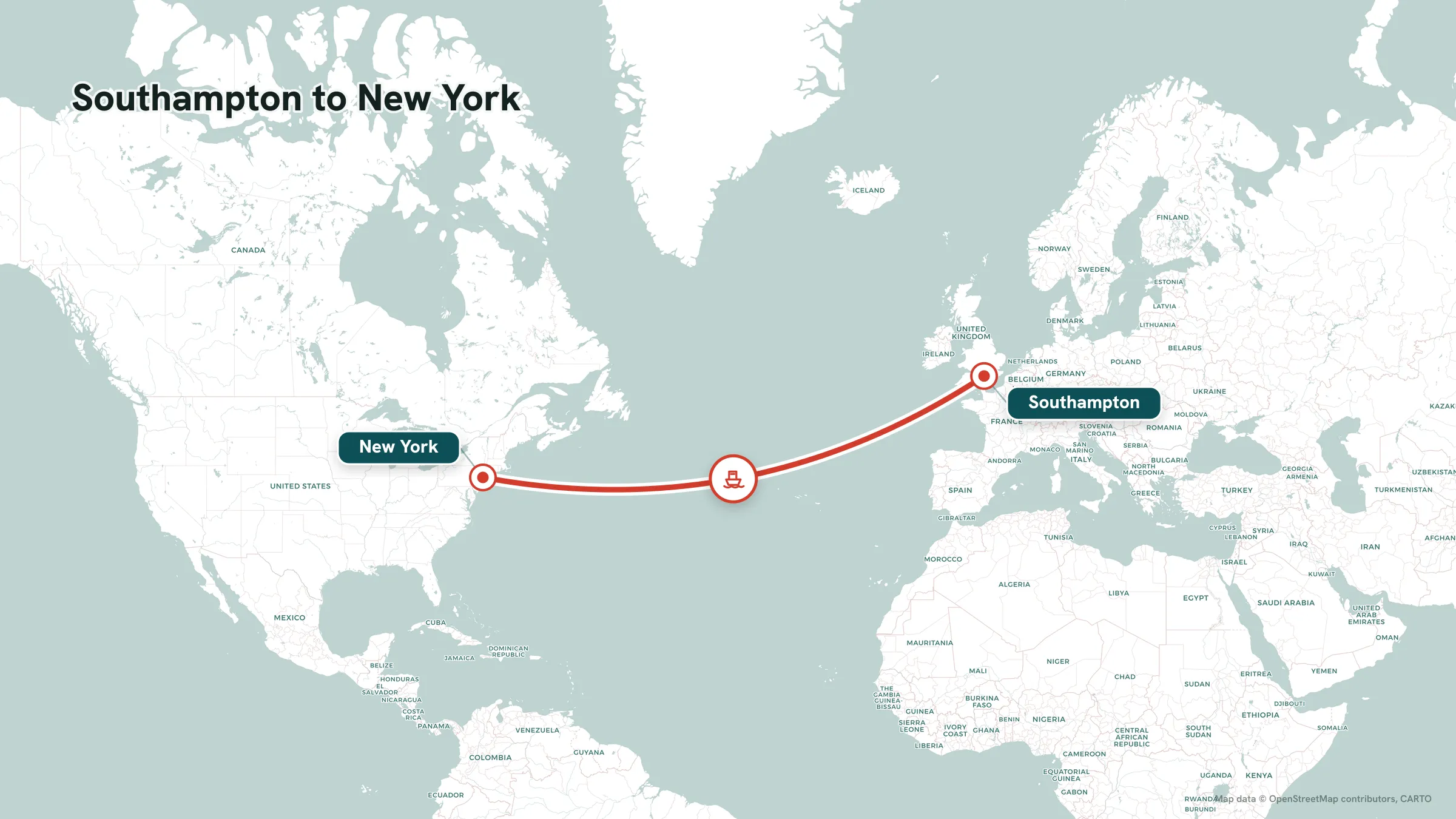
The crossing: Southampton to New York across the North Atlantic.
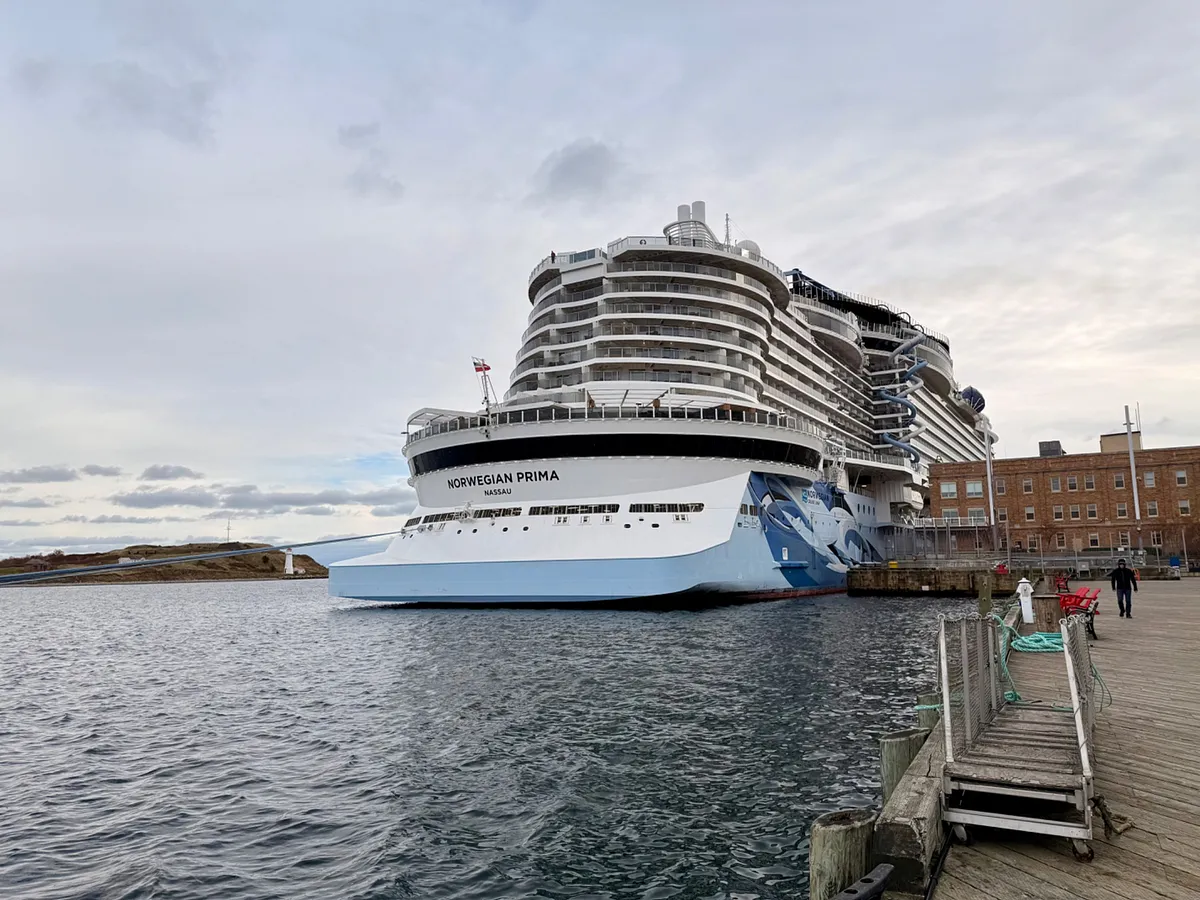
I sailed Norwegian Prima in 2025 on a transatlantic repositioning from Southampton to New York. Twelve nights, five ports on the schedule, one cancelled mid-crossing, and a solo deal on an ocean view cabin without a single supplement. Repositioning sailings are where Prima's value shows up, and where the ship is at its most pleasant: half-empty public spaces, room on Ocean Boulevard, dining venues you can walk into.
This is the Planet Patrick take: logistics, cabin, what to eat, what to skip, and whether the fare is worth it on a transatlantic versus a Caribbean week. For the deeper ship breakdown - deck plans, cabin grades, dining venue by venue - my sister review is linked at the end.
The ports: Southampton, Belfast, Halifax, New York
Five scheduled ports across twelve nights, weighted toward the end. The first half is the British Isles, then a long stretch of open Atlantic. Cobh got cancelled mid-crossing for sea conditions, adding an extra sea day before Halifax. The trade-off you accept on a repositioning.
Practical bookends: hotels near the Mayflower terminal in Southampton are walkable for embarkation, and stays near Manhattan Cruise Terminal put you a short cab ride from Midtown for the disembark morning.
The ship: Prima Class, by design
Norwegian Prima launched in August 2022 as the first ship in NCL's Prima Class. At 143,535 gross tons and 3,099 to 3,215 guests, it is intentionally smaller than NCL's Breakaway Plus class. Encore, Bliss and Joy all exceed 165,000 tons and carry around 4,000 guests. NCL bet on higher space-per-guest and many small venues over a few large ones.
What NCL did next tells us about their strategy. The Prima Plus class went bigger again: Aqua at 156,000 tons in 2025, Luna in 2026. The original Prima venues are tight at full capacity, and the cruise line corrected upwards.
Cruise Critic averages 2.9 across 525 votes; Tripadvisor 2.5 across 145. The complaints mostly trace to one structural mismatch: a 3,000 plus guest ship with venues sized for 2,500. On a transatlantic at 60-70 percent capacity that problem melts away. On a sold-out Caribbean week it does not.
The cabin: ocean view, solo, no single supplement
I chose a midship ocean view on Deck 11. Prima's cabins are the strongest part of the ship: every category is larger than the equivalent on older NCL ships. A standard balcony runs 230 to 355 square feet, with a glass-door shower, real storage, and a finish closer to a (slightly greige) hotel room than a cruise ship.
Soundproofing held up. Air conditioning ran consistently well. Small things you only notice when they fail.
The booking was a late solo deal where NCL charged a 0% single supplement for single use of a double room. Sweet as a nut. Repositioning sailings are where this happens on NCL.
The dedicated solo product is the Studio cabin: 73 dedicated rooms on Decks 12 and 13, a private Studio Lounge, no single supplement at any time. Roughly 100 square feet and excellent for the price. You'll be surprised, I think: these can sell out, often faster than standard cabins. There's a lot of us solo cruisers out there (I'm staring balefully at every other cruise line!). On a long crossing, the extra space of an ocean view at a comparable rate won out for me. Worth pricing both, though.
Onboard: where to eat, where to lounge, what to skip
Four moves to know about, in order of how much they matter.
One: eat at Indulge, not the buffet. Indulge Food Hall on Deck 8 has eleven stations, nine included. You sit, order from a touchscreen, food arrives in minutes. Surfside Cafe on Deck 17 is undersized for the ship and behaves accordingly at peak times.
Two: lounge on Ocean Boulevard, not the main pool deck. Ocean Boulevard is the 360-degree promenade on Deck 8, with two infinity pools hanging off the side of the ship and the Oceanwalk glass bridge. It does not feel cramped even on a sold-out sailing. The main pool deck on 17 is the weak link of the design.
Three: arrive at Syd Norman's forty minutes early. The Pour House plays Fleetwood Mac's Rumours end to end - one of the best music sets I have heard at sea. Capacity is about 120; The Improv at Sea is even smaller. The Prima Theater is a proper venue and the Donna Summer biographical musical is better than it has any right to be.
Four: take the Free At Sea bundle, or do the maths. NCL's standard promotion bundles drinks, Wi-Fi, specialty dining credits, and excursion credits in exchange for paying gratuities up front. Without it, Prima is expensive at the rack rate; with it, it competes with Celebrity. If you would spend on drinks and two specialty dinners anyway, the bundle is the better fare.
What works, and what does not
Works: the cabins, Indulge Food Hall, Ocean Boulevard, the entertainment programme if you treat the small venues as the boutique product they are, solo infrastructure, and service across the ship.
Does not: venue capacity at full sailings (Syd Norman's, The Improv, the Observation Lounge are all undersized). Interior layout has dead-ends and corridors that do not connect where you expect; you learn the ship in two days. The buffet is too small. Paid extras feel more aggressive than on older NCL hulls.
None of these are deal-breakers at 60-70 percent capacity. Most are at 100.
Value: what the fare actually buys
Caribbean fares from $885 per person for seven nights before taxes; transatlantic and long European itineraries $1,500 to $3,200 for ten to fourteen nights. Base fare covers the main dining rooms, Indulge, The Local, the buffet, all theatre shows, the main pool, Ocean Boulevard, and the Observation Lounge.
Extra: specialty restaurants $30-50 a cover, Hasuki $49 fixed; Vibe Beach Club around $249 per week; Galaxy Pavilion; the go-kart track per session; Wi-Fi; drinks. A couple adding the bundle plus two specialty dinners plus a Vibe pass plus a go-kart session can spend 40-50 percent over base fare.
Verdict on value: fair with Free At Sea on a long sailing where drinks and specialty credits cover real spend. Overpriced at the rack rate if you plan to use paid extras heavily. The repositioning fare here was the strongest Prima value I have seen: twelve nights, five ports, ending in Manhattan, against a transatlantic flight in business plus a hotel week.
Full ship breakdown - deck plans, dining detail venue by venue, and the cabin-grade specifics that did not fit here.
Final thoughts
Prima rewards the passenger who adapts to it. Eat at Indulge, lounge on Ocean Boulevard, arrive at Syd Norman's forty minutes early, take the Free At Sea bundle if the maths works. Make those four moves and it is a very good cruise.
For a traditional big-ship product with large public spaces and a proper pool deck, Prima is not the ship. NCL went smaller on purpose, and the Prima Plus class scaling up tells you the cruise line itself sees both sides.
On a transatlantic at 60-70 percent capacity none of the weaknesses bite. On a sold-out Caribbean week several of them will. Pick the sailing format as carefully as the cabin grade.
Frequently asked questions
Verdict
Adapt to it and it works.
A clever ship with structural design trade-offs. Strong on a half-full repositioning, less forgiving at full capacity.
8/10
Plan This Trip
MORE FROM MY CRUISE HUB