
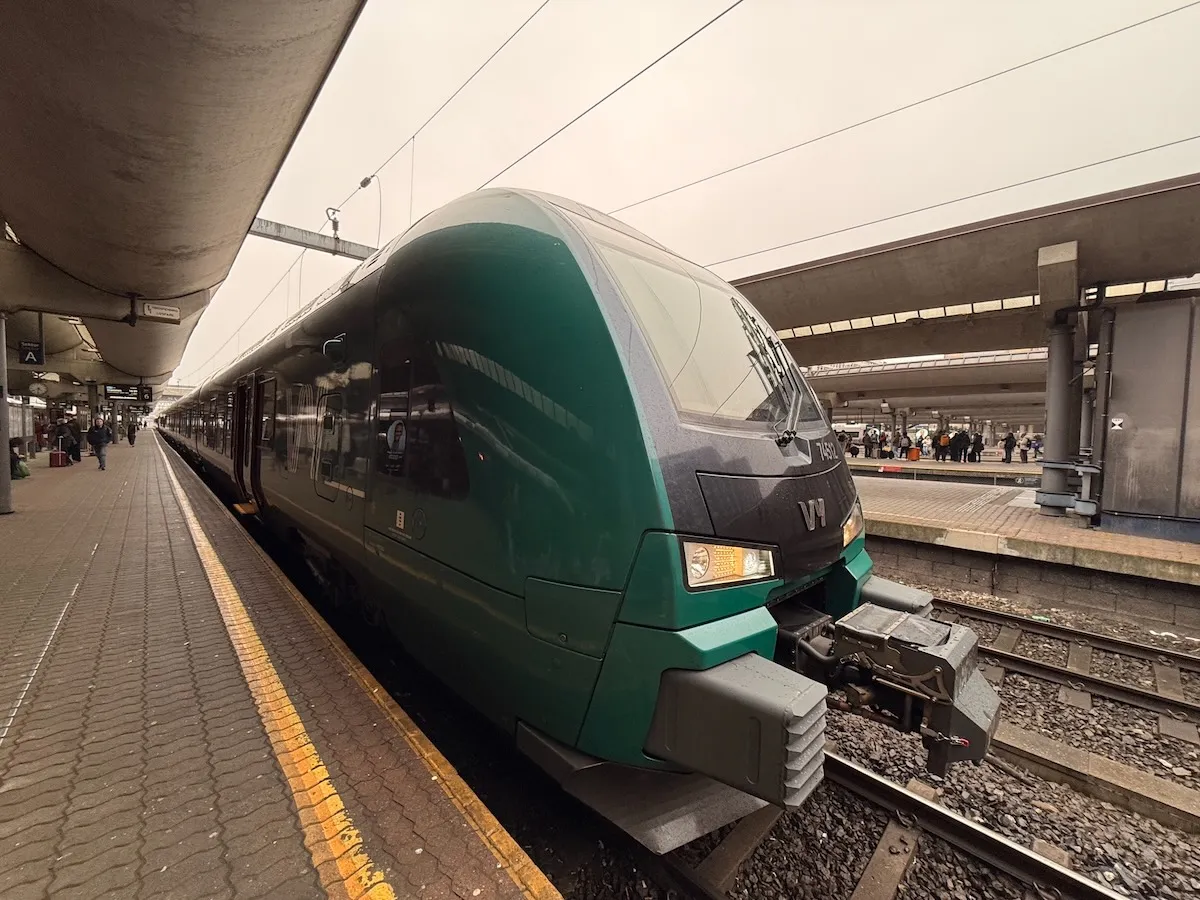
European rail is simpler than airports once you know the rhythm: platforms drop late, there's no gate number weeks in advance, you don't check luggage, and security takes thirty seconds. But the first trip still catches people out. Here's what to expect, what to book, and how to stop sweating on the platform.
How to book (reseller or direct)
Two paths: a reseller (aggregator) or the national operator direct. For your first trip, use a reseller. Clearer interfaces, international cards work without drama, and one ticket covers multi-operator journeys. You'll pay a booking fee of €1-8, which is worth it for the stress you don't have.
- Omio - strong on multi-modal comparison (train vs bus vs flight), covers smaller private operators like Italo and RegioJet that other resellers miss.
- Trainline - UK-born aggregator with deep coverage of SNCF, DB, Trenitalia, Renfe, and ÖBB. The app has live delay and platform updates.
Pick one. Download the app. Get comfortable with it before experimenting.
Once you've done a few trips and you're comfortable, booking direct with the national operator saves the reseller fee. SNCF Connect for France, DB for Germany, Trenitalia for Italy, Renfe for Spain, ÖBB for Austria - all sell in English. Fares are often a bit cheaper than the reseller's price. The catch: Renfe and Trenitalia can be temperamental with foreign credit cards, so keep a reseller on standby if a direct booking fails.
High-speed vs regional vs night: the three train types
High-speed - TGV (France), Frecciarossa (Italy), AVE (Spain), ICE (Germany) - almost always requires a reservation. Your ticket shows a specific carriage and seat (e.g. "Voiture 7, place 42"). The reservation is included in the ticket price when you book advance. You cannot just board and sit anywhere.
Regional and intercity trains are more flexible. Tickets are often open or flexible, valid for any service on that route within a time window. On paper regional tickets in Italy and some French routes, you must validate at a yellow or orange machine on the platform before boarding. The ticket tells you if it needs validating - if it does and you skip it, the conductor can fine you.
Night trains (ÖBB Nightjet, European Sleeper, Caledonian Sleeper) always require reservations - you're paying for a specific bed, bunk, or seat. Book weeks ahead, especially in summer. For your very first European rail trip, stick with a daytime high-speed route.
Booking and reading your ticket
Search by city, not station - the app figures out which terminus. If you're going Paris to Barcelona, type "Paris" and "Barcelona", and it'll default to Gare de Lyon and Barcelona Sants. Filter for direct trains or routes with one change maximum. Avoid connections under twenty minutes for a first trip.
Five things to check on every ticket before you board:
- Reservation - does the ticket show a carriage and seat number? If yes, sit in that seat and no other. "Réservation obligatoire" (French) or "Prenotazione obbligatoria" (Italian) = mandatory reservation.
- Class - "1" is first class, "2" is second. Don't drift into first with a second-class ticket; the conductor will find you.
- Validation - does the ticket say "validate before travel"? Paper regional tickets often do; e-tickets from apps are usually auto-validated.
- Train number and departure time - European trains leave exactly on time. 14:37 means 14:37, not 14:40. The train number helps you identify the right service on the board when multiple trains leave within minutes of each other.
- QR code - if e-ticket, make sure the QR is readable on your screen. Cracked screens sometimes fail; bring a PDF backup if you're worried.
At the station: platforms drop late
Arrive 20-30 minutes early. Not airport early - you don't need that. But don't cut it close either. That gives you time to find the departure board, grab a coffee, and get to the platform the moment it appears.
The thing that panics beginners: platforms aren't announced until 10-20 minutes before departure. The board shows your train with a time and destination, but the platform column stays blank until late. This is normal. Watch the board. When the platform appears, move.
Board labels: Abfahrt (German), Départs (French), Partenze (Italian). Your train is listed by departure time, destination, and train number. Big stations have multiple levels - Berlin Hauptbahnhof famously does - so when the platform appears, allow walking time.
Boarding and getting settled
Walk along the platform until you find your carriage number, marked on the side of the train near the doors. If you have a reservation, match the carriage number on your ticket to the number on the train - don't just board the first door. If you don't have a reservation, look for "2" (second class) or "1" (first class) on the outside of each carriage.
Stow luggage: small bags overhead, large suitcases in the end-of-carriage racks or between seat backs. Most operators allow bags up to about 85 × 55 × 35 cm with no explicit weight limit, but the practical test is whether you can lift it yourself. Label your bag with name and train details in case it gets separated.
If someone's already in your assigned seat, check your own ticket again (you may be in the wrong carriage). If you're right, show them your ticket - they'll move. If they argue, wait for the conductor.
Onboard: etiquette, Wi-Fi, food
Europeans treat trains as shared quiet space. Conversations happen but quietly. Phone calls are tolerated in regular carriages if you keep them short; in the quiet carriage (marked with a crossed-out phone symbol), even whispered calls will get you stared at. Feet off seats. No speakerphone video.
Keep your ticket ready - paper or phone. The conductor comes through 10-30 minutes after departure, sometimes twice on long runs. Don't be the person digging through emails while a queue builds.
Wi-Fi exists on most high-speed services but it's patchy and slow. Don't plan on it for work calls or streaming; download anything you need before boarding. Food carts run on TGV, ICE, Frecciarossa, and most long-haul services - expect €5-15 for a sandwich, coffee, or beer. Quality varies. Bringing your own food is completely normal and accepted.
Connections and missed trains
A safe connection window: 20 minutes at a familiar station with light luggage, 30-45 minutes at a major hub like Paris Gare de Lyon or Munich Hauptbahnhof. Five-minute connections are madness - don't book them.
When you arrive, go straight to the departure board and find your next platform. Follow signs marked Anschlusszüge (German) or Correspondances (French / Italian) for connecting trains. Get to the platform first, relax second.
If you miss a connection: don't panic. Most European rail tickets are valid on the next service on the same route - you lose your seat reservation but not the ticket itself. Board the next train and talk to the conductor if it's all-reserved and full; they'll usually let you stand or find a seat. If the delay was the operator's fault (your first train was late), there's usually no extra charge. Keep your tickets and any delay documentation - EU rail passenger rights give you compensation on significant delays, though enforcement varies.
A word on Eurail and Interrail passes
A pass gives you a fixed number of travel days within a validity window. It sounds flexible - and it is - but it's not always cheaper than point-to-point tickets. High-speed trains still require reservations (€10-30 each) on top of the pass, and night trains add €25-50 per berth. For a first trip with two or three high-speed hops, point-to-point is usually cheaper.
Passes make sense when you're doing a lot of regional travel or hopping between cities every day or two. Run the numbers in your booking app before committing.
The questions beginners ask most before their first trip.
Do I really need to validate my ticket?+
Only if it's a paper regional ticket that says "validate before travel" (common in Italy, some French regional services). E-tickets bought through an app are usually auto-validated. If in doubt, stamp it - the machines are yellow or orange, near the platform entrance.
What if my platform changes at the last minute?+
The departure board updates - watch it and move quickly. Big stations can mean a five-minute walk or a sprint up stairs, which is the reason you don't arrive five minutes before departure.
What if I miss my train?+
Most European rail tickets are valid on the next service on the same route - you lose your seat reservation but not the ticket. Check the board, find the next train, board. If it's full, talk to the conductor; they'll usually find a workaround.
Should I book direct with the operator or through a reseller?+
First trip: use a reseller like Omio - clearer interfaces, better with foreign cards, one ticket for multi-operator journeys. Once you're confident, book direct on single-country trips to save the fee.
Is first class worth it?+
For journeys under four hours, second class is perfectly comfortable on all major European high-speed services. First class is worth the premium on longer runs, on overnight trains, or if you specifically want the quieter carriage - not as a default upgrade.