
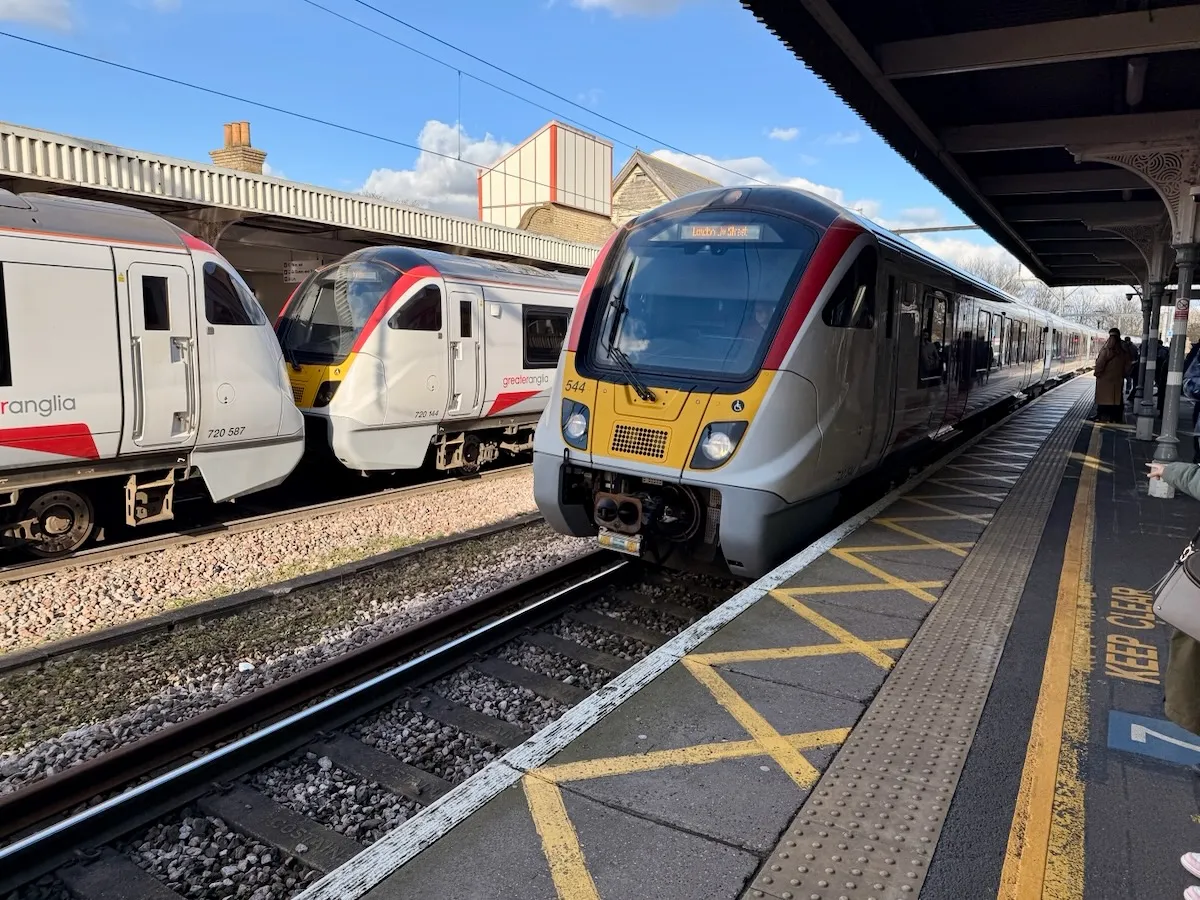
Chelmsford to London Liverpool Street is a 29-mile run along the Great Eastern Main Line in 27 to 29 minutes direct, operated by Greater Anglia. Most trains are Class 720 electric units - modern, quiet, better than most British commuter stock. Longer-distance services continuing to Norwich run as Class 745 fixed sets. At peak on weekdays you'll get up to five trains an hour; off-peak it settles to two or three. The first service leaves Chelmsford around 05:00 on weekdays, the last around 23:24.
The fare is the main catch. Walk-up fares typically run £20 to £30 depending on time of day and flexibility, which is steep for 29 miles by European standards. Advance fares drop as low as £12.90. If you have a railcard, apply it: that usually cuts the fare by about a third.
- Route
- Chelmsford → London Liverpool Street
- Line
- Great Eastern Main Line
- Distance
- 29 miles / 47 km
- Duration
- 27-29 min direct
- Operator
- Greater Anglia
- Main fleet
- Class 720 (5- or 10-car electric)
- Top speed
- 100 mph
- Frequency
- Up to 5 per hour Mon-Fri peak; 35 daily
- First / last
- ~05:00 / ~23:24 weekdays
- Advance from
- £12.90
- Walk-up standard
- ~£20-£30
- London terminus
- Liverpool Street (Zone 1)
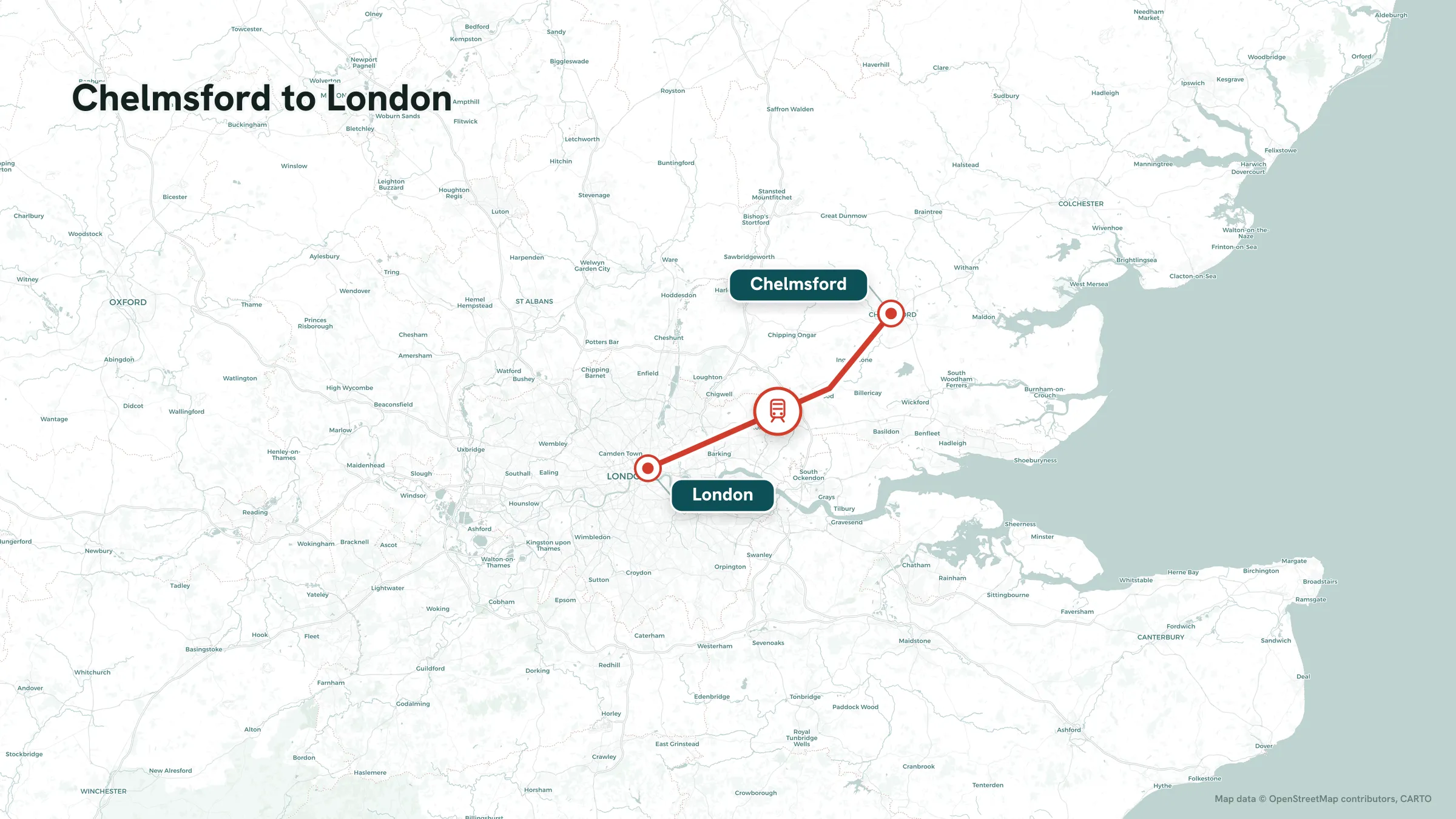
The Great Eastern Main Line: Chelmsford to London Liverpool Street.
How to Book
Greater Anglia (direct)
Book at greateranglia.co.uk or the app. No booking fees. Advance singles from £12.90, walk-up day returns around £20.90. Clean mobile ticketing.
Trainline
Same fares plus a small booking fee. Cleaner interface than most operators. Worth it if you're comparing across several operators or routes.
National Rail + railcard
Use a 16-25, 26-30, Senior, Two Together, Family & Friends, or Disabled railcard through any retailer to cut the fare by about a third.
Journey Timeline
Seating Classes
Onboard Experience
The Class 720 is the default fleet on most services. The route runs under 25 kV overhead wires end to end, so there's no bi-mode trickery - the ride is quiet and acceleration is brisk. Line speeds reach up to around 100 mph on stretches, though stopping patterns and the approach into Liverpool Street keep the average lower. Seats are firm but comfortable, the digital displays are up to date, and the wi-fi is free - when it works, which is patchy.
This is not a scenic line. You leave Chelmsford through Essex suburbs, pass through Ingatestone, Shenfield and a stretch of dormitory country, and arrive at Liverpool Street with a short run of tunnel at the end. The pleasure of the route is its reliability and brevity, not its views. Greater Anglia has also invested in interior displays that show carriage position, next-stop info, and which toilets are occupied - small things that make a short journey feel less stressful.
Train vs the alternatives
The train wins. 29 minutes into Zone 1 at a fare that undercuts driving once you include London parking. Coaches are slower and no cheaper. Just avoid peak, book in advance where you can, and keep the Greater Anglia app open for live status.
- Day-trippers into central London who value speed over price
- Anyone connecting to the Tube, DLR or Elizabeth Line at Liverpool Street or Stratford
- Working commuters who can dodge peak crush and want wi-fi and power
- You're travelling at peak with a large suitcase and won't stand
- You need a reliable internet connection for the full journey
Liverpool Street is one of London's major Tube interchanges. You can pick up the Circle, Hammersmith & City, Metropolitan, Central and Elizabeth lines directly from the concourse. For Canary Wharf, the Elizabeth Line is quickest - alternatively change at Stratford on the way in. For Paddington or King's Cross-St Pancras, the Elizabeth Line covers it all from Liverpool Street, no above-ground crosses needed.
Build in 15 minutes if you're connecting with luggage. Liverpool Street is large and the Tube entrances can be a five-minute walk from some platforms. The station is well-signposted and there are coffee shops on the mezzanine, taxis on Bishopsgate, and a Boots for last-minute essentials.
What happens if my train is delayed or cancelled?+
The Greater Anglia app and National Rail both show live status. If your train is cancelled the next direct service is usually 10-15 minutes away in peaks, 30 minutes off-peak. For full line blockages Greater Anglia runs rail-replacement buses from near the station that take around 45 minutes. Delay Repay applies on delays of 15 minutes or more.