
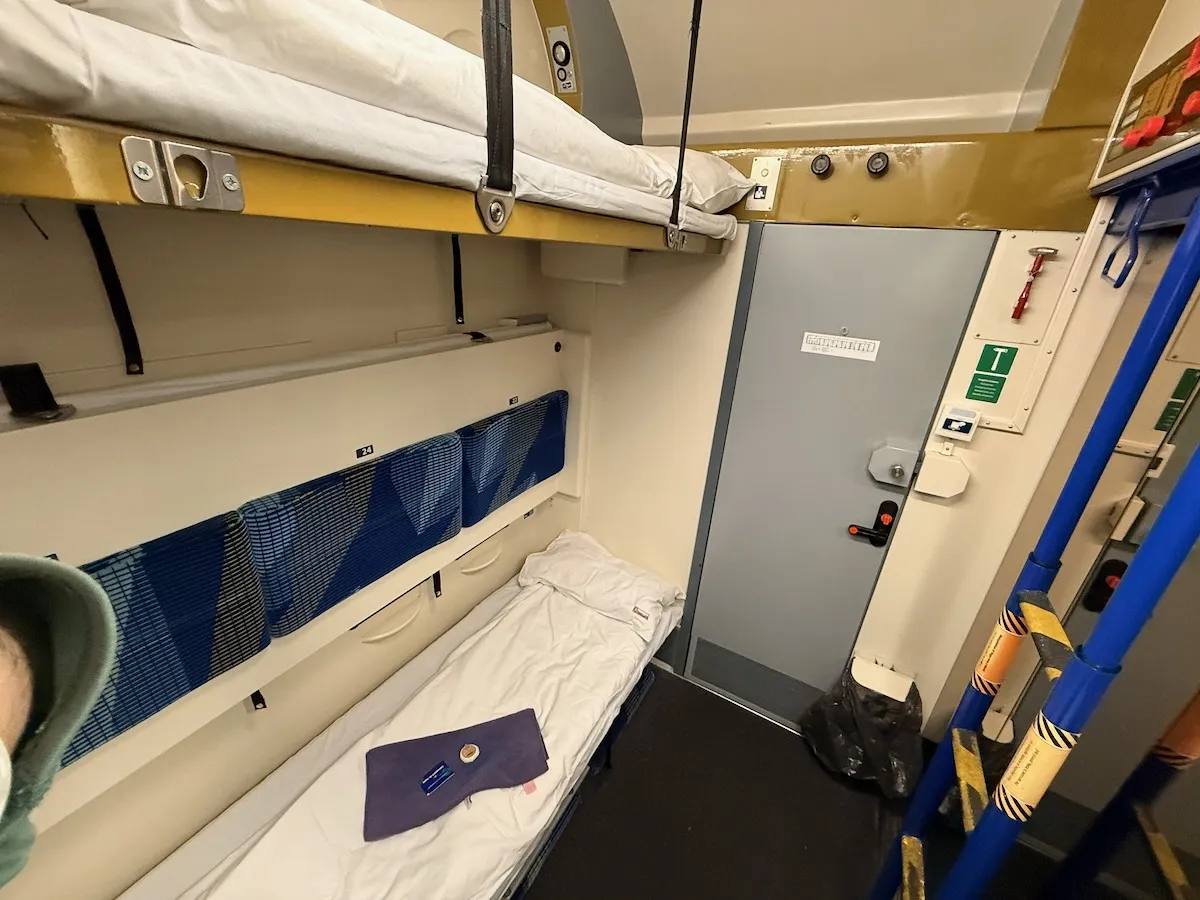
European sleeper trains went from obituary to renaissance in five years. ÖBB Nightjet has reshaped the network, European Sleeper keeps adding routes, and the Caledonian still runs north from Euston every night. The mechanics of booking one aren't complicated, but getting them wrong costs you a day of your trip. Here's the playbook.
When to book, by operator
Sleeper trains have limited berths - often just a couple of dozen proper sleepers and a handful of couchette compartments per service. Booking windows vary wildly, and dynamic pricing means fares climb steadily toward departure.
- ÖBB Nightjet: 180 days out - the longest window in Europe. Vienna-Venice, Vienna-Rome, Munich-Rome, Paris-Berlin, Hamburg-Vienna. Popular summer dates sell out four or five months ahead.
- European Sleeper: Brussels-Amsterdam-Berlin-Prague year-round, plus a new Brussels-Cologne-Zürich-Milan route launching 9 September 2026 (tickets on sale from 17 March 2026). Booking opens per timetable period rather than a fixed rolling window.
- Caledonian Sleeper (UK): roughly 12 months ahead for standard fares. London-Edinburgh, London-Fort William, and the other Highland routes. Weekends sell faster than midweek.
- Trenitalia Intercity Notte (Italy): 2-6 months depending on the route. Covers Rome, Milan, Reggio di Calabria, Lecce, and Sicilian services via the Messina train-on-a-boat ferry.
- SNCF Intercités de Nuit (France): significantly reduced since 2016. A handful of services remain (Paris-Briançon, Paris-Nice, Paris-Toulouse, Paris-Rodez) with reclining seats and couchettes - no private sleeping cars. Book 4 months out where the operator's system allows it.
Two things people get wrong. The first: assuming Deutsche Bahn runs sleepers. It doesn't - the overnight services through Germany are ÖBB Nightjet trains, and you book them on nightjet.com or via a reseller, not bahn.de. The second: leaving it until a month before travel for a popular route. By then the good berths are gone.
Seat vs couchette vs sleeper: what to pay for
Three accommodation tiers, and the price gap between them is wider than the physical difference suggests.
Seats: the cheapest option, usually a reclining chair in a 4- or 6-seat compartment. Fine for a short overnight hop if you sleep upright. Grim on anything over six hours.
Couchettes: four or six bunks in a shared compartment, basic mattress, communal toilet down the corridor. You'll share with strangers unless you book the whole compartment. Perfectly fine if you're young, travelling with friends, or genuinely don't care about privacy.
Sleepers: one or two proper beds in a private compartment with a washbasin, sometimes a shower. This is the "hotel room on wheels" tier. ÖBB Nightjet's new-generation stock now also offers Mini Cabins - solo sleeping pods inside a couchette carriage, cheaper than a full compartment but still private.
Lower berths are easier to get into, sway less, and cost more. Upper berths are cheaper but you'll feel more motion and climbing the ladder half-asleep at 2am isn't fun. If you're over 50 or have any mobility concerns, pay for the lower.
Key European sleeper routes worth knowing
- Vienna-Venice (ÖBB Nightjet): one of the prettiest overnight runs in Europe. Popular in summer - book in March or April for August travel.
- Paris-Berlin (ÖBB Nightjet): the flagship revived route. Daily, straightforward, pairs well with Eurostar from London.
- Brussels-Berlin-Prague (European Sleeper): the private operator's headline service. Three nights a week, budget couchettes plus sleepers.
- Brussels-Zürich-Milan (European Sleeper, new): launching 9 September 2026. Worth booking early if you're planning late-2026 Alpine travel.
- London-Fort William (Caledonian Sleeper): the Highland route. Wake up in the Scottish mountains. Book Edinburgh-bound for the city route - cheaper and faster.
Where to book
Two sensible paths: booking direct with the operator, or using an aggregator. Start by checking the Back on Track database if you're unsure a route still runs (some services are seasonal, and the network shifts every year).
Direct with the operator usually gets the best price and the clearest compartment layout. nightjet.com is genuinely good - you can see the cabin plan, pick upper or lower berths, and book a Mini Cabin if you want the cheapest private option. sleeper.scot handles Caledonian Sleeper. europeansleeper.eu covers their routes. Trenitalia for Italian services.
An aggregator is the easier route when your sleeper is part of a longer multi-country booking, or when the operator's site is fighting you. You'll pay a small booking fee, but you get everything in one English-language checkout. One worth knowing: Omio, which has broad European rail inventory and lets you compare the sleeper against flights or coaches for the same route.
What happens on the night
Arrive at the station at least 30 minutes early. Sleepers board well before other trains and the attendant needs time to check you in. You'll hand over the ticket, sometimes a passport, and get a boarding card in return - do not lose it.
On the MAV sleeper from Berlin to Budapest, the attendant took my passport and ticket, gave me a boarding card, and gestured at my compartment. Neither of us spoke the same language. It worked fine, but it would have been stressful if I'd arrived five minutes before departure.
The compartment will be smaller than the photos suggest. Everything folds, stows, or hides - the bed drops from the seats, the washbasin is under a lid, the ladder tucks somewhere non-obvious. The attendant will walk you through it. A bottle of water, sometimes a chocolate, occasionally terrible slippers; sheets are always clean. The train will stop at borders (staff changes, not customs) - if you're stationary at 3am, that's normal.
Overnight survival kit
- Earplugs. You'll hear people next door, points clanking, shunting yards. Non-negotiable.
- Eye mask. The corridor light stays on all night and compartment doors never seal properly.
- A warm layer. Temperature control is erratic - you'll often swing between too warm and too cold on the same journey.
- Toilet timing. In a shared couchette, go before lights-out. Queuing at 2am when you're half-asleep is miserable.
- Pack light. Storage is limited - under the lower berth and overhead. One medium suitcase is fine. Two is a problem.
Morning arrival
You choose the wake-up time at booking, usually 30-45 minutes before arrival. The attendant knocks. Coffee or tea appears if it's included. On the Caledonian, the attendant once knocked, handed me tea, and said, "I'm about to leave, you better leave before me." I was still looking for my socks.
Pack the night before. At minimum, know exactly where everything is. Sleeper trains empty fast at the terminus - you don't want to be fumbling while the platform clears. Breakfast, when it's included, is a roll and jam: enough to start the day, not a meal.
The questions that come up most when travellers are booking their first European sleeper.
Can I book at the station last-minute?+
No. Walk-up sleeper bookings haven't been viable in Europe for years. Popular routes sell out months ahead. Book online as soon as the operator's window opens.
What about customs or border checks overnight?+
Within the Schengen area, full customs checks are rare. Staff changeovers at borders are common though, and the train may be stationary for 20-40 minutes at an odd hour. Bring your passport anyway.
Can I cancel or change a sleeper booking?+
Policies vary. ÖBB and European Sleeper allow changes for a fee up to a day or two before departure on most tickets. Caledonian is stricter on advance fares. Read the refund rules before you book the cheapest option.