
Basilica Cistern: is Istanbul's underground palace worth the queue?
A 6th-century underground reservoir beneath Sultanahmet, 336 marble columns, two Medusa heads, and atmospheric lighting. I visited on a Friday when the mosques were closed - here is whether it earns your time.
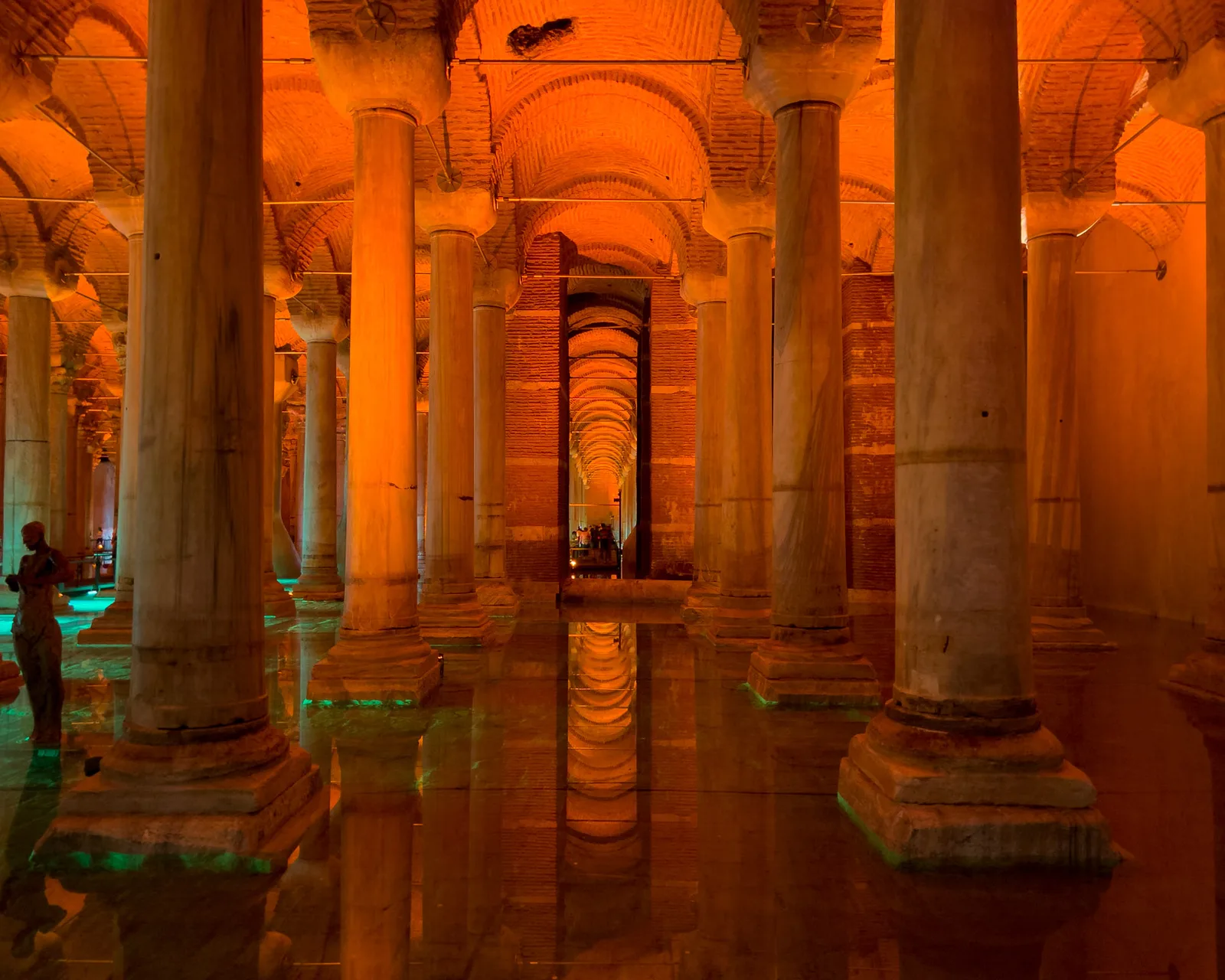
I visited the Basilica Cistern on a Friday in 2026 when the nearby mosques were closed for prayers. It made a good alternative, and I am glad I went. It is not a full morning's activity - you will be done in 30 to 60 minutes - but it adds genuine depth to understanding how Constantinople worked as a city. If you are in Sultanahmet anyway, go. If you are debating whether to cross the city for it, probably not.
How it rates
The scores below reflect a Friday visit during peak season.
What it is, and the first impression
The Turks call it Yerebatan Sarayi - the Sunken Palace. That name makes sense the moment you descend the staircase and see the scale. The cistern covers roughly 10,000 square metres. The columns stretch into darkness in every direction, reflected in the shallow water below. It is genuinely impressive, and the lighting design amplifies the effect rather than cheapening it.
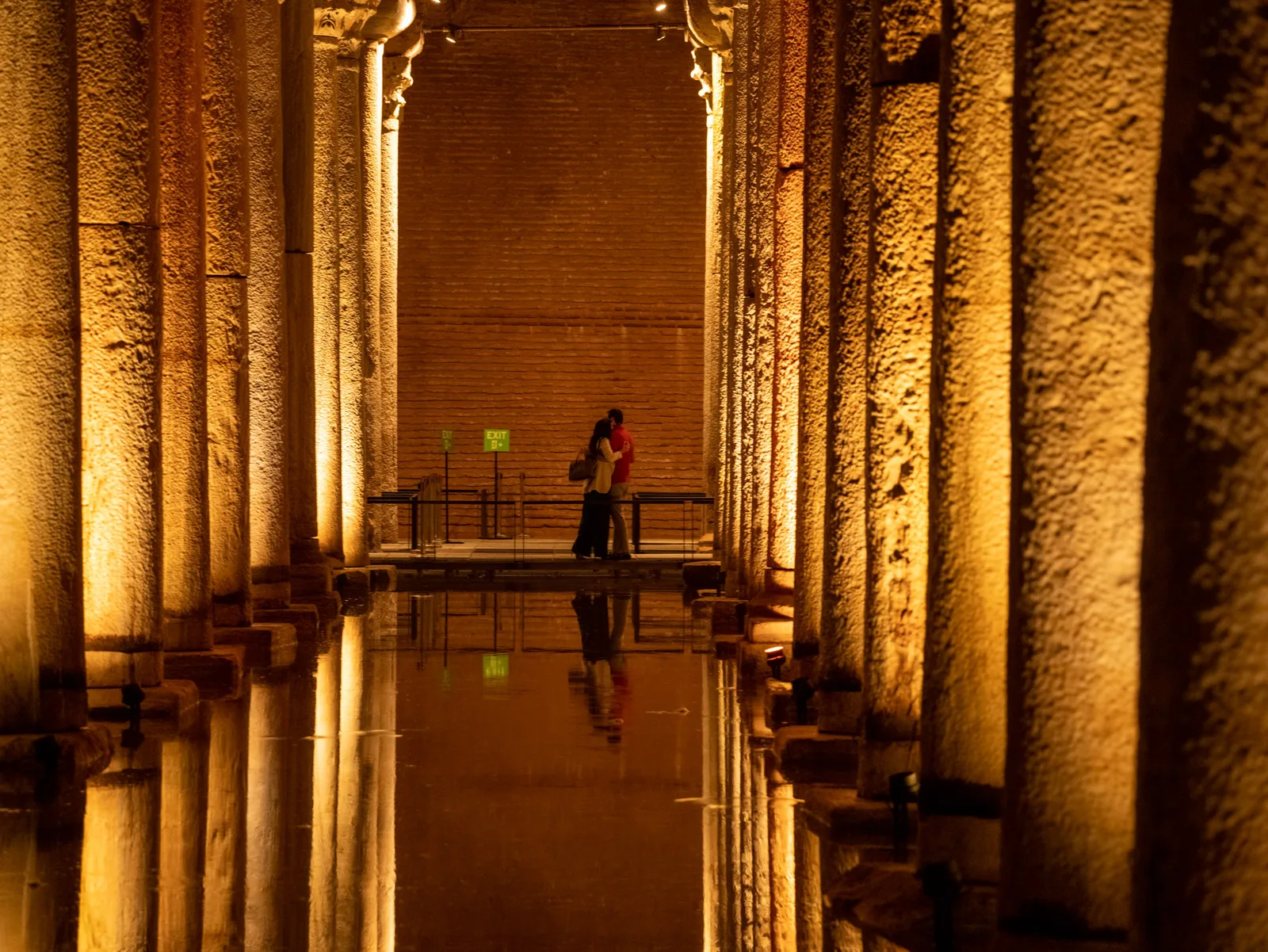
Raised walkways run the length of the cistern, above shallow water.
Emperor Justinian I commissioned it in 532 AD, immediately after the Nika riots destroyed half the city. While he was rebuilding Hagia Sophia above ground, 7,000 slaves constructed this filtration and storage system below ground - many of them dying in the process. The cistern measures 138 metres long by 64 to 70 metres wide and holds 80,000 cubic metres of water when full, enough to supply the imperial centre during sieges and droughts. Water arrived via aqueducts from forests roughly 20 kilometres outside the city.
The experience itself
The 336 columns are the main visual draw. Each stands nine metres high in marble or granite, and no two are identical - the builders reused columns from older Roman and Greek ruins, which explains the varied decorative styles. Some are plain Doric, some ornate Corinthian. It is a visible record of architectural recycling across centuries.
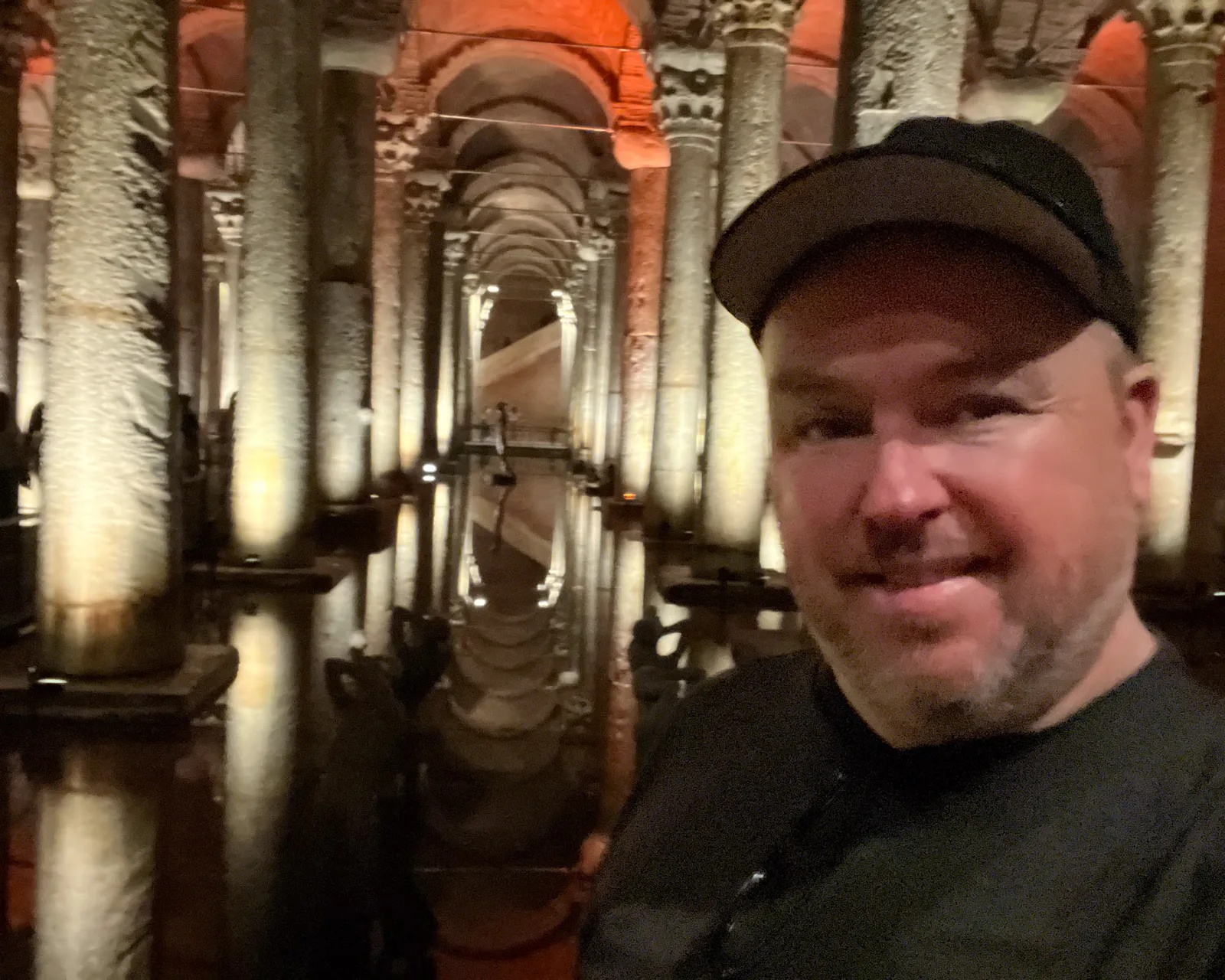
Down on the cistern floor - the columns recede into the dark behind me.
At the far end, two columns rest on carved Medusa head bases: one sideways, one upside-down. They are likely repurposed Roman monument pieces used for structural support, but they have become the most photographed spot in the cistern. Expect a queue. People will not wait politely. You will need to step aside on the narrow walkway and let others through, then claim your spot when there is a gap.
Photography is easier with a phone than a dedicated camera. The light is too dim for decent depth of field without cranking the ISO, and the shifting colour patterns favour auto settings. Portrait mode does not work here. Stick to regular wide shots that capture the reflections and the sense of depth.
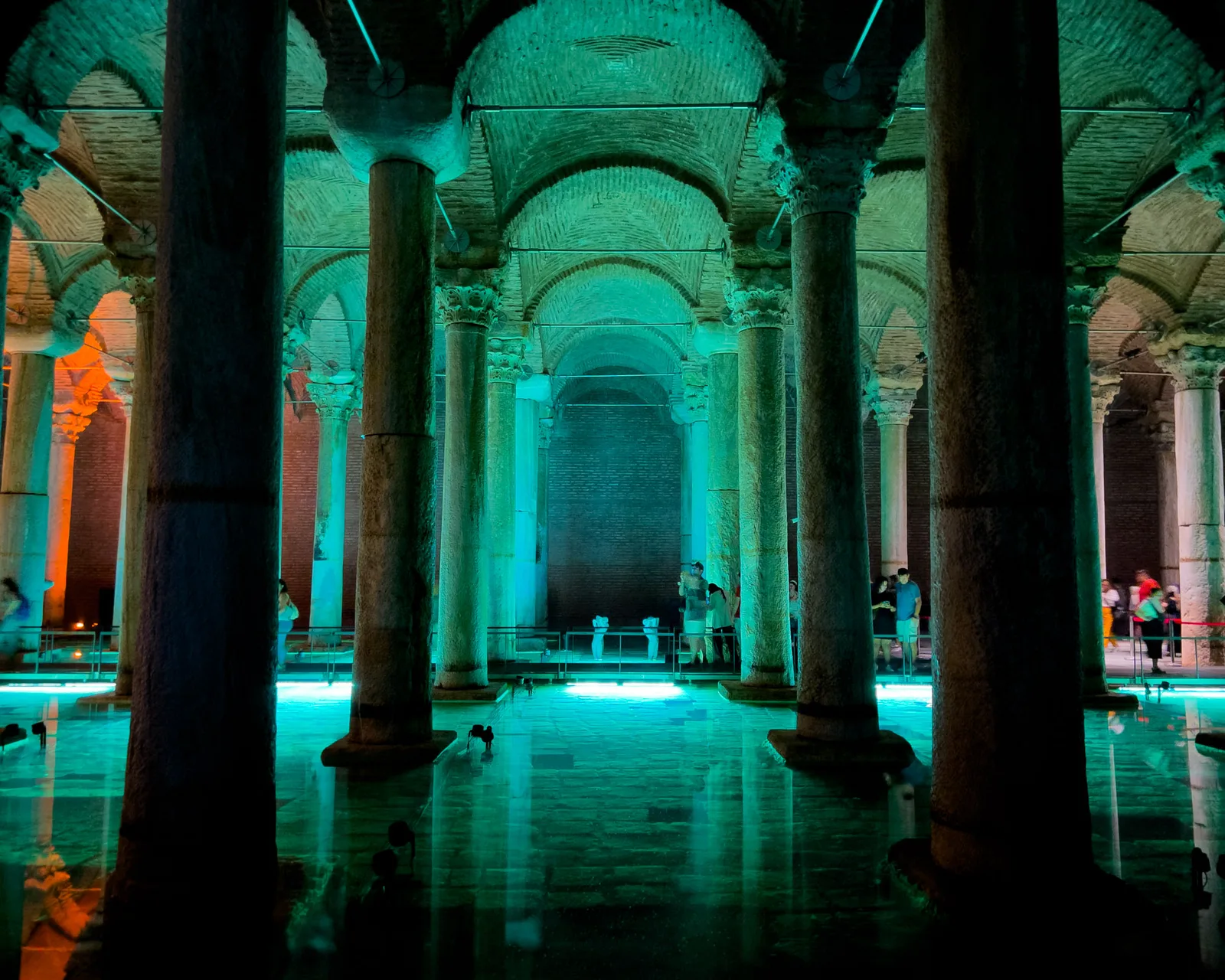
The lighting shifts through reds, blues and greens as you move through the space.
The cistern also houses temporary art installations in the flooded sections. When I visited, there was a fractured human figure caught mid-movement and a series of steampunk jellyfish sculptures lit from within glass domes. The pieces add atmosphere without overwhelming the architecture.
Practical: getting in, tickets, timing
The entrance is on Yerebatan Caddesi, directly opposite the main door of Hagia Sophia - you cannot miss it. If you are staying in Sultanahmet, you will walk there in under 10 minutes from most hotels.
Entry is controlled by timed numbers. You queue outside, then security scans your bag before you reach the ticket desk. If you are buying on-site during peak hours, expect to wait 15 to 30 minutes. Tour groups often get priority, and skip-the-line tickets bought online move you ahead of the walk-up queue.
Then come the stairs: 52 steep stone steps down to the cistern floor. Take them slowly. The lighting is dim and the steps are worn. Use the handrail.
Wheelchair users and anyone who cannot manage the stairs should buy a ticket at the main hall first, then find the separate disabled entrance further along the street (slightly downhill, on the left). A platform lift takes you down to cistern level.
Ticket prices for foreign visitors are currently TL 209 (roughly £10, EUR 11.50, or $11.25 USD at 2026 rates), with discounted rates for Turkish residents, students, and teachers. Prices can change without warning.
Opening hours vary seasonally. Some sources list 09:00 to 19:00; the official site has shown 09:00 to 22:00. This is Turkiye - hours change and are not always announced. Check yerebatan.com the day before you visit.
Is it worth it?
What Works04
- The atmosphere is the point - 336 columns in coloured light reflected in water is unlike anything else in Sultanahmet
- Atmospheric photography is achievable on a phone
- Directly opposite Hagia Sophia, so the logistics from any Sultanahmet base are trivial
- The Medusa heads are genuinely unusual - repurposed Roman sculpture used as column bases
What Doesn't04
- The Medusa head area is congested - narrow walkways and everyone wants the same shot
- The 52-step staircase rules it out for anyone with mobility issues unless you find the disabled entrance
- Skip-the-line tickets are worth buying if you arrive during peak hours - the walk-up queue moves slowly
- Opening hours are inconsistent across sources - verify the day before
How to do it
Buy a ticket at the entrance or in advance online (the timed-entry system applies either way). Allow 30 to 60 minutes inside. The natural pairing is Hagia Sophia before or after - the two sites are 150 metres apart and together cover a morning. Add the Blue Mosque for a five-minute walk in the other direction.
If nearby mosques are closed for Friday prayers, the cistern makes a particularly good use of that window - you will avoid the midday heat above ground, and the crowds are often lighter during prayer times.
Verdict: the atmospheric underground counterpart to Hagia Sophia
The Basilica Cistern is not an all-morning attraction. It is a 30-to-60-minute experience that earns its place on any Sultanahmet itinerary because it delivers something genuinely unusual: a vast underground space that feels more like a cathedral than an ancient water tank. The lighting, the reflections, the Medusa heads, the sheer scale of 336 columns disappearing into the dark - it is one of the more atmospheric things you can do in Istanbul for about the price of a meal.
The caveats are real. The Medusa head area is congested and the walkways are narrow. The staircase is steep. Hours vary and need checking. But none of that outweighs the visit if you are already in Sultanahmet. Pair it with Hagia Sophia and you have a tight, absorbing morning without crossing to another part of the city.
Anyone staying in Sultanahmet with 30 to 60 minutes to spare - especially as a complement to Hagia Sophia. Good heat escape in summer.
Anyone expecting a long immersive visit, or travelling with people who cannot manage 52 steep steps and are unaware of the separate disabled entrance.